This chihuahua may be small, but it’s pretty damned fearless. In late May, a TikTok user in Alaska posted a video showing her purse-sized dog barking at a cow moose in the street. “And, of course, it’s the 6-pound chihuahua that’s making poor choices,” the dog’s owner wrote in the video description.
The cow moose charged right up to the chihuahua, which was thankfully behind a fence—though the big moose could have conceivably blown through the barrier without much difficulty. Regardless, the chihuahua held its ground, and the moose relented and began grazing on the lawn near the angry pooch.
Soon following the initial video, the dog’s owner posted a second video, showing the cow moose with a small calf. “This is why Mamma was so protective against the chihuahua,” she wrote.
According to the Alaska Department of Fish and Game, moose are considered the largest member of the deer family. In Alaska, adult moose range from 800 to 1,600 pounds. Cow moose are known to be aggressive when defending their young, which appears to be the reason why the moose in this video took offense at the small dog.
While the recent video is pretty impressive, it’s far from the first time Man’s Best Friend has stood its ground against wildlife in peoples’ yards. Here are three other videos of dogs—and their owners—facing off with neighborhood critters.
Watch a Giant Schnauzer Give a Mountain Lion a Run for Its Money
Watch a Teenager Push a Bear Off the Backyard Wall to Save Her Dogs
A woman was recently attacked by a bison in Yellowstone National Park. According to a statement provided to Field & Stream, the victim of the attack was an 83-year-old woman from Greenville, South Carolina. Her full identity has not been released.
The woman was near Storm Point Trail at Yellowstone Lake on June 1 when the incident occurred. The National Park Service (NPS) has not yet released a detailed account of the attack, but officials say that the bison was “defending its space” and “came within a few feet of the woman and lifted her about a foot off the ground with its horns.”
The victim of the attack sustained “serious injuries.” An emergency response team brought her to the Yellowstone Lake Medical Center. She was then flown by helicopter for further treatment at a hospital in eastern Idaho. Her current condition is not publicly available.
Yellowstone National Park is the only area in the United States where bison have lived continuously since prehistoric times. In recent years, the park’s bison population has ranged between 3,000 and 6,000 individuals. Male bison can reach weights of up to 2,000 pounds, while cows typically max out at 1,000 pounds.
Though bison are herbivores and attacks are rare, they are known to become aggressive during calving season and their late-summer rut. In fact, according to NPS officials, “bison have injured more people in Yellowstone than any other animal.” Additionally, bison often behave unpredictably and can run several times faster than humans.
Officials did not say how or why the women involved in the recent attack had gotten close enough to a bison to cause it to react territorially. In Yellowstone, visitors are required to keep a distance of at least 25 yards from large ungulates such as bison.
“Wild animals can be aggressive if people don’t respect their space,” explains an NPS spokesperson. “When an animal is near a campsite, trail, boardwalk, parking lot, or in a developed area, give it space.”
Concealed-carry leggings are activewear designed to help women safely and securely carry their firearms. Compared to regular leggings, this type of activewear allows fashion and function to coexist. Not to mention helping you look and feel your most confident self. So, if you are ready for a wardrobe update, here are three brands of concealed-carry leggings that I recommend.
3 Brands of Concealed-Carry Leggings
Alexo Athletica
The first pair of leggings on the list is the ⅞ Camo Concealed Carry Legging by Alexo Athletica. These compression-fit leggings have eight pockets built into the waistband, which allow for appendix or kidney carry on either the left or right side.
It is important to note that these leggings do not have a built-in trigger guard. However, the pockets have enough space to wear proper trigger guard protection in them.
The waistband on these leggings is on the thicker side, which makes for a tighter fit. But personally, this feature did not bother me in the slightest, and I still found them comfortable to wear. To help you get a proper fit, I recommend you follow the size guide on the Alexo Athletica website.
These Camo Concealed Leggings come in sizes XS-XXL, in the colors Black Camo or Olive Camo. In addition, they are made from nylon, which makes them silky and smooth to the touch.
Furthermore, I am happy to report that these leggings did a fantastic job of keeping my firearm secure. More importantly, they allowed me to participate in my daily activities without any issues.
The next pair of leggings are the Concealed Carry Leggings with Pockets by CurvesNCombatBoots. Much like the ⅞ camo leggings, these activewear have an ambidextrous carry design with holster pockets on the front and back of the waistband.
Regarding the waistband, I immediately noticed that these leggings were not as tight or restrictive as the ⅞ camo leggings. I felt this made them much more comfortable to wear.
This activewear is 70% polyester and 30% spandex and comes in sizes XS-XXL. It can be purchased in Black, Black Camo, Green Camo, or Snow Camo.
More importantly, these leggings had pockets on both sides, which allowed me to easily store my phone and other small belongings, such as a credit card. Overall, these leggings were soft to wear and kept my firearm secure. In fact, I did not want to take them off once I put them on.
Now, if you do not prefer leggings with a tighter fit, I recommend the Women’s Concealed Carry Original Leggings Full Length from Undertech Undercover. Of all three leggings, these are the thinnest and did not feel restrictive at all.
Upon purchasing these leggings, you can pick what side the carry pockets are on, depending on if you are left or right-handed. Likewise, you have the option to either appendix or kidney carry.
A fun feature of these leggings is a retention strap in both pockets to help keep your firearm secure. I will admit that it took me a minute to get used to this feature. But once I did, I was happy to have the extra support.
When wearing these types of leggings, you never want to feel like your firearm is slipping around. So, something as simple as a retention strap ensures your firearm stays in place.
These leggings come in sizes XS-XXXL and are available in black or gray. They are made of 87% nylon and 13% elastane, and because of their stretchiness, I found them to be the comfiest of the three.
Regarding the length, these leggings have a 29-inch inseam. Although they were a bit too long for my liking, I would have no issues wearing them again. If you prefer a shorter length, Undertech Undercover also makes a crop-length version of these leggings.
Finally, these leggings were stretchy, extremely cozy to wear and were a pair that I cannot wait to wear again.
Concealed-Carry Leggings are Comfortable, Stylish, and Functional
A good pair of concealed-carry leggings is not only comfortable and stylish but also functional. You deserve to have clothes that help make carrying a concealed firearm easy.
I can say without a doubt that all three of these brands go above and beyond to make sure you look good and feel your best. But more importantly, they keep your firearm safe and secure.
The UA Charged Loadout boots are a testament to innovation, designed to be among the lightest yet most responsive tactical boots on the market. The robust Vibram® Litebase TC4+ outsole, equipped with multi-directional lugs and MegaGrip, offers unmatched traction across diverse terrains. Crafted for durability, the boots feature a rough out, full-grain leather, and rugged nylon upper, ensuring stability and responsiveness under strenuous conditions. The boots also boast a fast-rope compatible arch, making them ideal for a variety of tactical operations. Inside, the molded Ortholite® PU footbed and Ultralight Micro G™ EVA foam midsole provides unparalleled comfort and support during extended wear. These boots meet the stringent standards of AR 670-1 and AFI 36-2903, making them authorized for US Army and Air Force wear with OCP uniforms. Available exclusively at US Patriot.
UA CHARGED LOADOUT BOOTS
AR 670-1 Compliant for US Army Wear with OCP
AFI 36-2903 Compliant for US Air Force Wear with OCP
Fast-rope compatible arch for tactical versatility
Lightweight design with full-grain leather and rugged nylon upper
Speed lacing system and pull loops for quick fitting
Molded Ortholite® PU footbed for enduring comfort
Ultralight Micro G™ EVA foam midsole for superior cushioning
Vibram® Litebase TC4+ outsole with MegaGrip for exceptional traction
To stay fit for rural or urban activities, it takes a workout, and one of the most important parts of your attire is your footwear for pain-free stability and traction. New to the market is the 5.11 Tactical PT-R Inure Runner Sneaker. This lightweight, high-performance sneaker was now in my hands, or more aptly, on my feet, to test its many innovative features and all-around fit and feel. So, how did it score after I put it through mile after mile of non-stop (well, some stopping) hardcore use?
5.11 Tactical PT-R Inure Runner
The sneakers were both sporty and streamlined, and they offered a lightweight feel in my hands. Lightweight often equals construction using cheap or inferior materials; definitely not the case with this pair. The stitching was crisp and tight, no loose mends, and firm when tugged. The transition area where fabric meets the rubber was also firmly in place without noticeable off-centering or stress stretching. Overall, the construction appeared solid. As for the design, it exuded simplicity. The sample sent to me was the black and white version (the other color being Pacific Navy) and it was aesthetically pleasing. The sneakers look at home both in the gym or paired with casual attire as you traverse your day.
Fit & Feel
One true step toward success is always the fit of the sneaker. Here, no matter how nice of a design or construction it is, if it doesn’t fit well and causes more discomfort than coziness for your feet, then it’s practically worthless for you. My foot is wide, yet the Inure handled it well, giving in at just the right points to allow a snug, yet form-fitting envelopment of my foot. The laces were easily tightened with the knot firmly staying in place (I can’t take when laces come undone constantly during a workout) during my initial testing. With both sneakers on, and a few brisk steps forward and around my house to break them in, I was ready to hit the gym.
In-Action
On the treadmill, the sneakers performed very well, gripping every step of the moving platform as I ran. Here is where I felt its lightweight design in a realistic scenario. There was no clunkiness to my steps, nor did I feel weighted down as I ran. Additionally, in the past, I experienced my feet actually shifting within the sneaker as heat and sweat built up during a long run, but I was pleasantly surprised that didn’t happen with the Inure. One of its features is a mesh upper that allows for circulation of sweat from an intense workout and that was precisely what I experienced on the treadmill. For all my other gym activities, this sneaker stepped up. It offered excellent grip on all surfaces, while not being to “sticky” or causing me to slightly trip as I moved about.
I have only good things to say about 5.11’s PR-R Inure Runner. It performed excellently throughout my time at the gym and while running my daily errands. It definitely can be used in many locations, from work, to the gym, to going out, and you won’t feel out of place. I foresee with its durability and overall construction that this pair will be with me for a while, and I highly recommend that the Inure should be part of your footwear collection, too.
Shayne Patrick Burke was recently attacked by a grizzly bear in Grand Teton National Park in a harrowing incident. Burke, a disabled Veteran of the Army Reserve, was hiking in the woods of Signal Mountain on Sunday, May 19, where he hoped to spot a great grey owl.
“I told my wife I would be back at the parking lot in one hour. At the time of the attack, about 1.25 hours had passed,” wrote Burke in an Instagram post. “At this point, I knew she would be getting worried, so I decided to B-line it back to the car using my GPS in my phone… I started to walk fast to that location. I had a really uncomfortable feeling.”
Burke was making his way through thick cover. Despite making noise, he startled a grizzly sow and her cub. First, he spotted the cub running uphill about 50 yards in front of him and immediately knew he was in trouble. He unholstered his bear spray just in time to see the sow charging at him. He was unable to deploy the spray before the bruin reached him.
“When she pounced, I opted to turn and give her my back and I laid down in the prone position on my belly and braced for the ride, interlocking my hands behind my neck to protect my vitals,” wrote Burke. “I screamed. She then turned, stepping on my back. She bit one of my legs, picking me up and slamming me on the ground multiple times.”
Soon, the bear went for Burke’s head. Through the whole ordeal, he’d managed to hang onto his bear spray. As the bear bit Burke’s hands, it unintentionally sunk its teeth into the bear spray, exploding the canister. This saved Burke’s life. The bear ran off, and he was able to get some distance between him and the bears, apply makeshift tourniquets to his wounds, and call for help.
“Grand Teton National Park rangers and Teton County Search and Rescue personnel responded to the scene to provide emergency medical care and airlifted the patient via helicopter to an awaiting ambulance where he was transported to St. John’s Hospital,” explained the National Park Service in a press release. “Based on initial reports from the injured visitor and preliminary information conducted as part of an ongoing investigation of the site, law enforcement rangers and park biologists believe the incident was a surprise encounter with two grizzly bears, with one of the bears contacting and injuring the visitor.”
Due to the nature of the attack, officials don’t plan to take any management actions against the bear. The National Park Service warns visitors to take precautions in bear country, including carrying bear spray and knowing how to use it. Burke is expected to make a full recovery from his puncture wounds.
“What happened up on Signal Mountain was a case of wrong place wrong time,” he wrote. “It was the most violent thing I have ever experienced [and] I’ve been shot at, mortared, and experienced IED explosions.”
Since joining the firearm community, I have learned that one of the most important apparel items you can wear to the gun range is footwear. Wearing the proper shoes keeps your feet protected from hot brass, debris and other environmental elements, which means that it is a smart idea to invest in good quality shoes. Here are three different range shoes from 5.11 Tactical that are comfortable, stylish, and affordable–putting them among the best women’s range shoes for training and everyday wear.
5.11 Tactical’s Best Women’s Range Shoes
PT-R Inure Runner
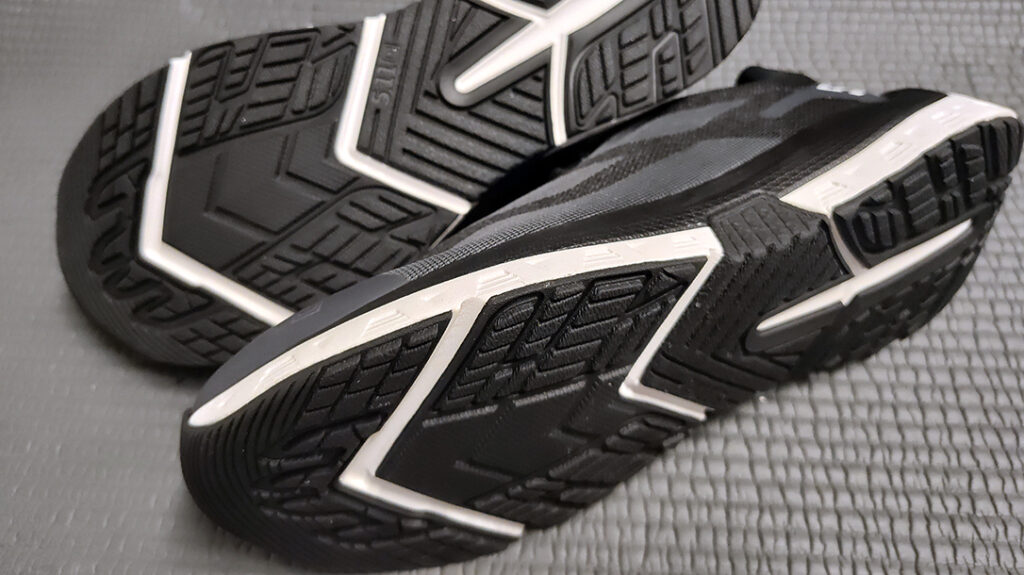
I find that you can never go wrong with wearing good sneakers at the gun range because these types of shoes are designed to be slip resistant, help support your feet and, more importantly, keep your feet fully covered. A sneaker I recommend from 5.11 Tactical is the PT-R Inure Runner. This shoe is extremely breathable to wear because it is engineered with mesh upper, which helps provide good blood circulation. Not to mention, this trainer shoe is also super comfortable to wear because the insole of the shoe is designed with INSITE Arch Relief that is made to help add extra support as you go about your day. There is also a TPU toe and heel overlay to aid in this sneaker’s durability.
These shoes have a CMEVA midsole, while the outsole of the shoe is made out of rubber, which ensures that these sneakers are slip resistant and can maintain a strong grip on different surfaces. You can choose this shoe in the colors Pacific Navy or Black/White. This trainer shoe also comes in sizes 4-15, and you have the option of choosing your width in either Regular-D or Wide-E.
Out of all the shoes I recommend, these sneakers were my favorite because they were easy to slip on and off and able to be worn for extended periods of time. While they are made for endurance training, these shoes will have no problem joining you on the range. I loved the colors, the sleek design and, more importantly, how they made me feel that I could accomplish anything when I had them on. The MSRP on the PT-R Inure Runner is $125.
5.11 A/T Women’s Ranger 2.0
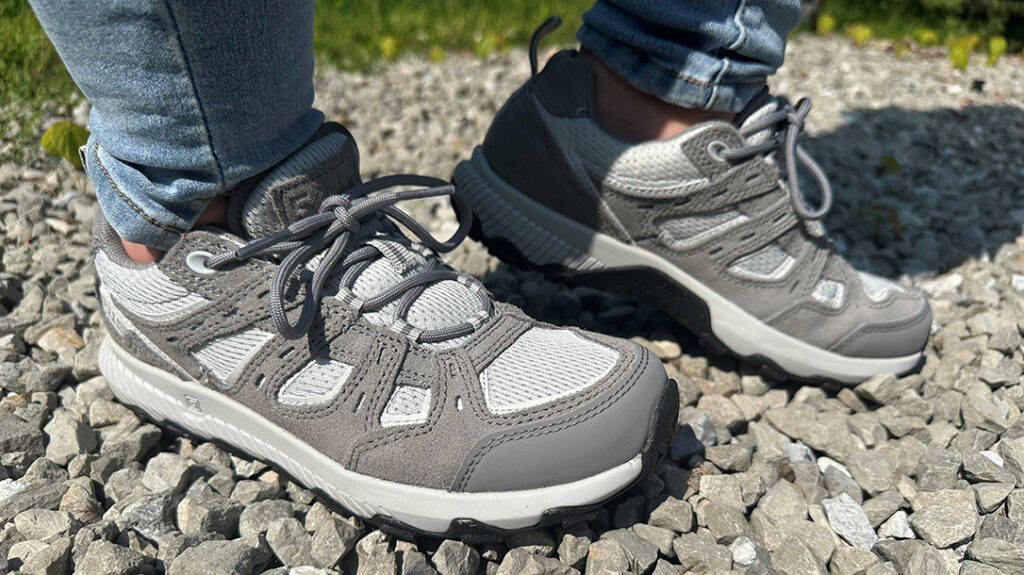
If you are looking for a sneaker that offers lots of support, I recommend the 5.11 A/T Women’s Ranger 2.0. This shoe comes equipped with anAll-Terrain Load Assistance System that is made to offer extra stability. They have a suede upper and a breathable mesh, which means these sneakers are great for people that are moving around a lot. For extra durability, these sneakers have a scratch rubber toe cap, and this feature makes these shoes a great option to wear to outdoor ranges.
The Ranger 2.0 has an Ortholite insole and Echo Lite high-rebound EVA midsole, which provides extra cushioning and support. As for the outsole, this sneaker has a multi-direction lug pattern. Lastly, for your convenience there is a removable support plate on the inside of the shoe. The Ranger 2.0 comes in sizes 6-10 and even includes half sizing. You can also choose your sneakers to be in the colors Volcanic or Pearl Grey.
I loved the design of the shoes, the support I gained when wearing them, and I loved that they kept my feet safe and protected at the range. The MSRP of the Ranger 2.0 is $110.
Women’s A.T.A.C. 2.06”
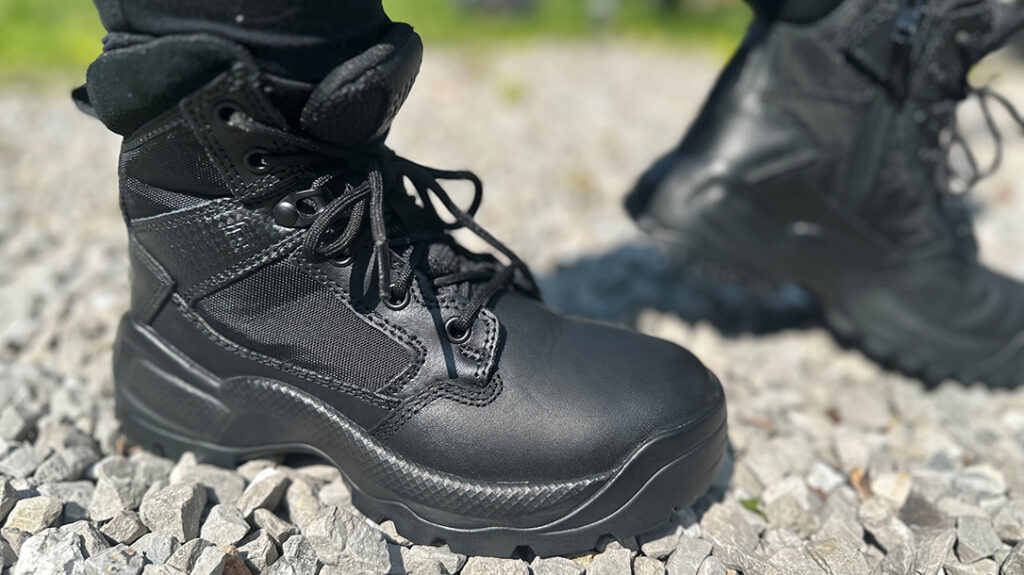
Now if sneakers are not a type of footwear you prefer to wear, boots are always a great option to look into, and the Women’s A.T.A.C. 2.06” are ones that I definitely recommend. These boots are made with an Ortholite footbed and a breathable tongue construction that ensures your feet stay cool and dry. They also have an Achilles heel flex that helps keep these shoes comfortable and flexible to wear. To add extra protection, these shoes have a Shock Mitigation System and are designed to last because they are made with a full grain leather toe. The upper on these boots are made out of 840D nylon, and the outsole on these boots are slip and oil resistant. As for sizing, they come in sizes 5-10 and unfortunately do not have half sizing.
Overall, these boots were breathable, easy to slip on and off and were extremely lightweight. These boots are great to wear outside, and I love that the black color can easily be paired with pretty much anything. The MSRP of the Women’s A.T.A.C. 2.06” is $110.
Closing Remarks
A good range shoe is one that does not make you choose between style and safety, but instead is one that allows fashion and function to coexist. Each shoe from 5.11 Tactical was comfortable to wear, made me feel confident wearing them, and allowed me to be range ready. I cannot recommend these shoes enough, and I cannot wait to wear them again. They are truly among the best women’s range shoes on the market. To check out the shoes I mentioned, please visit 511tactical.com.
A cow moose killed a 70-year-old amateur photographer who was trying to photograph the animal and its newborn twins near Homer, Alaska, on May 19.
Dale Chorman and a friend were searching for the moose on Chorman’s densely forested 3-acre property east of Homer when the moose burst from a thicket, prompting the men to turn and flee. The moose charged, kicking Chorman, according to an initial report of the incident by the Alaska Department of Public Safety, which dispatched State Troopers and Wildlife Troopers. Medics declared him dead at the scene.
“They both turned to run, and the friend looked back and saw Dale lying on the ground with the moose standing over him,” according to a later account shared with the Associated Press by Tom Kizzia, a Homer journalist and friend of Chorman’s. The second man, who was unharmed, did not witness the attack, leaving authorities unsure exactly how the moose killed Chorman.
“There was no evident trampling, and they didn’t see any signs of trauma later when they recovered his body,” Kizzia said. “I think the medical examiner’s going to try to figure out exactly what happened, whether it was just single blow in the terrible wrong place or something.”
While the general public considers moose less dangerous than bears, the reality is that more people in Alaska are injured each year by moose than by bears. Bull moose can be aggressive during the fall rut, and cows are particularly dangerous in late spring and early summer, warns the Alaska Department of Fish and Game’s fact sheet on living with moose: “If you see a calf on its own, be very careful because you may have walked between it and its mother—a very dangerous place to be.”
In a written statement shared by KTUU TV, Nathan Chorman said his father “died doing what he loved most” and noted that the experienced naturalist, wildlife guide, birder, and nature photographer was aware of the risks.
“Dale was highly experienced around wildlife. He was intimately familiar with nature, and had no naivete about its danger,” Nathan Chorman wrote. “This was not a hapless fool stumbling into danger—this was a person who went out looking for a great photo, knowing the risks, and got caught in a dangerous moment.”
Chorman noted that his father would not have wanted to the moose to be tracked down and destroyed, as some have apparently demanded. “The ungulate mother need not die. She was just protecting her offspring,” he wrote.
Reports of aggressive or unusual moose behavior are fielded by the ADFG, which decides how to proceed on a case-by-case basis. “In this case, we’re obviously very concerned about public safety,” Cyndi Wardlow, a regional supervisor in ADFG’s Department of Wildlife Conservation, told the Associated Press. “If there was an animal that was behaving in a way that continued to present a public safety threat, then we could possibly put that animal down but we’re not specifically pursuing that course.”
Backpacks are a dime a dozen these days, with a plethora of choices available from your local department store to an outdoor gear shop and, of course, online. However, not all are created equal by any means, and pertaining to reliable performance, comfort and efficiency, the pack thins out greatly. A new player in town is the 5.11 Cloudstryke 18L Backpack. This innovative pack was sent to me to test and review, and my time with this on-the-back storage unit was both eye-opening and a sheer pleasure.
First Impressions: 5.11 Cloudstryke 18L Backpack
Not your typical backpack, the Cloudstryke’s design punctuates with unique fronts straps featuring multiple pockets and storage areas. I found the design both ingenious and aesthetically pleasing. The pack’s streamlined, ultralight body became apparent upon pulling the this portable storage unit from the box. The lightweight feel could inspire questions of construction integrity sacrificed under heavy, uneven loads. But later testing would prove otherwise.
The backpack sported multiple pockets of varying sizes, along with a hydration compartment (for a 2 liter reservoir, sold separately), MOLLE attachment points, side compression straps and multiple external gear loops. Overall, the sage green and orange accented design had a true “earthy” feel and I quite liked it. The pack definitely perked my interest and I was ready to fill it up and strap it over my eagerly-awaiting shoulders.
Body Fusion
Like an all-around outdoor pack, the items I filled it with were varied in both weight and shapes, including items like clothing, flashlights, knives, a mini medical kit, and small packs of snacks and multiple water bottles. Surprisingly, this pack seemed to grow exponentially to meet my demands as I kept adding item after item. Its durable stitching and Honeycomb ripstop nylon material didn’t fail in the slightest under the pressure of its interior load. It could definitely take a day-trip’s worth of gear with room to spare. It was only when I swung the pack over my shoulders and it rested against my body did I truly grasp this backpack’s user-friendly design.
Even loaded, it hugged my back and felt a part of me, not cumbersome, awkward, or bulky in any way. The front strap pockets proved excellent for storing smaller items needed on the go. It presented the items easily accessible, even when while under motion on a brisk hike.
Final Thoughts
From my time with the Cloudstryke, it was clear that there was more to this backpack than originally met my eye. Its subtle design choices, strategically placed pockets, bottle holders, and mini gear compartments made this store-all unit one that was easily organized and practical when time is of the essence in the Great Outdoors. Its form-fitting feel was comfortable and practical when traveling over uneven terrain, thanks to its fully adjustable sternum straps, side compression system, and side straps. My final verdict on the Cloudstryke is that you need to add this to your outdoor collection today. No matter what packs you have, this one will always have a purpose for both urban and rural day excursions. The Cloudstryke’s subtle features, ultimate comfort and superior construction are what make the defining differences between just any ordinary, generic pack and this must-have, elite carrier.
We may earn revenue from the products available on this page and participate in affiliate programs. Learn more ›
Rarely does a day go by without me pulling one of my EDC knives out of my pocket. Maybe I need it to snip fishing line when I’m on the river. Maybe I need it to dress game while hunting or to prep dinner when I’m camping. Or maybe I just need it to open packages at my house. The point is, I use it often, and I’m just a guy who writes for a living. Farmers, ranchers, construction workers, and factory users will find even more uses for an everyday carry blade.
If you’re like me, odds are you’ve gone through a ton of cheap knives that keep breaking from excessive use. My dad used to do the same thing while installing commercial doors before he retired. Thus, finding a quality knife that will last an extended period is necessary.
With that in mind, I set out to test and see some of the best EDC knives available today. Whether you prefer fixed blades, folders, or multi-tools, there should be something here for everyone. We tried to find options covering a wide range of price points to fit every budget from top brands like Benchmade, Gerber, and Kershaw.
The Best EDC Knives
Best Overall
Specs
Steel Type: CPM-S30V stainless steel
Blade Length: 3.375 in.
Weight: 3.70 oz
Pros
Good scales
One-handed operation
Crisp components
Cons
Picking the best overall EDC knife was tough, and I labored over a ton of pocket knives in the decision. I wanted an option that was compact, light, and sharp. However, I also wanted an American-made option that wouldn’t break the bank. Ultimately, the Sedulo’s crisp operation and $129 price tag won me over.
The Gerber Gear Sedulo is just a solid all-around work knife, made with a high-quality CPM-S30V steel. I love the scales on this one. It’s got a more aggressive texture on the handle than some other knives. I have a perpetual case of butterfingers, and this knife always feels great. The pivot lock mechanism is nice and crisp, and I can easily open and close it with just one hand. I can even do it with my non-dominant left hand.
A close-up of the Gerber Gear Sedulo. (Photo/Travis Smola)
I used this tactical style knife extensively working on a van conversion and it handled every task I gave it with ease. The edge retention was better than I expected after ripping cardboard.
I only have one minor complaint: The tolerances are a little tight. It’s gotten better the more I’ve used the knife but don’t expect the blade to swing freely immediately after working the pivot lock. That’s not a dealbreaker for me personally, but I know some people like more play in their folders.
The Sedulo’s scaling provides an awesome grip. (Photo/Travis Smola)
Other than that, I feel the value is off the charts for this steel quality at this price point. Add in the fact that Gerber builds their knives here in the USA, and that feat is even more impressive.
Best Budget
Specs
Steel Type: 425 high carbon stainless steel
Blade Length: 3 in.
Weight: 3.2 oz
Pros
Versatile
Strong one-piece design
Made in the USA
Cons
Thanks to the one-piece design, this compact, drop point fixed blade has solid strength and a low profile. This knife conceals well for discreet carry in a horizontal aftermarket sheath. This option is excellent for messy environments because it has no intricate moving parts that can get jammed with debris.
A close-up of the Ka-Bar Wrench knife. (Photo/Travis Smola)
It’s also easy to clean, as I found out after using it to finish a field dressing job on a whitetail. Combine that with the easy-to-sharpen high carbon steel, and this is an easy knife to maintain. I know this knife looks strange, but it has proven to be highly capable for me.
While I love this knife, I’m not a huge fan of the included sheath. (Photo/Travis Smola)
I’m not a massive fan of the included sheath. I don’t think it’ll be durable in the long haul. However, it’s easy to find a better aftermarket replacement. Edge retention was solid during my cardboard tests. The MSRP is approximately $62, but this one is usually listed for less than $50. That’s an incredible price point for a fixed blade knife made in the United States.
Best Small
Specs
Steel Type: Various options
Blade Length: 2.89-3.37 in.
Weight: 2.3-4.9 oz
Pros
Lightweight
Easy locking mechanism
Variety of available steel types
Cons
K390 Steel variant requires extra maintenance
Spyderco makes several different variants of the Delica. The lightest is 2.3 ounces, making it easy to forget it’s in your pocket. Due to the hole in the blade, it’s easy to operate with one hand. This knife is available in multiple steel types like K390 and VG-10. There is something here for nearly every budget. Spyderco even makes a version layered with Damascus steel. The handles of these knives are also available in multiple colors and materials. The fiberglass reinforced nylon handles have a nice texture that’s easy to grip in wet conditions.
The blades’ full flat grind is appropriate for a range of EDC tasks. However, the K390 steel version will likely need more maintenance than the other options. Some users report that this version develops a patina over time. While some might like the look, others prefer as little maintenance as possible. Fortunately, Spyderco offers options.
Best Fixed Blade
Specs
Steel Type: CPM-S30V stainless steel
Blade Length: 3.38 in.
Weight: 6.45 oz
Pros
Incredible strength
Excellent edge retention
Good sheath
Cons
The original Bushcrafter was our pick for the most versatile bushcraft knife in the past. Thus, it’s unsurprising that we found a lot to like with this newer, downscaled version. Like the original, Benchmade used high-quality CPM-S30V stainless steel in the construction. It delivered exceptional edge retention during my tests.
A close-up of the Benchmade Mini Bushcrafter knife. (Photo/Travis Smola)
This is a beefy blade thanks to a 0.164” blade thickness. It gives the entire package exceptional strength through the full tang handle. I was never afraid to put some extra leverage on this blade. It effortlessly sliced cardboard during my tests while retaining an edge.
The beefy profile makes this knife easy and comfortable to hold. (Photo/Travis Smola)
This knife is slightly heavy for EDC at nearly seven ounces, another trade-off scenario for the extra strength and durability. I love the feel of this knife in the hand for more strenuous tasks. The G10 handle material has a solid feel. This knife is best for people who can wear it openly, mainly farmers, ranchers, and construction workers. As the name implies, it’s also a lighter option for bushcraft enthusiasts. It has a nice leather sheath for that task.
Best High End
Specs
Steel Type: CPM-MagnaCut
Blade Length: 3.88 in.
Weight: 4.23 oz
Pros
Good tolerances
Awesome edge retention
Great folding mechanisms
Cons
The Adira is a new addition to Benchmade’s lineup. It’s built specifically for use in and around water. The CPM-MagnaCut steel used here offers superb corrosion resistance, especially around saltwater. It also does an excellent job of holding an edge.
A close-up of the Benchmade Mini Adira knife. (Photo/Travis Smola)
It quickly passed my cardboard ripping test. I also used it extensively to cut zip ties and plastic split flex tubing while finishing the wiring on a trailer. When I tested it on braided fishing line, it made a perfect cut with no fraying. Through it all, it retained an incredibly sharp edge.
The jimping is one of the highlights of this knife for me. (Photo/Travis Smola)
The AXIS lock system is super smooth. I was able to open and close it quickly with just one hand. Some nice jimping on the top of the handle and blade provides solid control. This knife is expensive at over $200, but that’s to be expected with the quality of the steel. The tolerances on this knife are also excellent. When locked into place, the blade has no play, but it still swings freely on gravity alone.
Best Swiss Army Knife
Specs
Steel Type: X55CrMo14 steel
Blade Length: 3.6 in.
Weight: 3.5 oz
Pros
Practical tools
Good features without being heavy
Solid price point
Cons
Tight tolerances, takes a while to break in
I ranked the Fieldmaster as the best Swiss Army knife in a previous article. More than six months later, it remains my top pick. I’ve used almost every tool at least once since that first article was written. It’s amazing how handy this thing is in a pinch. I’ve ripped cardboard, snipped fishing lines, assembled an electric bike, and more with mine. The X55CrMo14 steel isn’t exactly high-grade; it’s soft Martensitic steel. However, it holds an edge surprisingly well. I haven’t had to sharpen it once since I got it.
A close-up of the Victorinox Fieldmaster. (Photo/Travis Smola)
Perhaps most surprising here is the sub-$60 price point. Given all the punishment I’ve put it through in under a year, this knife is a bargain. I sometimes prefer it over my more expensive blades. That’s not just because it would be cheap to replace but because of its versatility.
This knife is the rare multi-tool where I’ve found a use for everything. (Photo/Travis Smola)
The only downside to this knife is that the tolerances were too tight out of the box. I think it will vary from knife to knife. It took a while for some of the tools to break in properly. If gifting one of these to a youngster for a first knife, work the blades and tools to break it in first. It will make it easier for them to use.
Best Folding
Specs
Steel Type: M390 D2 steel
Blade Length: 3.4 in.
Weight: 2.8 oz
Pros
Smooth locking mechanisms
Lightweight
Sharp out of the box
Cons
Thinner profile and blade
Made in China
Kershaw makes some great-looking lightweight knives that won’t break the bank. The Iridium is a solid folder with one of the smoothest mechanisms in this price range. It’s another handy knife that can be opened with one hand in a pinch. Thanks to its lighter weight, it quickly disappears into a pocket until needed. There are a few variants that all fall into the roughly $60 price range. Sometimes, it’s possible to find them lower during sales. The carbon fiber handle arguably has the best feel and usually costs a little more. Kershaw offers these blades in spear points and a Tanto for anyone wanting piercing power.
While Kershaw knives are designed in the USA, they are made in China. I don’t think that’s a huge deal. Their knives are among the better ones being made overseas available today. These knives do have a thinner profile and blade, making them easier to carry. However, this comes at some cost of strength. We love the look of this knife, though. It’s a solid option for anyone who breaks or loses a lot of knives because it’s easy to replace.
Best Looking
Specs
Steel Type: CPM-20 CV
Blade Length: 3.4 in.
Weight: 3.3 oz
Pros
Great looks
Good edge retention
Lightweight
Cons
The Longhouse is a newer addition to Case’s lineup. I love the look of the rosewood handles and stonewash satin finish. Even when brand new, it manages to look like something my grandfather would have carried. Case managed to keep the weight down to just 3.3 ounces, making this knife a breeze to carry.
A close-up of the Case Knives Smooth Rosewood Longhouse. (Photo/Travis Smola)
The CPM-20 CV steel was razor sharp from the moment I took this one out of the box. It sliced cardboard and braided fishing line like butter. The tolerances here were solid when new. I noticed zero play in the blade while cutting, and it swung freely on gravity during my test. The liner locking system was crisp and smooth every time.
The lack of a nail nick is an odd choice, but the knife looks great. (Photo/Travis Smola)
There is a little bit of jimping on the back of the blade to help with opening. However, it’s most puzzling that Case didn’t put a nail nick on this blade. I did have a little trouble opening the blade a few times without one. I also think it would have helped with the old school aesthetics. Still, this is a beautiful knife that’s perfect for anyone who wants a modified clip point with a classic look.
How We Tested EDC Knives
I’ve owned most of the knives chosen here for a while and have thoroughly put them through their paces. Some of them I’ve owned for years already. I tested each knife for edge retention by ripping cardboard. I do this because cardboard comprises highly abrasive materials that quickly dull poor-quality blades. I also tested the blades on a variety of materials including braided fishing line, plastics, paracord, tape, wood, and wire. I even used a few for field dressing animals while hunting.
Through it all, I looked for the following:
Edge Retention: How long does the knife cut well before it starts to dull? Is it easy to sharpen?
Tolerances: Are the folding mechanisms and buttons tight? How freely do the blades move? Does the blade wiggle or move at any point while cutting?
Weight: Is the knife light enough to carry comfortably all day?
Grips and Handles: Are the stock components comfortable in the hand? Do they slip or slide if my hands are wet?
EDC Knives Buying Guide
When picking the right knife for you, it’ll depend on what you plan to use it for. Fixed-blade knives will likely be more helpful to farmers and ranchers who need a lot of strength and leverage. They are excellent for wood splitting, fence mending, and carving. Folding knives are better suited for factory workers who must rip boxes and cut plastic bands and zip ties. Here are some other considerations:
Steel Quality
Buying the highest quality steel you can afford is a good idea. Most of the cheaper knives use steels like Chinese-made 8Cr13MoV, which is soft and easy to re-sharpen. It also offers excellent corrosion resistance. However, it’s also more prone to breakage, and the edge retention qualities aren’t great.
CPM D2 steel is a good option for users who want toughness. This steel offers excellent edge retention and strength. The downside is that sharpening is difficult.
Other high-grade options include CPM S30V steel, which offers good edge retention and resistance to rusting. Once again, the downside is that it’s difficult to sharpen. It also usually comes at a premium price point in the $250-$300 range. It’s a similar story for CPM-MagnaCut, a steel quickly gaining momentum with EDC enthusiasts.
With almost any steel, there will be give-and-take with its qualities. Dockworkers and ship hands who work around water all day would be wise to choose corrosion-resistant steel like the CPM-MagnaCut, while a factory worker who slices cardboard all day might want something easy to sharpen like the 8Cr13MoV. If you’re interested in food prep, you might want to look at 420 stainless steel.
Folding vs. Fixed Blade
Most people prefer a folding blade knife because it’s the easiest to carry in a pocket. Knives made for everyday carry often include a pocket clip to facilitate this even more. For most average users, a folding knife will suffice.
Fixed blades are best for those who need a lot of strength for more strenuous tasks. They’re also advantageous over folders in dusty, wet, and dirty environments because the design has no locking mechanisms or other moving parts that could get clogged with debris.
Blade Length and Weight
Striking a balance between blade size and weight can be a challenge. Go too large, and the blade becomes too heavy. But go too small and the blade won’t be large enough for most EDC tasks. Most people will find anywhere from 2 to 4 inches to be the sweet spot. I like a blade around 3 inches. Anything longer than 4 inches starts to get heavy and can even run into legal issues while carrying in some states.
As for weight, I recommend anything between 2 to 5 ounces. You can find heavier knives up to 7 ounces that are still manageable.
Blade Type
The two main blade types for EDC are drop points and clip points. Clip points are thinner and have a smaller point, which is great for wood carving and precision work. They also puncture efficiently. Unfortunately, they lack strength. My dad used to carry clip points all the time for his commercial door work. He almost always ended up breaking the tip off of those blades.
Drop points are thicker, thus offering much more strength. The blade’s deeper profile is excellent for field dressing and skinning work. I like the drop points for ripping cardboard. The thicker blades are easier to control through such an abrasive substance.
FAQs
Q: What size knife is best for EDC?
This depends on each person’s personal preferences. I like blades in the 2.5- to 3-inch range. Some people prefer a blade of 4 inches. Anything larger than that tends to be too much for EDC purposes as it’s challenging to carry all day.
Q: What type of blade is best for everyday carry?
A drop point or clip point blade is usually ideal. Use a drop point for more demanding tasks where strength is needed. A clip point is sharper and thus better for fine work and wood carving.
Q: What size knife is legal to carry?
It varies from state to state based on their laws. Some states have no restrictions, while others place a 3.5- to 5-inch limit on fixed-blade knives. Limits are often further broken down by the type of knife. For instance, California defines switchblades over 2 inches as illegal. However, Texas does not restrict blades unless they are 5.5 inches or more. Usually, a knife up to 3 inches is safe for carrying, but check your state’s restrictions.
Why Trust Us
For more than 125 years, Field & Stream has been providing readers with honest and authentic coverage of outdoor gear. Our writers and editors eat, sleep, and breathe the outdoors, and that passion comes through in our product reviews. You can count on F&S to keep you up to date on the best new gear. And when we write about a product—whether it’s a bass lure or a backpack—we cover the good and the bad, so you know exactly what to expect before you decide to make a purchase.