Home Blog Page 14

The Best Axes for Splitting Wood of 2024, Tested and Reviewed

0

We may earn revenue from the products available on this page and participate in affiliate programs. Learn more ›

Splitting wood for the coming winter isn’t just great exercise. It can be a time for reflection and even meditation. There is something deeply satisfying in seeing the pile of split wood grow larger as you work throughout the year, and in knowing that you’re getting better prepared for the cold months ahead.

That said, your enjoyment of the chore will be dramatically affected by the tools you choose. If your axe isn’t well-suited for the task at hand, you’ll struggle to make any progress and begin to dread heading to the woodpile. Even worse, you could end up ill-prepared once the snow starts to fly because you weren’t able to work efficiently.

But the right axe for splitting wood can prevent all of that. One with a comfortable and ergonomic handle, heavy head, and sharp blade will make the job much more efficient and enjoyable. But how do you know what axes are suited for splitting wood? Don’t worry. We rounded up the best of the best so you can find the right axe for splitting wood and other tasks you may encounter.

How We Picked the Best Axes for Splitting Wood

Growing up in Wisconsin, the cold winters test your resiliency. And when the mercury plummets below zero, keeping your home warm can be challenging. So, when I bought a house nearly 30 years ago, a wood burning stove was a must. We have a gas furnace, but the stove kicks out an amazing amount of heat, allowing us to dial the thermostat down even during bitter-cold spells and save a little money. However, this all hinges on having enough split wood to last through the winter, which means many hours spent swinging an axe in the backyard.

Over the last three decades, I’ve owned and tested numerous axes—many of which are listed below. I learned along the way what works and what doesn’t. I like a traditional wooden handle, a heavy head, and a durable leather sheath. Those are the basic requirements for any axe I use to split wood. Of course, there are other handle materials, blade sizes, build differences, and small features that can be useful. But after hundreds of hours splitting wood over the years, I always go back to my hickory handle and heavy blade.

I included other recommendations for different scenarios and pursuits, like axes for camping, budget-friendly choices, hatchets, and lightweight models. Each axe featured here was chosen because they get the job done, pure and simple. I know because I’ve used them. And after years spent in the yard swinging an axe, this is what I recommend.

Image by Karsten Paulick from Pixabay

Best Axes for Splitting Wood: Reviews and Recommendations

Best Overall: Gränsfors Bruk Large Splitting Axe
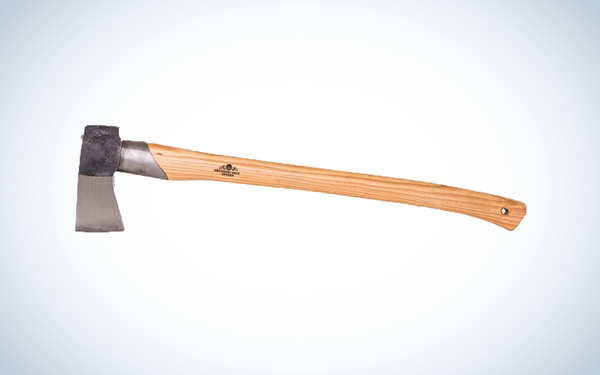
Gransfors Bruk Large Splitting Axe

Specs

  • Weight: 5.3 pounds
  • Length: 27.56 inches
  • Cutting edge: 3.0 inches

Pros

  • Durable and comfortable in the hand
  • Steel collar protects handle from accidental impacts
  • Wood handle is easy to replace if needed
  • Well-known company with a solid reputation

Cons

Gränsfors Bruk has been making axes for over 100 years, and in that time, they’ve developed an absolutely stellar reputation for quality. Every axe is designed for real world use and handmade to exacting specifications. The Large Splitting Axe has a forged head that bears a very thin, sharp concave edge. It bites deep and quickly separates the wood fibers. The wooden handle is strong and absorbs shocks fairly well. There’s a steel collar just behind the head to protect the handle from accidental misses, adding to the overall durability of the axe. And while this is the most expensive axe on the list, it will last season after season, no questions asked. It also comes with a handsome leather sheath to complete the package.

Best Budget: Eletorot Camping Hatchet
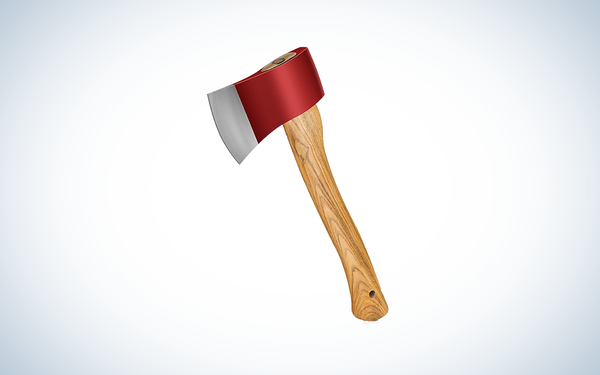
Eletorot Camping Hatchet

Specs

  • Weight: 1.76 pounds
  • Length: 14.5 inches
  • Cutting edge: 3.3 inches

Pros 

  • Compact at just 14 inches long
  • Easy to store
  • Can also be used for clearing trails and similar chores
  • The hickory handle is ergonomic and comfortable

Cons

  • Will need to be sharpened before using it for the first time

A small hand axe or hatchet like this isn’t an ideal tool for splitting wood. But not everyone can drop a hundred bucks on a good axe, so compromises need to be made. This one will do the job, and do it surprisingly well for its size. It is well-balanced and easy to use. The downside is that it isn’t large enough to handle heavy-duty tasks. Think more along the lines of splitting kindling than large logs.

Eletorot lists this as a “camping hatchet,” and that is an accurate description. The compact size and lightweight design make this an ideal tool to have at camp for splitting small pieces of wood and kindling, hammering in stakes, cutting rope, or any other camp tasks. It is also the perfect size to keep in your truck for emergency situations.

Best for Camping: Estwing Fireside Friend Axe
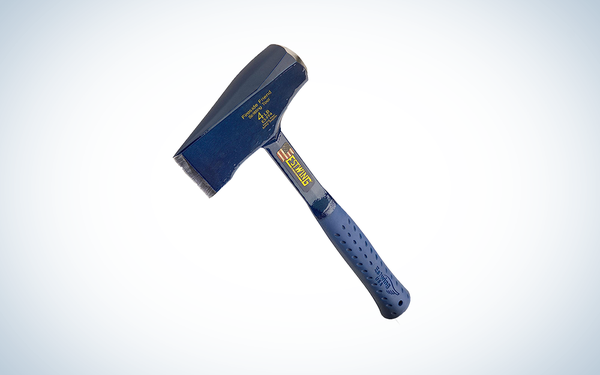
ESTWING Fireside Friend Axe

Specs

  • Weight: 7.05 ounces
  • Length: 14.25 inches
  • Cutting edge: 2.375 inches

Pros

  • Durable one-piece construction
  • Includes a ballistic nylon sheath to protect the edge
  • The grip is made from hand-sanded genuine leather

Cons

  • A little top-heavy and awkward until you’re used to it

Estwing is known for producing quality hand tools, and this is no exception. The Fireside Friend Axe is made from a solid piece of steel, resulting in incredible durability. It’s shaped sort of like a miniature splitting maul, and it will get the job done without taking up too much space. They also added a leather grip for comfort. In fact, this grip will absorb a significant amount of impact shock as you work, leaving you less tired after the job is done.

The wedge-shaped head is weighted, so it will lend extra power to each swing, despite its small size. It is just over 14 inches long and will fit into virtually any camping pack. It is also just long enough to use with either a one- or two-handed grip.

Best Multipurpose: Cold Steel Trail Boss Axe
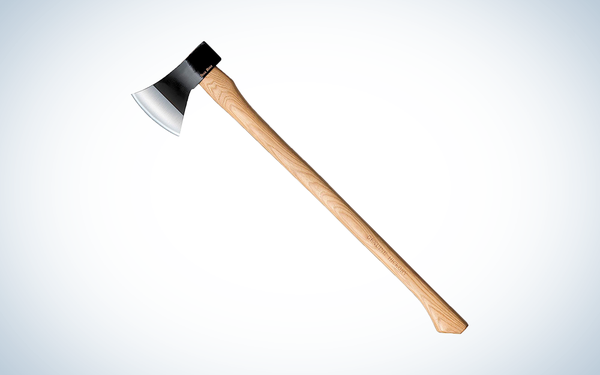
Cold Steel Trail Boss Axe

Specs

  • Weight: 2.59 pounds
  • Length: 27.0 inches
  • Cutting edge: 4.5 inches

Pros 

  • Large 4.5-inch cutting edge
  • Straight-grained American Hickory handle
  • Total weight is less than three pounds

Cons

  • Carbon steel head can be prone to rusting if neglected

While splitting wood is one of the primary uses of an axe, sometimes you want something that will do more, so as to reduce the number of tools you need to bring. This axe from Cold Steel works great for splitting as well as for chopping kindling, clearing storm debris, and even felling trees in a pinch. Its straight handle is made from American Hickory, so you know it’ll last a long time. The drop-forged 1055 steel head has a generous 4.5-inch cutting blade that makes splitting wood a breeze. From end to end, this axe stretches 27 inches, so it’ll be long enough to tackle any chore without being a burden to bring along or mount in the bed of your truck.

Best for Safety: Kindling Cracker XL
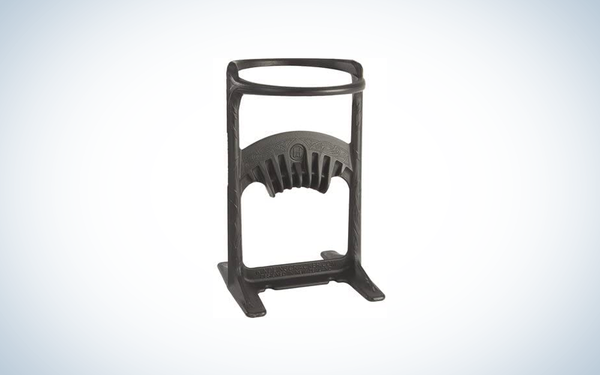
Kindling Cracker XL King Firewood Splitter

Specs

  • Weight: 21.3 pounds
  • Length: 17.0 inches
  • Cutting edge: 9.0 inches

Pros 

  • Safest option on the market for splitting wood
  • The feet can be bolted to a work surface for increased stability
  • Can be used indoors or outdoors

Cons

  • Hard to sharpen, if needed

Okay, this one isn’t really an axe, but it is absolutely the safest way to split wood. The process is simple and effective. Place the wood into the ring, then use a sledge or mallet to drive the wood down into the wedge. At no time are you swinging any sharpened edge anywhere, so there’s little risk of injury.

Its 9-inch diameter ring and 17-inch height allow you to process large pieces of wood quickly, getting the job done sooner so you can get back to doing the fun stuff. Cast iron construction means this handy tool is virtually maintenance-free, too. You can even mount it to a work surface for absolute stability, which will also improve the safety and effectiveness of the Cracker XL.

Best Lightweight: Fiskars Norden N10
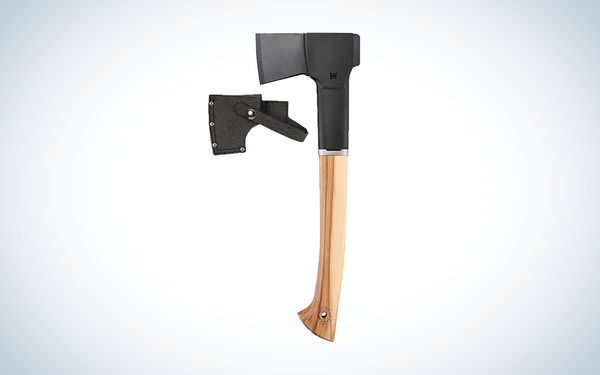
Fiskars Norden N10

Specs

  • Weight: 1.85 pounds
  • Length: 17.0 inches
  • Cutting edge: 2.87 inches

Pros

  • All Fiskars axes come with a lifetime warranty
  • A sheath made from recycled leather is provided
  • The carbon steel head isn’t hard to sharpen in the field

Cons

  • Not made to handle large logs or rounds

A lightweight splitting axe is something of a misnomer because you usually want some weight behind the swing to effectively split the wood. That said, there’s weight, and there’s weight. The heavier the axe is, the harder you’ll end up working to swing it over and over. The Norden N10 hits a nice middle ground where it is robust enough to do the work without being so heavy that you’ll tire easily.

The hickory handle has a FiberComp overlay collar to provide protection against damage from overstrikes. It is 17 inches long, giving you plenty of reach. It is also a good option for someone looking to toss it in their pack, only weighing 1.85 pounds.

Best Small: Fiskars X11
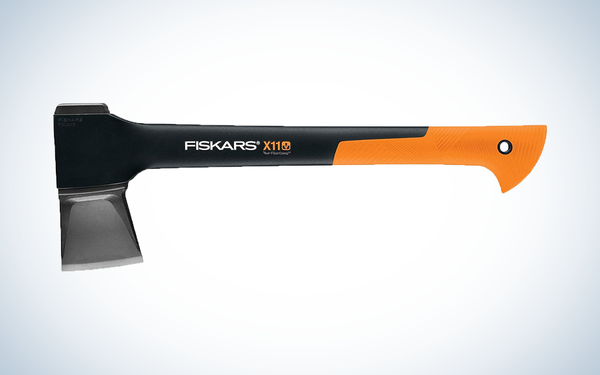
Fiskars 378561-1004 X11 Splitting Axe

Specs

  • Weight: 2.18 pounds
  • Length: 17.0 inches
  • Cutting edge: 2.5 inches (approx.)

Pros 

  • Short, so it won’t take up too much pack space
  • Textured, non-slip grip for safety as well as comfort
  • Designed for one-hand use

Cons

  • Not large enough for heavy-duty use

You don’t want to be weighed down by a ton of gear on a camping trip. And while you can probably make do when it comes to firewood for a day or two by scrounging sticks together, you’ll want a reliable firewood processing tool for longer stays. Sure, you could use your knife to baton firewood into size, but that’s not the best option. That’s where the Fiskars X11 comes into play. At just a bit more than two pounds, it is easy to pack and carry, even on lengthy treks into the wilderness.

The X11 has a low-friction coating on the wedge-shaped head, allowing it to easily slide through the wood it splits. The FiberComp handle is virtually impossible to break, and thus rather forgiving to the budding lumberjack. It also features an optimized power-to-weight ratio, increasing your swing speed effortlessly.

Best Large: Fiskars X27 Super Splitting Axe
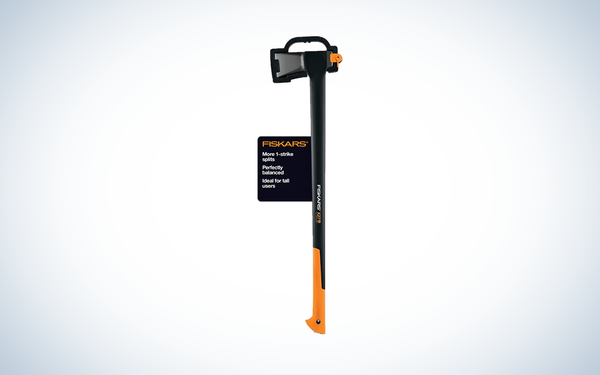
X27 axe

Specs

  • Weight: 5.85 pounds
  • Length: 36.0 inches
  • Cutting edge: N/A

Pros

  • Shock-absorbing handle has a textured, non-slip grip
  • A full 36-inch length makes it perfect for tall users
  • Great value

Cons

  • Might be a bit too much axe for some people

This axe is a monster, but handles like a dream. It is designed for splitting medium and large logs and will do so with one strike quite often. The advanced bevel convex design of the head means efficient splitting as well as easy removal from the wood. On top of that, the handle absorbs shocks with every swing. The overall length is three feet, and it weighs in at 5.58 pounds. This is no backpacker’s axe. It is made for home or worksite use. A sheath is included, and the axe is covered by a lifetime warranty.

axe in stump
The right-sized axe can make slitting wood much easier. Image by Helge Ely from Pixabay

Things to Consider Before Buying an Axe

Axes come in a variety of shapes and sizes. Some are designed for strictly splitting big logs, some are made to carry with you camping, and others offer more versatility. We took into account the purpose of each axe and the different scenarios you might find yourself splitting wood. But remember to also consider these factors before buying your next axe.

Handle and Head

Handle material is important. Personally, I prefer a wooden handle, preferably American Hickory. Admittedly, there’s something to be said for a composite handle, but wood is traditional as well as comfortable.

How well an axe head works is due to a few factors. The shape is certainly a consideration, which would include how keen the edge is on the blade. The sharper it is, the easier your job will be. The slope or angle of the cheeks, which are the sides of the axe head, will also impact this to some degree. You want them to quickly slide the wood apart once the edge digs into the material.

Weight

The heads of the axes above tend to be on the heavy side, with a weight averaging between three and six pounds. Splitting wood requires a fair bit of force, and the lighter the axe is, the more effort you’ll need to exert to move the axe head through the material. A heavier axe head requires less of your energy to split the wood, but if it is too heavy to lift and swing comfortably, it can be dangerous. You need to find a balance between an axe that’s heavy enough to do the work while not being so heavy that you can’t control it.

Blade Materials

The steel used is also important. Some sort of carbon steel is common, as you can sharpen it easily in the field, and it will keep that edge for a while. The last thing you want is to touch up the blade after every couple of swings. However, carbon steel does tend to rust if it isn’t cared for properly, so regular maintenance is required.

FAQs

Q: Is a dull axe better for splitting wood?

President Abraham Lincoln famously said, “Give me six hours to chop down a tree and I will spend the first four sharpening the axe.” With any sort of cutting task, the sharper the tool, the easier the work. Not only that, but a sharp tool is safer to use. If the axe is dull, you’ll need to exert more force to move it through the wood, which increases the likelihood of a slip and an accident. Fortunately, sharpening an axe isn’t difficult, though it does take some practice.

Q: What is the best axe length?

Here’s how to determine the best axe length for your body. Hold the axe in your dominant hand, gripping it just behind the head, and extend your arm straight in front of you. Rotate the handle up, toward your body. An axe of the proper length will have the handle just reach your armpit.

Q: How long should you wait to split wood?

Wood can and should be split soon after it has been cut to length. Green wood is easier to split than seasoned. Plus, split wood will dry and season quicker than full pieces. It could take upwards of a year for whole pieces to fully dry, whereas splitting the wood can cut that time in half.

Best Axes for Splitting Wood: Final Thoughts

Like any other tool, a splitting axe is designed for a specific purpose. It is not recommended that you use one as a wedge, or for striking a wedge, for that matter. It isn’t a splitting maul, though some models might bear a passing resemblance to one. For those unfamiliar with the differences between an axe and a maul, the former has a sharp edge that will bite deeply into the wood, whereas the latter is heavier and relies more on brute strength to power through the wood.

The splitting axe is also more than a bit different than the venerable tomahawk. While the ‘hawk will do fine with smaller, thinner bits of wood, you’ll struggle to split anything of medium or large size.  

Use a splitting axe to process firewood by splitting pieces along the grain. Trying to split wood across the grain is a losing proposition. Any of the axes featured here will do the job efficiently, allowing you to move on to other chores that need attention before winter hits.

Why Trust Us

For more than 125 years, Field & Stream has been providing readers with honest and authentic coverage of outdoor gear. Our writers and editors eat, sleep, and breathe the outdoors, and that passion comes through in our product reviews. You can count on F&S to keep you up to date on the best new gear. And when we write about a product—whether it’s a bass lure or a backpack—we cover the good and the bad, so you know exactly what to expect before you decide to make a purchase.

The Best EDC Flashlights of 2024, Tested and Reviewed

0

We may earn revenue from the products available on this page and participate in affiliate programs. Learn more ›

I’ll admit, I wasn’t always a flashlight guy. For years, I heard people talk about this light or that light for everyday carry. I didn’t understand the point. Unless you had a job that required you to work in the dark, why bother carrying a flashlight everywhere?

Then a buddy of mine convinced me to give it a try. I was shocked at how many times I reached for that light in my pocket. In just that first week, I used it for everything from spotting the dog’s toy after she rolled it under the couch to lighting up dark hallways during work as a private investigator.

I’ve carried an EDC flashlight ever since. Today, they are second only to knives in terms of the number of models and brands that I’ve owned. All three of my sons have been gifted pocket flashlights, and my wife has a couple as well. After years of using, testing, and gifting a number of different lights, I’ve become fond of a few particular models.

That’s what this list is—a full guide to the best EDC flashlights you can buy for a number of different tasks and purposes.

How We Picked the Best EDC Flashlights

Over the last decade, I’ve tested out numerous EDC flashlights. Some were great, and others ended up in the junk drawer. The most common failings of poor lights are a weak battery and poor lumen output. Naturally, those two categories ended up being the most important factors in my testing. I chose lights that have long battery lifespans, strong lumens, and a compact design. I also took into account the durability of each light, user-friendliness, and any included accessories to make my picks.

How did I test them? I’ve been carrying some of these lights for almost ten years. I know they work because I carry them, use them, and gift them to family and friends. They are trusted lights that can help around the house, at work, or out in the field.

The author’s everyday carry setup. Jim Cobb

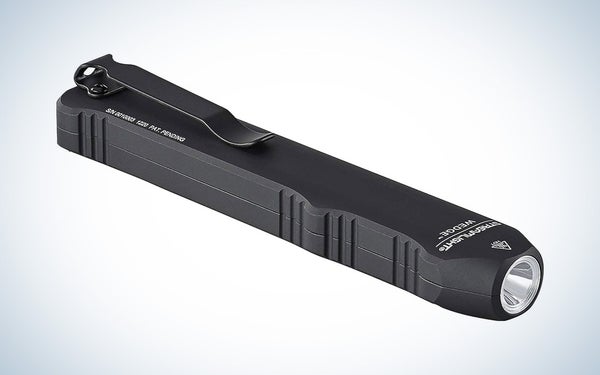
Best Overall: Streamlight Wedge

Best Overall

Specs

  • Length: 5.46 inches
  • Weight: 3.3 ounces
  • Max output: 300 lumens, with a temporary burst of 1,000 lumens

Pros

  • The shape makes it easy to grip
  • Rugged anodized aluminum construction, so it’s built to last
  • Each Wedge is serialized for positive identification

Cons

  • Only two illumination levels: 300 lumens or 1,000 lumens

The Wedge is unique among its peers due to its flat, rather than round, shape. This low profile means it slides in and out of your pocket easily—minimizing bulkiness. Rotate the power switch and it will throw a 300-lumen beam, but push the switch forward a bit more, and you’ll hit THRO (Temporarily Heightened Regulated Output) mode with 1,000 lumens lighting your way.

The pocket clip is reversible to make it easy to adjust between right- and left-handed carry. You can also remove it entirely for a more streamlined look. The Wedge is waterproof and is rechargeable via USB-C. If you were to turn it on and leave it be, the battery will last about three hours.

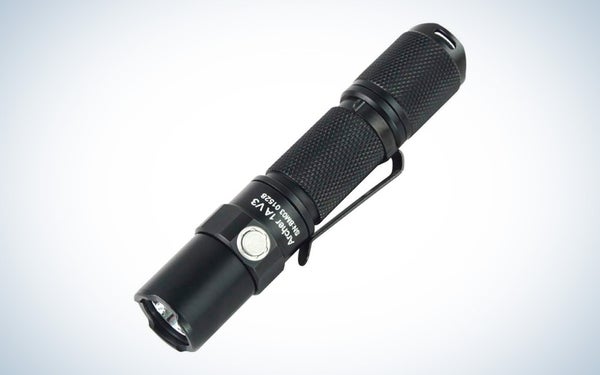
Best Pocket: Thrunite Archer 1A V3

Best Pocket

Specs

  • Length: 4.3 inches
  • Weight: 2.5 ounces
  • Max output: 200 lumens

Pros

  • Several light modes so you aren’t locked into one choice
  • Knurled surface provides a positive grip in challenging conditions
  • Tail cap switch can be pressed just halfway for a quick flash

Cons

  • Only 180 lumens at the highest setting

I’ve owned this light for several years, and it has never let me down. It has a tail switch for on/off, but the illumination settings are toggled by a side switch. The entire operation is very intuitive and easy to use, even if you’re rushed or under stress. It has four levels of illumination, ranging from 180 lumens on high to 0.055 lumens on firefly. It also has a strobe mode for emergency signaling or perhaps disorienting an aggressor.

At just a bit over four inches long, it fits in the pocket nicely without feeling like a boat anchor. The clip can be used to keep it in place, or you can easily just snap it off entirely. Pro tip: That clip will also keep the light from rolling off a work surface, should you need to set it down.

Best Tactical: Fenix PD35

Best Tactical

Specs

  • Length: 5.28 inches
  • Weight: 2.95 ounces
  • Max output: 1,700 lumens

Pros

  • Comes with a handy belt pouch
  • The crenelated head can be used as an impact weapon for self-defense
  • Lightweight (just under three ounces)

Cons

  • At over five inches long, it is a bit large for EDC

If you need something that can take a beating as well as turn night into day, look no further. The PD35 from Fenix puts out a whopping 1,700 lumens on high, with a range of about 390 yards. It is built with high-strength aluminum and HAII anodized finish for toughness and reliability. It is also rated for impact resistance up to one meter.

A tail switch turns the light on/off, and a metal side switch controls the settings. There are five lighting levels available. Turbo mode gets you 1,700 lumens, and you can dial it all the way back to Eco mode with just 5 lumens. A bidirectional clip gives you options for where you can secure the light as you move.

Best Rechargeable: Streamlight ProTac 2.0

Best Rechargeable

Specs

  • Length: 6.1 inches
  • Weight: 8.25 ounces
  • Max output: 2,000 lumens

Pros

  • The 2,000-lumen setting is extremely bright for an EDC flashlight
  • The construction is dust-tight and water-resistant
  • It has a holster, so you can wear it on your belt instead of keeping it in your pocket

Cons

  • Weighs just over 8 ounces, making it a fairly heavy EDC option

This rechargeable light is one of the brightest on our list, with 2,000 lumens on the high setting. It runs on an SL-B50 battery pack, which is included. What’s nice is that you can recharge it inside or outside the light, as there is a sliding cover for a USB-C port a bit behind the head of the light. It also features Streamlight’s TEN-TAP programming, so you can customize the settings and really make the flashlight work for you. It comes with a nylon holster, a 22-inch power cord, and a removable pocket clip.

Best AA: Skilhunt M150 V3

Best AA

Specs

  • Length: 3.3 inches
  • Weight: 1.2 ounces 
  • Max output: 750 lumens

Pros

  • Tail switch magnet makes it easy to use hands-free
  • Comes with spare O-rings, should you lose one
  • Charges magnetically with the correct battery

Cons

  • The available lumens vary quite a bit with different types of batteries

One of the neatest things about this light is the magnetic tail. This makes it easy to position the light when you need both hands free for working under the hood of the truck. That same magnet also provides magnetic charging, if you’re using the proper type of battery. There is also an attachment point for a thin lanyard, should you wish to add one. 

The M150 can use four different kinds of batteries—alkaline AA, Ni-MH AA, 1.5V Lithium, or 3.7V Li-ion 14500. This gives you plenty of power options. It has five light levels, but those levels change based on which type of battery is used. With the 14500 Li-ion, you’ll have 750 lumens at your fingertips. But if you’re using a Ni-MH AA, then you’ll only have 240 lumens at the highest setting.

Best Under $50: Streamlight MicroStream

Best Under $50

Specs

  • Length: 3.87 inches
  • Weight: 1.2 ounces
  • Max output: 250 lumens

Pros

  • Has an unbreakable, scratch-resistant polycarbonate lens
  • A combination pocket/hat clip keeps the light in place
  • Weighs less than two ounces with the battery

Cons

  • Wall adapter for charging is sold separately

There are a lot of cheap flashlights on the market, but this one punches well above its price point. The MicroStream is particularly well-suited for EDC, given its slim profile and compact design. It will easily fit in the palm of your hand with plenty of room to spare. It has two settings, with 250 lumens on high and 50 lumens on low. The tail switch controls everything. Hit it once to turn it on and double-bump it to cycle between settings.

The white C4 LED is clean and bright on either power setting. It is rechargeable via a mini-USB port found by sliding a sleeve at the lens end of the light. While charging is easy enough to do, the average user will go a week or two, probably more, between charges.

Best 1000 Lumen: Fenix UC35 V2.0

Best 1000 Lumen

Specs

  • Length: 5.5 inches
  • Weight: 3.13 ounces
  • Max output: 1,000 lumens

Pros

  • Boot up power indicator lets you know right away where you stand
  • Has five lighting modes, plus a strobe
  • The light’s range is nearly three football fields long

Cons

  • Some users don’t care for dual-switch operation

This is the improved version of the original UC35, and they’ve increased the lumens to 1,000 and the throw to almost 300 yards. While that’s a lot of light, just as nifty is the Moonlight mode that puts out just a single lumen. That’s perfect for checking a map at night without blinding you. The UC35 is ruggedly built from aircraft aluminum and is designed for real world use and abuse. This is a dual-switch light, with a power on/off at the tail and a side switch to change settings. It charges via a micro-USB port on the side of the frame.

Best Brass: Prometheus Beta QRV2 Classic

Best Brass

Specs

  • Length: 2.95 inches
  • Weight: 2.0 ounces
  • Max output: 90 lumens

Pros

  • Quick-release keychain means you can carry it everywhere you go
  • The brass exterior is exceptionally handsome
  • High CRI bulb allows natural colors to shine through

Cons

  • Only 90 lumens on the highest setting

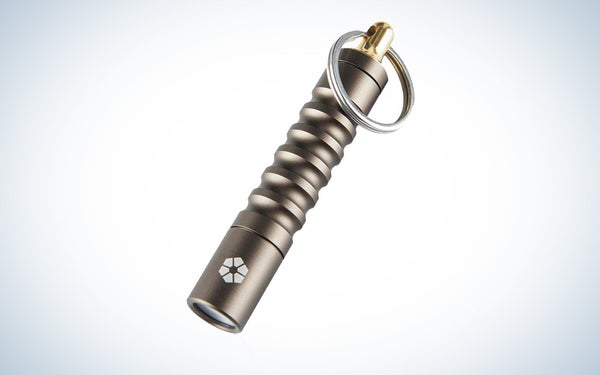
This is the only true keychain flashlight on our list. It is designed with a quick-release feature, so it can easily pop off a keychain for use, and then clipped back on. Power is turned on and off by simply twisting the light. It has three modes: 90 lumens, 15 lumens, and 1 lumen. The modes are changed by quickly turning the light off and back on.

This is the first production light in the EDC light industry to come with a High CRI LED bulb. This means the colors seen using the light are very natural, rather than clouded by the light source. An excellent feature for those who work on vehicles in particular.

Best Compact: Klarus Mi7

Best Compact

Specs

  • Length: 3.4 inches
  • Weight: 1.6 ounces
  • Max output: 700 lumens

Pros

  • Special lock-out mode to prevent accidental activation
  • One-touch access to high and moonlight settings
  • Weighs less than an ounce (without battery)

Cons

  • Might be too small for those who have larger hands

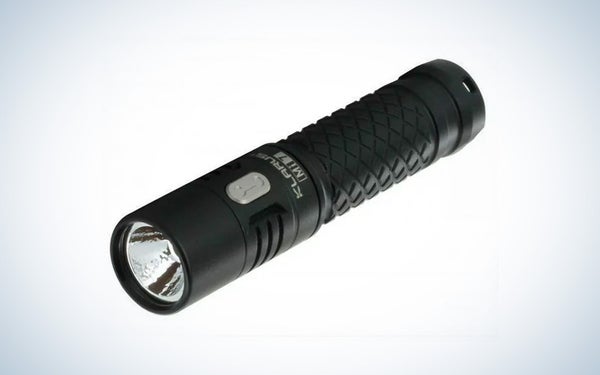
With an overall length shorter than four inches, this light will disappear into your pocket until you need it. When you deploy it, you’ll have access to an incredible 700 lumens. If you don’t need a light quite that bright, you can scale it back to 90 lumens, or go even further down to about five lumens on the lowest setting. There are even two strobe patterns, one of which is an automatic SOS. 

It has pineapple-style knurling, which is comfortable while also providing great traction. There’s no pocket clip provided, but there is a nice lanyard. Given its overall size, this is an excellent EDC flashlight for those who work in an office or who otherwise don’t want to be weighed down with pocket jewelry.

What To Consider When Choosing an EDC Flashlight

There is a wide range of flashlights on the market that come in all shapes and sizes. But when we’re talking about an EDC flashlight, there are some specific qualities we want.

The first consideration is size. By definition, an EDC flashlight is one that you’ll carry virtually every day. As such, it needs to be small enough to carry comfortably. And unless you don’t spend your day wearing a tactical belt loaded with pouches and loops, you’ll be carrying the light in your pocket. 

Ergonomics is another factor. If the flashlight is awkward to use, you’ll find yourself leaving it at home, which defeats the purpose of buying it. Some people prefer a tail switch, where the on/off is located at the end of the light. Others like a side switch. Find what is most comfortable to hold and stick with it.

Flashlights today have their illumination power measured in lumens. Without getting too deep into the weeds and breaking out complex formulas, just think of lumens as a measurement of the total amount of light you’re able to see emitted from the flashlight. The higher the lumens rating, the brighter the flashlight. Remember that a high-lumen light might be overpowering in some instances, so having the ability to dial it down a notch or two is ideal. 

A rechargeable light is often preferred over something that has replaceable batteries. You can always toss a spare battery pack in your EDC bag to charge the light if it runs low. Just remember to include the proper charging cord.

Adding a large rubber O-ring to the clip makes it even easier to snag the light from your pocket.
Adding a large rubber O-ring to the clip makes it even easier to snag the light from your pocket. Jim Cobb

FAQs

Q: What are the best lumens for an EDC flashlight?

There is no one-size-fits-all rule when it comes to lumens for an EDC flashlight. You need to consider where and how you plan to use the light. Anything rated up to about 250 lumens will be fine for most general chores. A range from 250-1,000 lumens will be good for nighttime use, such as checking the backyard to see what’s making that weird noise. Once you hit the 2,000-lumen mark, you’re getting into law enforcement and military needs.

Q: What is the difference between a tactical and EDC flashlight?

Tactical flashlights are built for heavy-duty use and often include features like high-output light that can be used defensively as well as a strike bezel that can be injurious to an attacker. They also often have fairly simple controls for high-stress situations. An EDC flashlight can certainly have those features as well, but will usually have several output levels and other bells and whistles.

Q: What should every EDC flashlight have?

Every EDC flashlight should have multiple illumination settings that are easily toggled. This gives you options, as the high setting might be far too bright for a given task. I like to see a well-built clip that allows me to attach the light to the brim of my hat or clip it to my pocket for security while moving around. Some degree of water resistance is also desirable, as you never know when you might get soaked by a sudden storm or stumble and end up in the drink.

Best EDC Flashlights: Final Thoughts

When it comes to EDC gear, which includes everything from knives and multi-tools to pens and watches, you have to carefully weigh your options. This category of equipment has absolutely exploded in the last few years, and there are more options on the market today than ever before. All of the recommendations above are sure to excel in the real world every single day—just like any EDC tool should.

Why Trust Us

For more than 125 years, Field & Stream has been providing readers with honest and authentic coverage of outdoor gear. Our writers and editors eat, sleep, and breathe the outdoors, and that passion comes through in our product reviews. You can count on F&S to keep you up to date on the best new gear. And when we write about a product—whether it’s a bass lure or a backpack—we cover the good and the bad, so you know exactly what to expect before you decide to make a purchase.
The 7 Best Knives of 2024, Tested and Reviewed

0

We may earn revenue from the products available on this page and participate in affiliate programs. Learn more ›

Before I lost it while climbing out of a canal lock on a long boat trip down the Atlantic coast, my long-term EDC blade—an older version of the Gerber Harsey Air Ranger that’s no longer made—had done it all. With that single blade, I had cleaned deer, ducks, squirrels, and a wild hog; carved fuzz sticks; and removed a rotten toenail in the Canadian backcountry. It still cleaned up nicely enough to cut a wedding cake when the caterer failed to bring her own knife. 

But I’ll confess: I will cheat on a knife in a sharp skinny minute. And I encourage you to find and fall in love with a single EDC knife that becomes an extension of your hand—not to mention your pants pocket. But there are simply too many awesome knives out there to tie yourself down to a single blade because no one knife does everything well. My current EDC knife is a Giant Mouse Ace Grand, whose brawny blade isn’t the best at breasting out wood ducks. I could butcher a deer with it, but it wouldn’t be easy. Or pretty. But it handles eight out of 10 cutting duties like a champ. For the other two duties, I have more than a hundred other knives from which to choose. Lucky me.

Speaking of which, here are seven of the best knives to keep in your blade quiver. If you can’t get it done with one of these, you probably shouldn’t be doing it anyway.

How We Picked the Best Knives for Practically Everything

It was a tall order: Pick a handful of knives that collectively could handle just about every cutting scenario, from slicing tomatoes at camp to being batoned through kindling in the backcountry to butchering deer at home. I’ve tested and reviewed knives for Field & Stream for years, and have some proven ideas on what steels are best for various cutting tasks, and how grinds and blade profiles affect a knife’s performance.

I also have an at-home and in-the-field protocol that includes some crazy trials. I smear sausage grease on the handles and test for grip and slip. I work blades through inch-thick stacks of cardboard compressed in a shop vice to assess how the edges hold up to the abuse. I incessantly fiddle and play with knives, opening and closing folding blades hundreds of times to assess lock-up and whether a knife performs better with a thumb stud or opening hole.

And I hunt and fish from one end of the country to the other, and often pack a handful of different knives on each assignment for real-world assessment. Each of these knives has had its butt kicked—and its belly, bolsters, spine, and scales. And each of them has come through the gauntlet with high marks. Some are best suited to specific tasks, such as caping a hide or removing meat from bone. Others are great for more general use. But they all deserve a place in your pocket or on your belt.

Best Knives: Reviews & Recommendations

Specs

  • Blade length: 3.5 inches
  • Total length: 7.75 inches
  • Weight: 3.6 ounces
  • Steel: 52100 ball-bearing steel

Pros

  • Parkerized steel reduces rust
  • Gorgeous selection of tough G10 scales
  • Adjustable Kydex sheath for horizontal or vertical carry

Cons

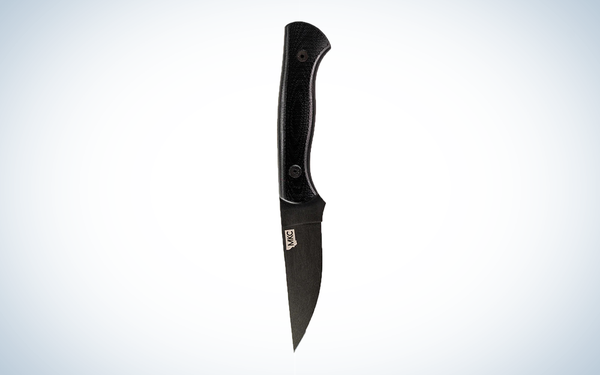
“Just enough” is the Holy Grail of knifemakers when they set out to produce an all-around hunting knife. It’s a juggling act that seems to defy the laws of physics: Just enough of a piercing tip for precise caping cuts on a big game animal, but just enough belly to serve as a skinning blade. Just enough heft for cutting through the hip joint of a 10-pointer, but just enough maneuverability for the tight confines of a rib cage. Just enough toughness to handle being two-handed through an elk’s sternum, but just enough lightness not to ride on your belt like a wet beaver. Montana Knife Company gets it right with the Blackfoot. 2.0.  

Let’s start with the blade profile. It’s a just-barely-dropped-point-blade, which is just about perfect. Too many drop-points drop too steeply, which whittles away at what skinny belly they could have. The blade length is just about perfect, too. Long enough to get the job done, and that’s that. The steel choice for this particular model has a high degree of wear resistance, and is tough enough that it’s used to manufacture high-pressure ball bearings. But it does take a wee bit of care. Ergo, the nice subtle Parkerized blade finish. It’s not Ninja-Death-Star overdone black. It’s just enough. If you’d rather have a stainless steel, no sweat. The Blackfoot also comes in Magnacut steel.

And the knife goes overboard where it counts. The tang runs the full length of the handle, but is skeletonized for lighter weight. The G10 handles are tough and hard-wearing, and MFC offers them in tons of colors. The sheath can be worked horizontally or vertically, with a quick attach belt loop.

Best Bushcraft Knife: Morakniv Garberg BlackBlade

Specs

  • Blade length: 4.2 inches
  • Blade thickness: 1/8 inch
  • Total length: 9 inches
  • Weight:  9.6 ounces
  • Steel: Sandvik 14C28N

Pros

  • Wicked tough
  • Several sheath choices
  • Easy to resharpen

Cons

  • Handle feels plasticky
  • Not a great camp kitchen knife
  • Could use a beefier finger guard

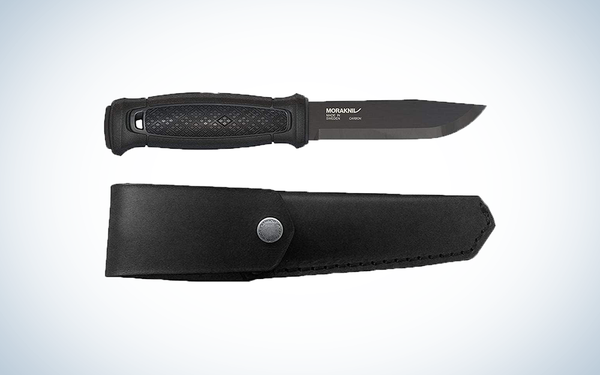
Beat on it, beat with it, bang it, baton it, smash the snot out of it—you won’t find a tougher knife than Morakniv’s Garberg BlackBlade. It’s a full-tang bushcraft and survival blade that isn’t trying to be pretty and couldn’t care less about being cute. It is sharp. It is durable. It holds up to the elements. It will take all the abuse you can throw at it. It’s the knife you’ll want when the going gets holy-crap-we-are-lost-and-it’s-dark.

The design may be a bit Spartan, but the devil is in the components. The steel is high in chromium, so it will resist rolling over or chipping when it is being pounded through wet wood or cutting through handfuls of cattails. The exposed metal pommel turns it into a makeshift hammer. The ground, unpolished spine creates sharp 90-degree angles for maximum spark throwing when using a fire starter. The barrel-shaped handle fills a palm well, and it’s made from polyamide, which is some sort of plastic. It is ugly as a pig in the mud, but that doesn’t matter for the tasks you’ll use it for.

I keep a Garberg in my truck and another on my workbench. More times than not, when something needs to be notched or split or divided into pieces, it’s the knife I reach for. That thick blade and Scandi grind leave a lot to be desired when it comes to cooking dinner. It is simply not a great slicer and dicer and doesn’t pretend to be. It’s not a great skinning knife, either. But when things get real—as in real bad—it’s the blade you’ll want by your side.

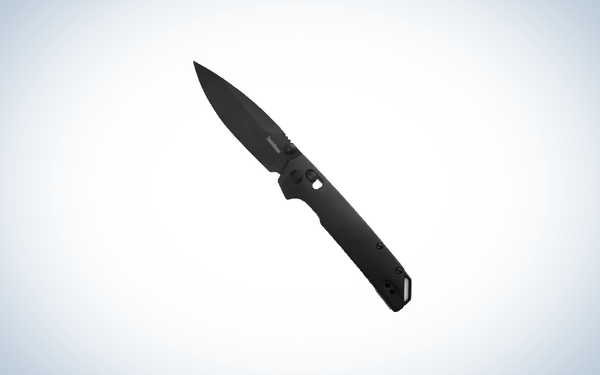
Best Lightweight Folding Knife: Kershaw Iridium Black

Specs

  • Blade length: 3.4 inches
  • Open length: 7.9 inches
  • Closed length: 4.5 inches
  • Weight: 3.3 ounces
  • Blade Steel: D2 high-carbon tool steel

Pros

  • Spear point blade for general use
  • Solid locking system
  • Reversible deep-pocket carry clip

Cons

  • Somewhat slippery handle
  • Closing one-handed takes some practice

With a handle of sleek aluminum scales, the Iridium Black is a great lightweight option for EDC. The spear point blade excels at tasks that require piercing, and there’s a generous 3-plus inches of cutting surface to work through thick cordage or a handful of cattails when you’re building a blind. I wouldn’t want to field-dress big game with this knife, only because the untextured aluminum scales got a bit slippery when slimed with sausage fat. But that same slickness helps this blade slip in and out of a pocket very smoothly. The blade locks up with Kershaw’s patented Dura-Lock steel crossbar, so once it’s deployed, you can use this knife with confidence.

D2 steel is a great choice for an all-around blade. It’s easy to resharpen, and pretty tough. The knock against high-carbon steels is their propensity to take on a patina and rust if you don’t take care of them. But Kershaw coated this blade with a black PVD finish to turn away corrosion. In fact, the entire knife is blacked-out, with black oxide handle screws, pocket clip, and back spacer. It’s an elegant knife, one that borders on the tactical.

And the KVT ball bearings in the pivot make this knife open with almost alarming smoothness. You’ll want to play around with the opening and closing mechanisms to get the hang of how easily the Iridium swings into action.

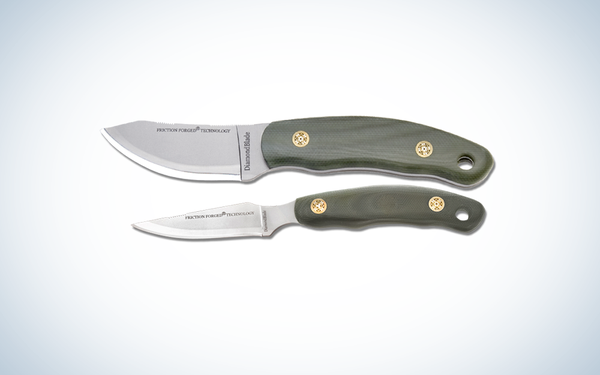
Best Combination Set for Hunting: DiamondBlade Pinnacle Combo

Specs

Pinnacle I

  • Blade length: 2.55 inches
  • Overall length: 7.25 inches
  • Weight: 4 ounces
  • Steel: D2 tool steel

Pinnacle II

  • Blade length: 2.55 inches
  • Overall length: 7 inches
  • Weight: 2.5 ounces
  • Steel: D2 tool steel

Pros

  • Rust inhibitor blade coating
  • Ridiculously sharp out of the box
  • Coolest knife sheath ever

Cons

Any discussion of DiamondBlade knives requires just a bit of metallurgical jargon, so stick with me. DiamondBlade knives are specially forged of three different zones in the steel. The edge undergoes a proprietary “Friction Forged” process that reduces the grain structures in the knife steel significantly, making them up to 10 times smaller than those in other premium steels. Smaller grain structures can be sharpened to a keener edge. The process also reduces the amount of free chromium in the plasticized steel, turning the edge material in these knives into something close to stainless steel. It’s crazy, but it works.

This is not hokum. If you look at a DiamondBlade knife wrong, it could slice your retinas. You have been forewarned. Top that performance off with fabulous handle materials, fetching mosaic pins, gorgeous sheaths, and some of the most interesting blade profiles on the market. This two-blade set is a stunner. The Pinnacle I has a beefy belly, with a slightly clipped drop-point blade that will separate hide from critter faster than any other knife I know. The knife is designed to be slimed with blood and guts, with aggressive jimping on the spine. And it’s a beauty.

As is its little brother, the Pinnacle II caper. This knife is all about control. The tip is pointed and sharp. There’s a slender, wasp-like waist between the blade and handle, designed for fingertip control when the knife is working around a trophy’s lips and eyes. And the size works equally well as a bird knife. The combo comes in a slick double sheath made up of DiamondBlade’s signature basket-weave-embossed outer layer and a fitted Boltaron thermoplastic liner.

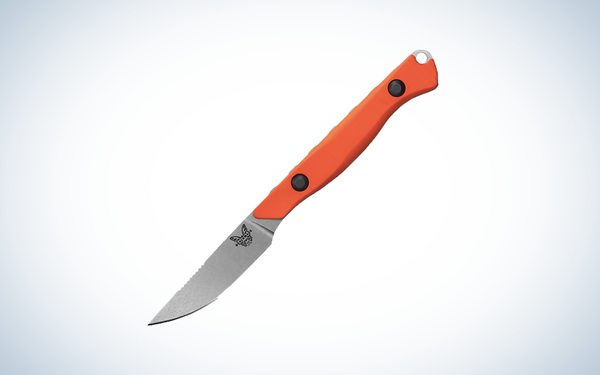
Best for Waterfowlers: Benchmade Flyway

Specs

  • Blade length: 2.7 inches
  • Full length: 6.96 inches
  • Weight: 2.1 ounces
  • Steel: CPM154

Pros

  • Abuse-tested G10 handle scales
  • Lifetime free sharpening from Benchmade
  • A great camp kitchen paring knife

Cons

  • A little tricky to sharpen

I get pretty particular when it comes to cleaning ducks. I’ve paid buckets of money to ship waterfowl home from distant hunts, and I don’t want to miss a morsel of meat when cooking, nor do I want to serve up a duck breast hacked all to pieces with an overly large blade. The brand-new Benchmade Flyway seems like it was designed just for me.

The handle is just the right palm-filling length. And the blade geometry is simply perfect for the precise cuts needed when butchering ducks and geese. The perfectly straight spine meets the upswept edge to create a very sharp tip, just what you need when breasting out small ducks such as wood ducks and teal. The knife is made with a full tang, so it punches above its weight in overall strength, but the spine of the tang is made with a series of rolling indentations—sort of like souped-up jimping—to create a super grippy handle. That’s helped with a bit of traditional jimping cut into the mid-spine area, exactly where you would place a fingertip on the back of the blade for increased control.

The Flyway comes with Benchmade’s proprietary SelectEdge, which sports a more acute than usual 14-degree bevel for a 28-degree blade angle. Paired with the pretty hard CPM 154 pelletized steel, the Flyway takes a bit of knife knowledge to sharpen properly. But the company offers free lifetime sharpening on SelectEdge blades, so don’t let the unusual edge angle turn you off. This is a well-built, stout little knife, with as much utility in the camp kitchen as just about any other blade you might own.

The Benchmade Flyway was made to clean waterfowl and other game birds.
The Benchmade Flyway was made to clean waterfowl and other game birds. Ryan Chelius

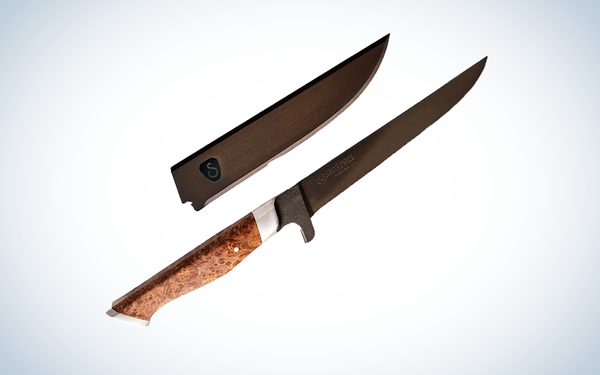
Best Boning Knife: Steelport 6-inch Boning Knife

Specs

  • Blade length: 6 inches
  • Total length: 12 inches
  • Weight: 6.7 ounces
  • Steel: 52100 carbon steel

Pros

  • Comfortable handle for long hours of use
  • Tough steel with just enough flex for difficult cuts
  • Plenty of heft for cutting through joints

Cons

Hailing out of Portland, Oregon, a mecca for fine hand-made knives, Steelport Knife Co. is a recent addition to the must-have list of knife makers. A rising star in the culinary world, the company’s 6-inch boning knife is going to wind up in many big-game butcher’s kits. Traditionally forged and produced by hand, the knives are a collaboration between a chef/knifemaker and an engineering Ph.D. They clearly know their knives.

In the hand, this knife seems to invite hard use. The handle is made of gorgeous big-leaf maple burl, locally sourced in the Pacific Northwest, and stabilized with resin. It’s produced with rounded bottom edges and chamfered top edges to reduce fatigue when you’re staring at a monster buck or elk on your butchering table. There’s a slightly longer guard at the bolster for an additional safety boost, and the boning blade carries most of its width all the way to the tip, which is still acute enough to detangle silverskin and make deft cuts through joint ligaments and tendons. And it’s a one-piece blade and tang, with an integral bolster, so this knife is not going to fall apart any generation soon.

Of course, an oak stick is tough and durable, but you don’t sever hip joints with one. That’s where this boning knife really shines: It’s a combination of sharpness and toughness. The blade is differentially heat treated—the edge is a very hard 65HRC, while the spine measures 30HRC to give it a bit of flex and durability. It’s a specialized knife for specialized work. But nothing makes a mound of meat disappear more quickly than a well-tuned boning knife, and this is the one.

Best Camp Kitchen Knife: Opinel No. 8 Carbon

Specs

  • Blade length: 3.28 inches
  • Open length: 7.59 inches
  • Weight: 1.6 ounces
  • Steel: XC90 Carbon Steel

Pros

  • Inexpensive
  • Easy to resharpen
  • Lightweight

Cons

  • Wood handle can swell
  • Requires some maintenance

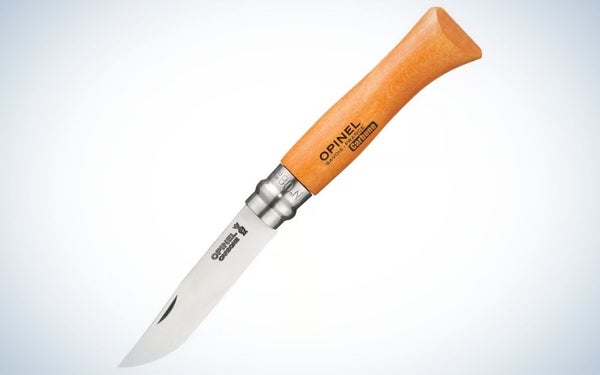
Could this be the best knife in the world? I wouldn’t argue against it. For some 130 years, this built-in-France classic has engendered a cult following. The high-carbon steel takes a wicked edge and ages with a perfect patina. The slick Virobloc rotating blade lock is genius. The birch handle is sculpted to fill your palm just so, with a slightly bulbous heel that gives it an even greater purchase. It’s inexpensive, iconic, and has a decided flair about it.

The knife comes in 10 sizes, but the No. 8 is the go-to. The only knock against the wood-handled Opinel is that the wood can swell when it gets wet, temporarily making it a little difficult to open the blade. But the swelling goes down once the handle dries, so this is not a deal breaker. You could order this knife in a swell-resistant plastic handle, just like you can order it with a stainless steel blade instead of the traditional carbon steel blade. But by doing so, you will invite scorn and derision from anyone who knows about knives, and certainly from me.

You likely could not cut up a water buffalo with this knife. But if you had a water buffalo backstrap in hand, then you could do literally everything else required: Whittle a feather stick for a cooking fire, chop side-dish veggies, trim away silverskin, peel the accompanying potatoes, cut the steak, carve a marshmallow stick, and pick your teeth, if you wanted to. This is the original 4WD of camp knives, and how they keep it at less than 20 bucks is an international mystery.

Things to Consider Before Buying a Knife

Blade Profile

If you were to trace a knife blade on a piece of paper, the shape you’d draw is the knife’s profile. How a knife performs varies dramatically depending on the blade profile, and it’s a world of tradeoffs. Various profiles will accentuate a sharp point, an arcuate belly, or a dropped point that will help prevent punctured entrails when field dressing a game animal.

Blade Grind

When it comes to a knife’s performance, a blade’s grind is akin to a car’s engine: Do you want hard, boat-towing torque? Or zippy, tire-squealing horsepower? The grind is the shape of the blade when viewed in cross-section. It could be thick or thin. It could taper evenly from the spine to the edge (flat grind), have a concave shape (hollow grind), or have a bevel grind that begins below the midpoint of the blade (Scandinavian grind). Thinner blades generally make better slicers. Thicker blades can hold an edge better and hold up to twisting forces. It’s all about how you plan to use the knife.

Steel Choice

Parsing the growing list of fine knife steels can be a confounding exercise, but choosing the right knife steel has as much to do with a blade’s performance as any other factor. And it goes far beyond deciding if you want a stainless steel or carbon steel blade. Steel recipes are designed to balance or accentuate properties such as ease of sharpness, edge wearability, blade hardness, and overall sharpness, and there isn’t one best choice for all applications. If you find a knife whose profile and grind are appealing, it’s worth taking a few minutes to research the steel to make sure it will perform like you want it to.

Hand Feel

There’s something downright magical about how some knives seem to fit your hand like they were meant to be there. If you love a knife’s shape and heft, but it feels overly large or overly small in your hand, walk on by. If your fingers seem slightly out of whack as they close over a knife’s choil or finger indents, it won’t be a bargain, no matter the price. But when you pick up a knife and note its grind and profile are what you’re after, and it feels like a little piece of King Arthur’s sword in your grip—that’s called “hand feel,” and you can’t put a price on it. Don’t settle for less, regardless of price.

FAQs

Q: What’s the best way to sharpen a knife?

There are tons of knife-sharpening devices out there, from motorized belt sharpeners to angle guides to crock sticks. You’ll be better at using them if you first learn to sharpen a knife by hand with a whetstone. There’s no substitute for getting an innate feel for edge angles and sharpening pressure than by learning the old-fashioned way. Then you’ll be that much better and faster using more modern sharpening aids.

Q: Why is my knife rusting?

If it is a stainless steel knife, it is rusting because you are abusing the hell out of it. So stop. If it is a carbon steel knife, it is turning colors because that’s what carbon steel does. That’s not necessarily rust. You should rinse and dry it carefully after use, oil it lightly, and revel in the patina of blues and browns and every hue in between as the knife takes on a personality all its own. If a carbon steel knife is actually rusting, it is because you are abusing the hell out of it. So stop.

Q: For a serious outdoors person, how many knives are enough?

That’s easy: Just one more will always be plenty.

Best Knives: Final Thoughts

I know old-timers who insist they can do anything, cut anything, slice anything, carve anything, with a Case Barlow slip joint, so why would they ever carry any other knife? And there are others who insist that their insert a famous knife here is the be-all, end-all in the cutlery world.

But there are few more personal decisions you can make as an outdoors person than choosing a knife—or 10. The fact is, you don’t have to spend an arm and a leg for a really great knife, so shop around. Buy one each opening day. Keep the ones that sing to your soul. Trade the others with your buddies. 

Try enough knives, and you just may finally settle on the perfect blade. Until the next one comes along.

Why Trust Us

For more than 125 years, Field & Stream has been providing readers with honest and authentic coverage of outdoor gear. Our writers and editors eat, sleep, and breathe the outdoors, and that passion comes through in our product reviews. You can count on F&S to keep you up to date on the best new gear. And when we write about a product—whether it’s a bass lure or a backpack—we cover the good and the bad, so you know exactly w

Best Compasses of 2024 | Field & Stream

0

We may earn revenue from the products available on this page and participate in affiliate programs. Learn more ›

If you spend a lot of time outdoors, then you understand the importance of navigation. Whether you’re a hunter, angler, hiker, or camper—knowing how to use a compass is one of the most critical skills to have as an outdoorsman. When you venture out of cell service range, and Google Maps isn’t useful anymore, having the best compass can help you return home safely.

A compass is essentially a magnet that spins freely to align itself to the Earth’s magnetic fields, which lets you determine magnetic North and true North and your directional orientation. You can’t rely on service in the backcountry or trust that your phone or handheld GPS device will hold a charge long enough for when you need it most. Understanding how to use and read a compass will make you a more well-versed outdoorsman and potentially save you from a dangerous situation.

Below are our picks for the best compasses and what you should consider before buying one to ensure you find the right option for your outdoor adventures.

How We Picked the Best Compasses

Learning land navigation isn’t an easy task, and it can be extremely difficult when you’re relying on compasses that are little more than toys. While you don’t need to spend hundreds of dollars on something that amounts to basically a magnetized needle resting on a spindle, the more accurate the compass model has proven to be, the easier it will be to find your way from one location to the next and eventually making it home safely.

In examining the different models available on the market, we took into account the following considerations.

  • Quality: The components used must be sturdy, and the design must be robust enough to handle the rough-and-tumble outdoors. The last thing you want is something that is likely to break the first time you drop it. And yes, you are going to drop it, probably more than once.
  • Reputation: This is not an area of survival planning where you want to try counting on some off-brand that might have just started a business last month. Knockoffs have no place when it comes to your safety and well-being.
  • Value: No matter how inexpensive or pricey the compass may be, for it to be worth purchasing, it needs to perform, no matter what. It isn’t just a matter of price, but what you’re getting with your money.

On top of all that, there’s practical experience. Each of the models I chose to include here has been used extensively by myself and my colleagues over several years. We know they work because we’ve used them. We’ve relied on them to keep us on track and moving in the right direction. And we’ve made it home safely each and every time.

The Best Compasses: Reviews & Recommendations

Best Overall: Suunto MC-2

Best All-Around

Specs

  • Dimensions: 2.56 x 3.98 x 0.71”
  • Weight: 2.61 oz
  • Operating temperature: -22°F to 140°F

Pros

  • Loaded with useful features.
  • Hinged mirror can be used as an emergency signal
  • Clear baseplate for map use.

Cons

  • Requires a fair amount of practice.

Suunto was founded in 1936, and ever since, they have been one of the biggest names in the compass world. While today Suunto is largely known for its line of GPS-enabled watches, they built their reputation with the best compasses available. The MC-2 is one of the best products in their compass line and is popular worldwide for hiking, mountain biking, trail running, skiing, and much more.

It includes a sighting hole and notch so you can get accurate bearings, as well as a clinometer and a declination adjustment tool. A high-grade steel needle points the way, swinging smoothly through the liquid-filled capsule. Luminescent markings enable you to use the compass in low light conditions. A detachable snap-lock lanyard keeps the compass close at hand, but out of the way until you need it. The lanyard can easily be removed when you’re working with a map, too. A magnifying lens in the baseplate is useful for seeing small details on your map. In a pinch, you could even use it to concentrate the sun’s rays on your tinder to get a fire going. The MC-2 is made in Finland and comes with a limited lifetime warranty.

Best for Hiking: Cammenga Lensatic Compass

Best for Hiking

Specs

  • Dimensions: 3.25 x 2.25”
  • Weight: 7.2 oz
  • Operating temperature: -50°F to 150°F

Pros

  • Perfect for use in extreme temperatures.
  • Same model as used by military forces around the world.
  • Copper induction ring steadies needle quickly.

Cons

  • Much heavier than other models on our list.

Founded in 1992, Cammenga has risen to become the world’s largest military compass supplier, including the official U.S. military compass supplier (as Defense Logistics Agency, DLA). When you’re headed out on the trail, the best compass for hiking is one that’s designed to overcome anything Mother Nature can throw your way. The Lensatic compass is damage-resistant and waterproof to considerable depths. It is sandproof and will perform quite well from -50°F to 150°F. 

Its housing is not liquid-filled—thus, there’s no worry about anything freezing up. A copper induction-damping ring will slow, settle, and steady the compass needle in a hurry. The powdered-coated aluminum frame is built to last. It has seven Tritium micro-lights that will provide illumination for over a dozen years. These small lights are self-powered, needing no recharging and certainly no batteries. This compass is equipped with a magnifying lens, sight wire, and dial graduations in degrees and mils. It is accurate to +/- 40 mils. If you’re going to be traveling on foot far from groomed trails and easy-to-find rest stops, you can rely on the same simple but robust compass design used by U.S. military troops stationed around the world.

Best for Children: Suunto A-10

Best for Children

Specs

  • Dimensions: 2.2 x 4.09”
  • Weight: 1.06 oz
  • Operating temperatures: -22°F to 140°F

Pros

  • Inexpensive without sacrificing quality or needed features.
  • Durably built and easy to use.
  • Can easily be worn on a lanyard.

Cons

  • Very basic model with no added features.

The Suunto A-10 is a minimalistic compass, perfect for those who aren’t well-versed in the more technical aspects of orienteering. It is a baseplate compass, designed for use in conjunction with a map. It has a liquid-filled capsule and a steel needle with a jewel bearing. This model is balanced for use in the northern hemisphere with both inch and centimeter scales and a fixed declination. It is quick to settle and fix on a direction, perfect for young hands with little patience. The all-plastic construction is sturdy and will easily handle even moderate-height falls.

The lack of bells and whistles works in your favor as there’s less you need to teach the youngster to do. This also means there are fewer features that could confuse them when they’re just starting out with the basics. The compass is accurate to about 2.5°, which is just fine for most people to get from Point A to Point B. It will work fine in cold weather down to -22°F, so there’s no need to leave it home in the winter. It has a lanyard attachment, making it the best compass for children so your young hiker can keep it with them at all times and refer to it often as they travel.

Best Budget: Brunton TruArc 3

Best Budget

Specs

  • Dimensions: 4.1 x 2.4”
  • Weight: 1.3 oz
  • Resolution: 2° for 0-360°

Pros

  • Accurate anywhere on the planet you travel.
  • Tool-free declination adjustment.
  • Lanyard hole designed so compass will still lay flat.

Cons

  • Baseplate is too small for use as a straightedge on a map.

There’s little need to spend a ton of money on a high-end compass for someone who is just starting out with learning orienteering and related skills. The budget-friendly Brunton TruArc will do all you need it to do in order to find your way, whether you’re looking for a new campsite or just trying to get back home. The TruArc needle tilts up to 20° for balanced use anywhere on the globe. It has tool-free declination adjustment, so you can quickly and easily orient magnetic north to true north. It is even made right here in the USA, in Riverton, Wyoming. The small size makes it great for EDC (everyday carry). It also resists magnetic interference better than just about any other compass on the market, so you won’t lose your way following the wrong bearing. It operates on either standard or metric measurements, so you can use it with any map without difficulty. This isn’t the compass to choose if you’re headed way out into the great beyond. But it will be just fine for short trips or as a backup to something a little more robust.

What to Consider When Choosing a Compass

Selecting the best compass depends on several factors. Your budget is a consideration, but where and how you’ll be using it is more important. The best compass for camping, for example, isn’t necessarily the greatest option for those who are heading out on a thru-hike along the Appalachian Trail. 

Also, consider your experience level. While all sorts of bells and whistles can be interesting, if you don’t know how to use them, all they do is cost extra with little practical gain. Naturally, the more time you invest in practicing your navigation skills, the more you may appreciate some of those additional features. No matter where you’re headed, a good compass is absolutely one of the best pieces of survival gear, it’s just as important as a knife and a fire kit.

At first, going out and buying the best compass on the market might sound foolish. After all, there is any number of the best GPS apps you can install on your phone. Those work very well and can be a lot of fun to boot. Here’s the thing, though. A compass won’t run out of battery power. It won’t fall victim to soaking in the rain, and a decent one won’t shatter if it falls from your hand. A magnetic compass needs nothing special to keep you on the right path, other than perhaps a little bit of practice with reading it and understanding what it is telling you.

Selecting the best compass can be confusing, with so many options available. However, we’ve done most of the work for you. We’ve culled through the various options available and narrowed them down into the ideal selections in several categories. While any compass in your pocket is better than the one you left at home, you will dramatically increase your chances of success if you select one based on how you plan to be using it. A simple pocket compass might be all you’ll need for a short camping trip. But if you’re headed out on a lengthy trek, you’ll want something a little more substantial.

FAQs

Q: Do I need a compass for hiking?

First and foremost, understand that a compass is really only half of the navigation equation. It will tell you which way is north, from which you can deduce other directions. However, a map is necessary to help you determine where you are and which direction you need to move to find camp, help, or just get back to the trailhead. Whether it is a simple pocket compass or something more elaborate, you should have a compass with you when hiking. But you should also have a good map of the area so you can use the two tools together.

Q: Are cheap compasses accurate?

Most of the base models from known brands are accurate enough to get you moving in the right direction. However, the small button compasses you can find cheap online are more than a little suspect. Many of them either get stuck or will move very easily when bumped. Having a compass that’s drastically inaccurate may be worse than having no compass at all. Always test a compass at home, in a known and safe environment, before relying on it in the field. Get to know its quirks, if any, well ahead of needing the compass to get you home again.

Q: What compass does the military use?

Most military forces are trained in the use of a lensatic compass. This is a model that is equipped with, well, a lens that will aid in the orienteering process. This type of compass has three basic components – a base, cover, and reading lens. The base has the compass dial itself and the bezel. The cover protects the compass and also has the sighting wire, which helps you to determine direction. The reading lens helps to secure the cover when it is not in use. Using a lensatic compass does require some practice or training, so take the time to become familiar with its use before heading off down the trail.

Best Compasses: Final Thoughts

Choosing the best compass isn’t always easy, but it shouldn’t be a mind-boggling dilemma, not if you take into account our recommendations. Fortunately, even the highest-grade orienteering compass isn’t ridiculously expensive, so you can invest in a high-quality product without breaking the bank. That said, you can pick up a compass that’s perfectly suited for camping or short hikes for very little money. Above all else, though, you need to invest time and effort into learning how to use any compass you purchase. The skills are easily transferable to any other model you purchase down the road.

Why Trust Us

For more than 125 years, Field & Stream has been providing readers with honest and authentic coverage of outdoor gear. Our writers and editors eat, sleep, and breathe the outdoors, and that passion comes through in our product reviews. You can count on F&S to keep you up to date on the best new gear. And when we write about a product—whether it’s a bass lure or a backpack—we cover the good and the bad, so you know exactly what to expect before you decide to make a purchase.
Best Flashlights of 2024 | Field & Stream

0

We may earn revenue from the products available on this page and participate in affiliate programs. Learn more ›

If you’ve spent any time outdoors, you’ve likely been caught in the dark if you forgot a flashlight. Be it paddling to the duck blind, hiking out of the woods, or waiting on a rising trout, packing a light source is among the gear essentials many experts recommend. When the sun disappears, and you are stuck in the pitch black, having the best flashlight makes for a leisurely walk back to the truck.

A strong light is one of the most important tools for any outdoorsman. A good flashlight, headlamp, lantern, or spotlight is critical for the safety and success of a trip. After extensive testing, we found the best flashlights for any situation to help light the way for you on your next adventure.

How We Picked the Best Flashlights

As a fisheries biologist and an avid angler and hunter, I find myself reaching for a flashlight daily. If you choose the right light, the job at hand becomes much easier, but choose the wrong one, you have a long night ahead of you. I took the time to narrow down the best flashlights on the market today to help save you from that struggle. All of my picks are field-tested and field-proven.

My selections were based on the following criteria:

  • Lumens: How bright is the flashlight, and does it offer different brightness modes?
  • Battery life: Will the battery life hold up long enough to get the job done?
  • Rechargeable: Is the flashlight USB rechargeable, or does it rely on disposable batteries?
  • Distance: How well do the available lumens translate into beam distance?
  • Size: Do the size and shape make sense, and is it ergonomic and comfortable?
  • Weight: What is the weight of the light, and is it justifiable?
  • Durability: Flashlights must be built to withstand lots of abuse without faltering. 

Products and descriptions are subject to changes and updates as further testing is conducted or new products are chosen.

Best Flashlights: Reviews and Recommendations

Best Tactical: Fenix TK16 V2.0 Tactical Flashlight

Best Tactical

Specs

If you’re exploring different options, you might find this list of gambling sites without GamStop restrictions helpful for your needs.

  • Lumens: 3,100
  • Power Source: ARB-L21-5000U battery
  • Weight: 3.95 oz 
  • Run time: 2hr 50min on high
  • Materials: Aluminum
  • Waterproof: Yes

Pros:

  • Great battery life
  • Fully waterproof and dustproof
  • Six different light modes

Cons:

  • Battery needs to be removed for charging

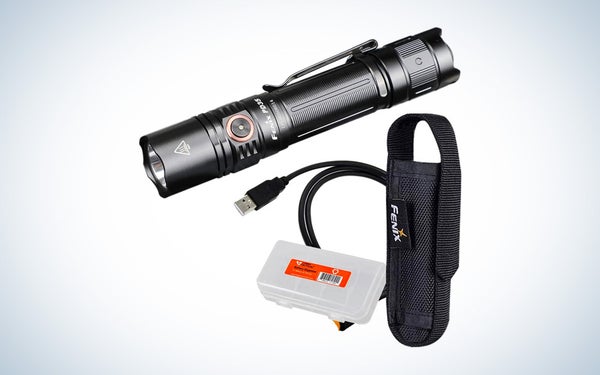
If you need a powerful light in a durable package, nothing is better than the best tactical flashlight Fenix TK16 V2.0. It is equipped with an IP68 rating, and this light is built to go through just about anything. As a fisheries biologist, I find myself reaching for this light more and more. It’s waterproof and dustproof, which is ideal for working in and around water. The different modes allow you to dial in the brightness for whatever you need to see without blinding yourself.

The TK16 also has an impressive battery life which can last up to 43 hours in Eco mode or nearly 3 hours in turbo mode. For those looking for a quality tactical light, this won’t disappoint. The strobe mode blasts out at 3100 lumens and is more than bright. This is the best all-around light I have used, and it always comes with me for both work and pleasure. Not to mention the TK16 is backed with Fenix’s Limited Lifetime Guarantee.

Best EDC: Streamlight MacroStream USB Everyday Carry Flashlight

Best EDC

Streamlight MACROSTREAM USB Everyday Carry Flashlight is the best EDC flashlight.

Specs

  • Lumens: 500 
  • Power Source: CR123A batteries
  • Weight: 2.2 oz
  • Run Time: 2 hours on high
  • Materials: Aluminium
  • Waterproof: Water Resistant

Pros:

  • Lightweight
  • Bright for the size
  • USB Rechargeable

Cons:

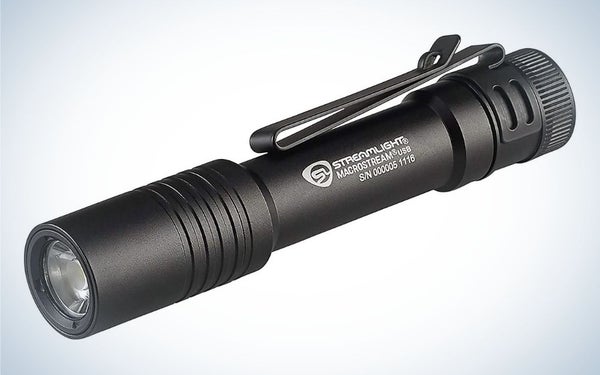
Few people think to add a flashlight into their everyday carry kit, and rightfully so. In the past, flashlights have always been big and bulky. Those small enough to carry lacked the power to illuminate anything for long periods of time. But flashlight technology has now improved to the point that both lightweight and powerful are possible in one unit.

The Streamlight MACROSTREAM is the perfect size to carry all day, and at 500 lumens is plenty bright to get the job done, making it our pick for the best EDC flashlight. This little light finds its way into my pocket daily, and at just over 2 ounces, it’s easy to forget you’re carrying it. The two light modes offer 50-lumen and 500-lumen options which are great for everyday tasks like looking under your truck or lighting up a dark parking lot. The rechargeable battery makes it easy to throw on the charger in your truck and be ready to go when you reach your destination.

Most Powerful: Fenix LR50R Flashlight

Most Powerful

Fenix LR50R Flashlight is the brightest flashlight.

Specs

  • Lumens: 12,000
  • Power Source: ARB-L52-16000 Li-ion battery pack
  • Weight: 34.8 oz
  • Run time: 1hr 50 min on turbo
  • Materials: Aluminum
  • Waterproof: N/A

Pros:

  • 9 different running modes
  • Tripod socket for easy setup
  • Intelligent downshifting light sensor

Cons:

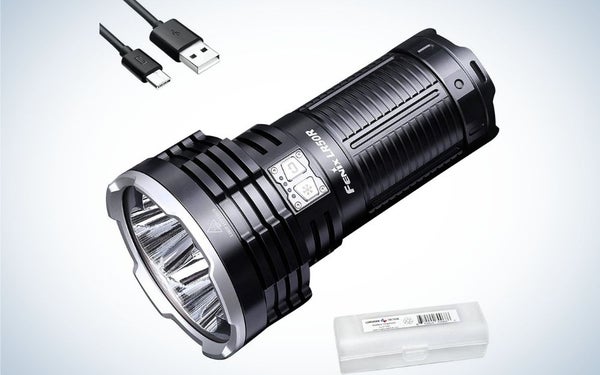
Ever need the power of the sun in the palm of your hand? The Fenix LR50R is the closest thing I’ve found. It’s one of the most powerful flashlights ever made. At 12,000 lumens, there is no shortage of light. This is a true floodlight and casts a wide beam up to a half-mile away. In the woods, I find myself reaching for this light more and more for tracking blood trails after a successful hunt.

It provides excellent coverage to trail blood, and the intelligent downshifting light sensor will automatically dim the light when I get up close. Another great feature is it will double as a portable charger to keep your phone or other electronics ready to go during a long sit in the stand. If you’re looking for the brightest light you can find and don’t mind a little extra weight; then the Fenix LR50R is your pick.

Best for Fishing: Nebo Luxtreme SL100 Rechargeable Spotlight

Best for Fishing

Nebo LUXTREME SL100 is the best flashlight for fishing.

Specs

  • Lumens: 500
  • Power Source:
  • Weight: 20.8 oz
  • Run Time: 6.25 hours on spotlight mode
  • Materials: Aluminum
  • Waterproof: Yes

Pros:

  • Magnetic base
  • LEP laser for long distance
  • Red light mode

Cons:

  • Be careful where you shine the LEP laser

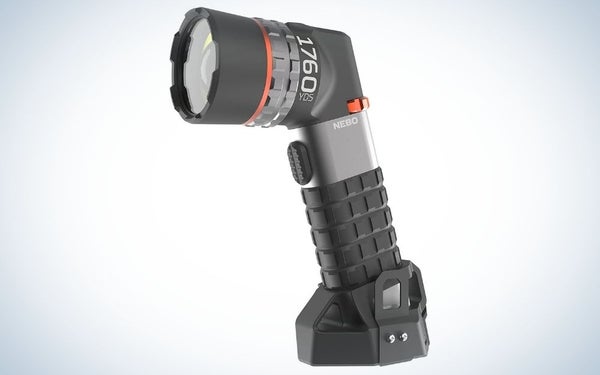
In the world of flashlights, lumens were everything until the Nebo Luxtreme SL100 came along. As the best flashlight for fishing, this innovative light uses an LEP laser that can shine up to a mile away and is truly impressive. On my boat, I run from dock light to dock light in the dead of night, looking for wary snook and tarpon. Weaving in and out of channel markers and obstructions makes for a sketchy trip without good light. I find this light shines as a boat light—pun intended.

The magnetic base sticks to the center console, and with the squeeze of a trigger, I can see everything in front of me. It also offers a wide range of floodlights that helps brighten a larger area. This is beneficial when tying on flies and moving around the boat. If the fish are incredibly wary, I turn on the red-light mode to stay stealthy and hidden.

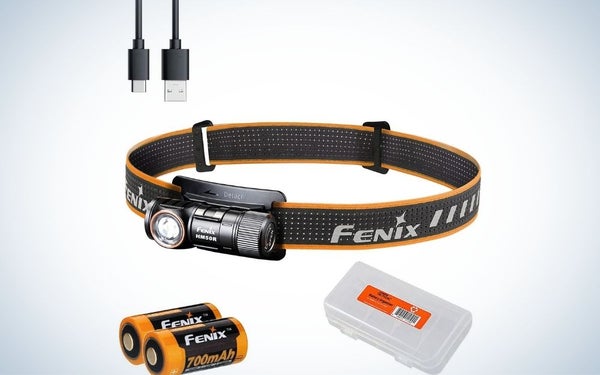
Best for Hunting: Fenix HM50R V2.0 Rechargeable Headlamp

Best for Hunting

Fenix HM50R V2.0 Rechargeable Headlamp is the best flashlight for hunting.

Specs

  • Lumens: 700 
  • Power Source: ARB-L16 batteries
  • Weight: 2.75 oz
  • Run Time: 1 hour on turbo mode
  • Materials: Aluminum
  • Waterproof: Yes

Pros:

  • Red light mode
  • Detachable clip
  • Rechargeable

Cons:

  • Changing between modes can take some getting used to

What do 30-inch brown trout, trophy deer, and a flock of ducks all have in common? Other than the need for a headlamp, not much. Trekking to your deer stand, paddling to your duck spot, or casting all night for a fish of a lifetime are all next to impossible without a good light. The Fenix HM50R V2.0 is the best headlamp for fishing and hunting I’ve used to date and keeps your hands ready to go. On a recent hunt, I tested this extensively by hiking miles through the dark and rain to my stand with ease.

With four different brightness options, clicking a button allowed me to see everything and minimize glare, especially in the rain. The neat part of this light is that it can detach from the headband, allowing you to clip it to a shirt pocket or hold it in your hand to see in tight places. Additionally, a red-light mode gives you the option to help stay hidden from wild game and wary trout. The HM50R is an incredibly well-thought-out headlamp in a virtually indestructible and rechargeable package.

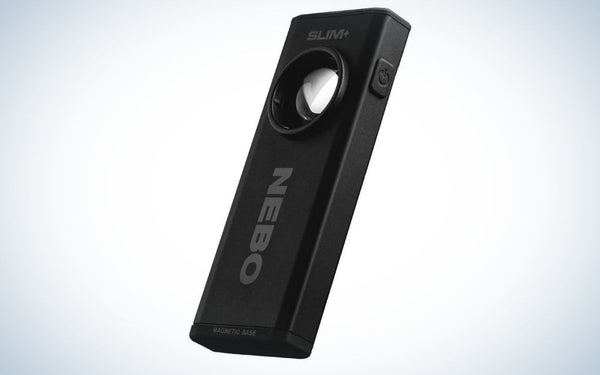
Best Rechargeable: Nebo SLIM+

Best Rechargeable

Nebo SLIM+ is the best rechargeable flashlight.

Specs

  • Lumens: 700
  • Weight: 4 oz
  • Run Time: 1.5 hours on high
  • Materials: Aluminum
  • Waterproof:

Pros:

  • USB battery pack
  • Laser pointer 
  • Adjustable clip

Cons:

  • Battery life is not long-lasting 

Most flashlights are rechargeable these days, but few offer as many features as the Nebo SLIM+. This model is our choice for the best rechargeable flashlight because it is a flashlight and a laser pointer and battery pack in a small convenient package. While it may not look like a conventional flashlight in its rectangular shape package, this light blasts out 700 lumens and is plenty bright enough.

The versatility of the SLIM+ is why it made it on our list. Hold the power button down, and it suddenly becomes a laser pointer. If your phone is dying, plug it into the USB port, and you’ll be fully charged. This light is a valuable addition to my camping gear when I need extra light and can conveniently keep my other electronics charged simultaneously. The innovative adjustable hook and magnetic base work great for hanging inside a tent to double as a camp lantern.

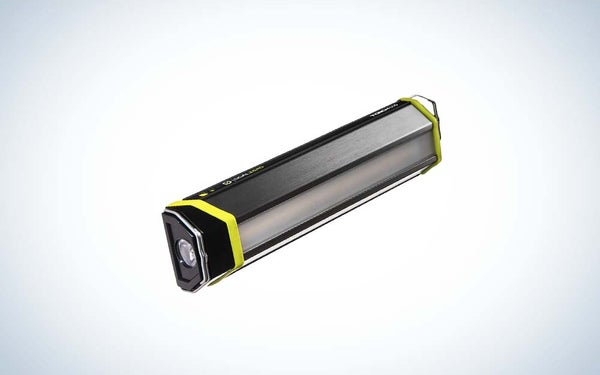
Most Versatile

Camping photo

Specs

  • Lumens: 500
  • Power Source: monocrystalline 5200 mAh battery
  • Weight: 12.8 oz
  • Run Time: 50 hours (low spotlight)
  • Waterproof: Yes

Pros:

  • Spotlight and floodlight modes
  • Built-in solar panel to recharge
  • IP67 waterproof rating
  • The battery can charge small devices like phones

Cons:

  • The outer casing isn’t as durable as other options

Goal Zero is well known for its solar panels and power banks to upgrade your off-grid living. The Goal Zero Torch 500 flashlight combines a handheld light with a solar power bank for the perfect backcountry light source. With both a spotlight and a floodlight feature, this light is versatile enough to be a staple in the garage, survival kit, or on the trail. You can recharge the light from the sun with the built-in solar panel or a USB-C power source. The powerful 5200 mAh battery also allows you to charge your phone.

Both the floodlight and the spotlight have three light settings. The Torch 500 splits the lumens between the two light sources. So, you have 300 lumens with the spotlight and 300 lumens with the floodlight. The 50-hour run time is for the spotlight when running on low. If you run both lights simultaneously on high power, the battery will only last around 2 hours. Just one light on high power runs between 3-4 hours. Regardless of the light setting, it is reliable for emergency and outdoor situations since it has an IP67 waterproof rating.

Best Budget

Camping photo

Specs

Many players seek casinos without GamStop restrictions to enjoy more flexible gaming options online.

  • Lumens: 400
  • Power Source: Lithium Metal batteries
  • Weight: 4.3 oz
  • Run Time: 20 hours (medium beam)
  • Materials: Aluminum
  • Waterproof: Yes

Pros:

  • Reliable light source down to 14℉/-10℃
  • Great value for the price
  • Compact design
  • Five light modes

Cons:

  • Battery run time is not the best

If you want good value for the price, then the Anker Rechargeable Boulder Flashlight is a good pick. It gets the job done and has no especially stand-out features. The materials are strong, durable, and have an IP65 rating. So, if you plan to use it as a flashlight on outdoor expeditions, it will hold up to rain, snow, and general moisture. We like that the battery functions in low temperatures, but keep in mind that the battery life may not be as good in cold weather. The casing is also shock resistant, so you don’t have to worry about damaging the flashlight if you drop it as you hike. Five light modes, including an SOS feature, are essential for any emergency kit flashlight. It is a simple, reliable, and affordable flashlight that you can trust.

What to Consider When Choosing a Flashlight

A good flashlight can last you a long time, but a decent price tag comes with that. Before committing to a purchase, you should know what you need from a flashlight. Look for lights built with a purpose, and you’ll be much happier in the long run. Here are a few key considerations:

Reliability

When you look for a flashlight, chances are you need it. You don’t want that dreaded feeling of hitting the power button with no response. Look for lights with rechargeable batteries that will hold a charge for a long time. Another essential feature is the light’s durability rating. Is it IP68-rated? Meaning, is it drop-proof, dustproof, and waterproof? These are all important considerations when finding a light that will never fail you when you need it most.

Ergonomics

Finding a light that is comfortable in your hand makes the user experience much more enjoyable. Look for rubberized grips or finger grooves to make holding the light for long periods comfortable. Along with ergonomics comes weight and size. For instance, compact and lightweight are significant factors if you want an everyday carry flashlight. If a spotlight is more important for you, then weight and size might not be as big of a deal compared to if it fits your hand comfortably.

Brightness

Flashlights are big on lumens, a unit of measurement equal to roughly one birthday candle from one foot away. A good starting point for a flashlight is anything 500 lumens and up on high power. This is more than enough light for you to see plenty at night. With lumens, another important factor is how the flashlight projects the light. Floodlights, for instance, might be upwards of 10,000 lumens but spread a wide beam. In contrast, a typical flashlight might be 700 lumens but can see just as far, if not farther, with a narrow light beam.

Battery Life and Charging

Nowadays, there are endless battery options for flashlights. Rechargeable lights are readily available and can be charged using any USB port if you want something that’s always ready to go. If you know you’ll be off the grid for long periods of time, look for lights with disposable batteries and pack extras for when your light runs out. Look carefully at how long the light will run on specific settings to ensure the light you choose will last long enough for the job you need. Nothing is worse than a slowly dimming light when you need it the most.

FAQs

Q: How many lumens should a good flashlight have?

In the flashlight world lumens are everything and can range anywhere from 100 to 100,000. A good starting point for most lights is 500 to 1,000 lumens. This range is plenty bright without being overkill. The result is a usable light that gets the job done without blinding those around you. Lights with variable modes allow you to adjust the brightness to the task at hand and maximize battery life.

Q: What are lumens?

Lumens (lm) are the measurement used to distinguish the amount of visible (to the human eye) light from a light source. The higher the lumen rating, the brighter the light appears.

Q: What is the best flashlight on the market?

Many flashlight brands are rugged, reliable, and bright. It’s tough to say what the best flashlight is because like a pocket knife it depends on how you plan to use it. The perfect light for me may not be the perfect light for you. Companies such as Fenix, Nebo, and Streamlight make quality lights that can withstand anything you throw at them.

Q: Are flashlights waterproof?

Not all flashlights are waterproof, but we prefer waterproof ones. Look for an IP rating of 65 or higher to find a flashlight that is waterproof and dustproof. If a flashlight is waterproof, the company will list it in the product description. Remember that a water-resistant light won’t be as impervious to water exposure as a waterproof one so look for specific language regarding the casing and moisture resistance.

Q: What is the longest-lasting flashlight?

Flashlight battery life depends on a lot of conditions such as the temperature outside and the settings you run it on. Any rechargeable light worthy of owning should last up to 20 hours on low power while many such as the LR50R can last upwards of 60 hours. Do your research and find a light that will last more than enough for what you plan to use it on.

Best Flashlights: Final Thoughts

Choosing the right flashlight for you is not always as straightforward as you may think. Something comfortable, long-lasting, and bright is a good starting point but really knowing what you plan to use it for can help you narrow it down. My top picks will help steer you in the right direction with something for everyone. But remember to do your research and look for a flashlight that will serve you the best.

Why Trust Us

For more than 125 years, Field & Stream has been providing readers with honest and authentic coverage of outdoor gear. Our writers and editors eat, sleep, and breathe the outdoors, and that passion comes through in our product reviews. You can count on F&S to keep you up to date on the best new gear. And when we write about a product—whether it’s a bass lure or a backpack—we cover the good and the bad, so you know exactly what to expect before you decide to make a purchase.
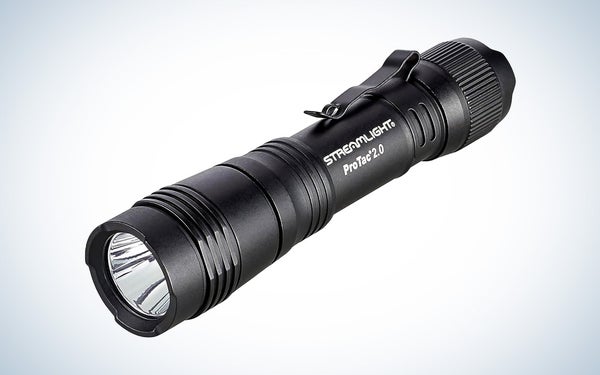
Best Slingshots of 2024 | Field & Stream

0

We may earn revenue from the products available on this page and participate in affiliate programs. Learn more ›

The best slingshots go well beyond the forked sticks and cut-up bicycle tire tubes we played with in our youth. Nowadays, we’re talking about high-end materials combined with precision engineering. As a result, these aren’t toys but powerful tools.

We’ve gathered together a few excellent options. Your final choice will largely depend upon your intended use, whether we’re talking hunting, taking care of critters that are after your garden produce, or just plinking at cans for giggles. At the end of the day, the best slingshots are ones that will deliver the payload with authority while being easy to handle.

How We Picked the Best Slingshots

I’ve used various makes and models of slingshots since I was a young kid growing up out in the sticks. From homemade ones cobbled together from tree branches and rubber bands to wrist rockets and more, no tin can or soda bottle was safe. Ammunition was usually smooth rocks picked up on lake shores, though marbles or steel shot was an occasional splurge when I had the funds.

There are three primary factors that were used when evaluating slingshots for this article.

  • Value: Few of us have enough disposable income that we can afford to just toss money away on something that’s worthless, even if it is neat looking.
  • Quality: When it comes to a tool that might be used to provide food or at least prevent food from being taken from us—like when we find Mr. Rabbit hopping our garden fence—we need to be certain the tool will hold up to actual use.
  • Reputation: Any flight-by-night company can slap some tubing on a cheap frame and call it a slingshot. For my recommendations here, I stuck with brands that are well-known for reliability.

Best Slingshots: Reviews & Recommendations

Best Value: Beeman Marksman Laserhawk

Best Value

Specs

  • Weight: 11.2 ounces
  • Tempered steel arm and yoke
  • Elastic tubes, not bands

Pros

  • Uses 1/4-inch or 3/8-inch steel shot
  • Folds for storage or carrying
  • Wrist support for stability

Cons

  • The elastic tubes aren’t tremendously powerful

The Beeman Marksman Laserhawk is very similar to the wrist rockets we had when we were kids. A wrist-rocket style of slingshot like this one can be more accurate than its counterparts, owing to the stability offered by the support arm. The more accurate you are, the more use you’ll get out of the slingshot. This one is designed to handle both 1/4-inch and 3/8-inch steel shot, which gives you options so you can tailor the ammunition to the target, using the larger ones for larger critters.

The yoke is tempered steel, making it strong and unlikely to snap under pressure. The handle has finger grooves for comfort. When needed, the elastic tubes are easy to replace or swap out for ones that offer more knockdown power.

What’s really nice is that this slingshot can fold up relatively flat, making it easy to store and economical in terms of space. It is also easier to pack in your bag when you’re headed out into the wild. All of that for under fifteen bucks, giving you plenty of room in the budget for ammunition and such.

Best for Beginners: Scout Hunting Slingshot

Best for Beginners

Specs

  • Weight: 4.6 ounces
  • Polycarbonate construction
  • Made in the USA

Pros

  • Can easily switch elastics
  • Supports different shooting styles
  • Ergonomic handle

Cons

  • Comes with just one set of elastic bands

With a very traditional look and feel, the Scout Hunting Slingshot is easy to use. The first time you pick it up, it feels almost familiar already. A key element to accuracy with anything is repeatability. The handle on this slingshot is comfortable in the hand as well as being very easy to hold in precisely the same position again and again.

The slingshot comes with one set of flat band elastics, but it is designed to use anything from tubes to rubber bands. This gives the beginner plenty of options when they’re just starting out with learning how to shoot a slingshot accurately.

This slingshot supports a range of shooting styles, too. Whether you prefer a hammer grip, a pinched grip, or a fork-supported grip, you’ll be able to do it comfortably with this model. Again, this allows the beginner to experiment a bit and try different styles to see which one is best for them.

Best EDC: TOPS Knives Mini Slingshot

Best EDC

Specs

  • Weight: 1.3 ounces
  • 3.5 inches long
  • Micarta handle

Pros

  • Leather sheath included
  • Can easily fit in a pocket
  • Powder-coated steel construction

Cons

  • Not as instinctive as other models

TOPS Knives introduced their first slingshot in 2017 and it proved to be wildly successful. Their Mini Slingshot is the same high-quality construction, just on a smaller scale. With its black powder-coated steel and tan Micarta handle, it fits right in with the bushcraft appearance of many of the knives made by TOPS.

The goal was to create a slingshot small enough to be easily carried on a regular basis, something you could use for plinking whenever the urge strikes. This slingshot is so small and lightweight, you could forget you had it with you. The leather sheath allows you to carry it on a belt either vertical or horizontal, but you could just as easily toss it into a pocket. Add a handful of steel shot in a small plastic bag and you’re ready to go.

With just a little practice in the backyard, this small-scale slingshot will prove to punch way above its weight class in performance.

What to Consider When Choosing a Slingshot

There are countless slingshots to choose from and it can be difficult to decide which one would be best for you. Here’s what you need to consider.

Budget

If you can’t afford it, then it won’t matter if it’s the best slingshot ever made. Fortunately, even what we’d consider to be a “high-end” slingshot is far more reasonably priced than a firearm. Realistically, most people can fit the average slingshot into their budget. Ammunition price is a related consideration. Though again, ball bearings or marbles are considerably cheaper than bullets, not to mention easier to reuse. When practicing in your backyard, hang an old comforter from a clothesline behind your target, leaving it loose on the bottom. This makeshift backstop will make it easy to collect your shots to use again.

Handle Construction

The body of the slingshot should be durably constructed from quality materials. If the handle breaks during use, it could lead to serious injury. It also needs to be comfortable and easy to keep stable when you’re using it. The more ergonomic it is, the more accurate you’ll be with it.

Elastic Material

The elastic is what provides the power for the slingshot. There are two types—tube or flat bands. Tubes are best if you’ll be hunting or otherwise taking the slingshot out into the wilderness, as they tend to stand up better to rough use. Flat bands are often more powerful and give a slight edge for accuracy, but they wear out more quickly.

FAQs

Q: Can you use a slingshot for self-defense?

You certainly can use a slingshot for self-defense. Doing so requires sufficient practice ahead of time to ensure accuracy, of course, as well as a steady hand when you’re under pressure. But many slingshots are powerful enough to cause serious injury to a would-be assailant.

Q: Is a slingshot illegal?

It is impossible to give a blanket answer as to whether a slingshot is illegal, as jurisdictions have varying laws regarding the possession and use of slingshots. Many municipalities, for example, have outlawed the use of wrist-supported slingshots, what many have termed to be “wrist rockets.” In some areas, it depends on how you’re using the slingshot, such as for hunting. It is best to consult both state laws as well as municipal ordinances to be clear on what is and what is not allowed in your area.

Q: How effective is a slingshot?

A slingshot is an extremely effective tool for hunting, defense, and similar pursuits. They are effective enough that laws have been enacted to control their use in some areas. Whether you’re trying to harvest a rabbit for dinner or just keep that groundhog from stealing lettuce out of your garden, a slingshot is a powerful and effective tool.

Best Slingshots: Final Thoughts

Shooting a slingshot can be a great way to spend an afternoon with your kids as well as an excellent option for small game out in the field. Each of the best slingshots listed here will do their jobs well, without being overly complicated to set up and use. Pick one up and have some fun.

Why Trust Us

For more than 125 years, Field & Stream has been providing readers with honest and authentic coverage of outdoor gear. Our writers and editors eat, sleep, and breathe the outdoors, and that passion comes through in our product reviews. You can count on F&S to keep you up to date on the best new gear. And when we write about a product—whether it’s a bass lure or a backpack—we cover the good and the bad, so you know exactly what to expect before you decide to make a purchase.
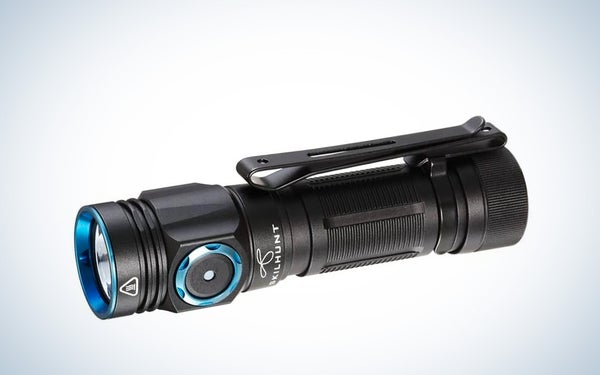
The 6 Best Knife Sharpeners of 2024

0

We may earn revenue from the products available on this page and participate in affiliate programs. Learn more ›

Choosing the best knife sharpener can be difficult, given the myriad of choices. However, being able to properly maintain the edge on your cutting tools—whether it’s a pocket knife or a fillet knife—is of vital importance. A dull knife is a dangerous knife, as you’ll need to focus more effort to move the knife through the material. That means you’re at greater risk of having something slip. This can lead to an injury or to damage to the material being cut.

A finely tuned knife is a dream in the kitchen and in the field, as opposed to something that’s not been maintained well. If you take care of your blades, they’ll take care of you. It doesn’t take much time to keep them hair-popping sharp either, as long as you have one of the best knife sharpeners at hand.

How We Picked the Best Knife Sharpeners

I’ll be honest in that I own far more knives than any human being would ever truly need. I’ve been collecting, using, and sharpening them for well over 40 years. While some of them don’t see a whole lot of use (I mean, how often do you really need to break out a machete?), there are several that are in constant rotation for my daily carry knife. I use them for everything from opening mail and packages to slicing up fruit and vegetables for lunch or dinner. Whether folding or fixed blade, I keep them all sharp and ready to go.

Having equipment to bring a dulled edge back to being razor-sharp is important for any knife user, whether you own a single blade or a couple hundred of them. Blade degradation happens with every use. And some materials are worse than others, of course. For example, corrugated cardboard is horrible for a knife. The glue used to make it dries very hard and there’s often sand and grit mixed in with the paper, making it incredibly abrasive. Given that we receive a lot of packages at home, we end up using knives quite often to break those boxes down. That means we’re sharpening our blades regularly and the tools listed here are ones I’ve used myself.

Best Knife Sharpeners: Reviews and Recommendations

Best Overall: Work Sharp Knife & Tool Sharpener Mk.2

Best Overall

Key Features

  • Uses flexible belts to do the work, just like the pros
  • Two-speed motor for better control
  • Sharpening guide for precision and repeatability

Pros

  • Electric motor does the work for you
  • High-quality construction and materials
  • Will handle knives, axes, lawnmower blades, and more

Cons

  • Requires practice to perfect the technique

Work Sharp has a well-deserved reputation for excellence and the Knife & Tool Sharpener Mk.2 is truly the cream of the crop. If you don’t want to invest in a full-size belt grinder and sharpen your knives and tools the way the professionals do, this is the next best thing. It is sort of a tabletop version of that same grinder, scaled down to a compact size.

It comes with six belts, two each of three different grits. These are easy to swap on the machine as you move along in the sharpening process. The angle guides can switch from 20° to 25°. They can also be flipped out of the way entirely if they will inhibit the movement of the blade through the sharpener. You can put it on low speed for heavy-duty tasks like mower blades, then switch to high-speed for knives and such.

While this system isn’t difficult to operate, you should practice on a few inexpensive blades until you get the hang of it. If you’re not careful, you can damage the knife’s edge and end up creating more work for yourself in the long run. Just take your time and let the machine do the work. When done, it all packs up easily to keep it on the shelf until you need it. As this is an electric knife sharpener, it isn’t meant for use in the field.  This is strictly something you’d keep in the house or workshop.

Best Pocket Knife Sharpener: Work Sharp Guided Field Sharpener

Best Pocket Knife Sharpener

Key Features

  • Ambidextrous, use it right- or left-handed
  • Has built-in angle guides for easy use
  • Compact and easy to carry in the field

Pros

  • Has diamond plates, a ceramic rod, and a leather strop, all in one unit
  • Will sharpen straight blades, serrated edges, even fishhooks
  • Provides five complete steps to sharpen a dull blade

Cons

  • Can be awkward to use for large knives

With the built-in sharpening guides of the Work Sharp Guided Field Sharpener, you’ll be able to replicate the proper sharpening angle again and again. All you need to do is rest the knife blade against the guide, then maintain that same angle as you move the knife down the sharpener. This takes a small amount of practice, but it isn’t too difficult.

The best pocket knife sharpener, this model has five separate stages, working from 200 grit and 600 grit diamond plates to the rough and smooth sides of the ceramic rod, then finally to the leather strop. Owing to the quality of the components, you don’t need to exert a ton of force. Just the weight of the knife itself will suffice. Just take it step by step and you’ll get there.

In addition to knives, this model can sharpen fishing hooks, too. The ceramic rod has a groove just for this purpose. This really is the complete solution for the active outdoorsman or outdoorswoman, giving you plenty of sharpening power in a compact and easy to pack size. In addition, it works great in the workshop or kitchen. As a bonus, it is relatively inexpensive, so you could have one in the knife drawer for touching up your meat carving blades and another with your hunting gear.

Best Manual Knife Sharpener: Lansky 4 Stone Diamond Deluxe Sharpening System

Best Manual Knife Sharpener

Key Features

  • Four stones of varying coarseness
  • Four guide rods for different angles
  • Has been a very popular sharpening system for over 40 years

Pros

  • Easy to assemble and use in the kitchen or shop
  • Kit comes with everything you need
  • Clamp to hold the knife steady

Cons

  • Heavy or wide knives can be troublesome

While it does take a little practice and patience to get the hang of it, the Lansky 4 Stone Diamond Deluxe Sharpening System works amazingly well. As it should, given how long it has been around. Products generally don’t last on the market for several decades unless they work well. This sharpener was designed for people who are not well-versed in knife sharpening. You just put your knife into the clamp and secure it. Then, choose the angle rod and the stone of your choice, put them together, and run the stone across the blade several times. Flip the knife and repeat the process. Then, move on to the next stone until the edge is sharp.

There are four stones included in this kit from 600 down to 70 grit. Depending on the condition of your knife, you might not need all four stages, making it an even quicker process.

The angle rods included are:

  • 17°: a severe angle that’s typically used for razor blades or similar tools
  • 20°: common for high-quality knives, including kitchen cutlery
  • 25°: recommended for most standard knives, such as those for the outdoors
  • 30°: typically used for heavy-duty chores, like cutting carpet or slicing cardboard

The rods are color-coded to make them easy to locate. Everything stores in a handy case, keeping everything organized as well as easy to transport. While I wouldn’t toss it into a backpack for a weeklong trek in the wild, if you’ll have a vehicle with you, it will fit quite nicely in the trunk or backseat.

Best Sharpening Stone: Tri-6 Arkansas Tri-Hone Sharpening Stones System

Best Sharpening Stone

Key Features

  • Three stones on a triangle axis
  • Molded base with nonskid rubber feet
  • Kit includes sharpening lubricant and instructions

Pros

  • Very safe to use, won’t slide on the table or counter
  • Comes with a sharpening angle guide
  • Easy and instinctive to use

Cons

  • The stones can get gunked up quickly

Arkansas stones are known for their quality. The Tri-6 Arkansas Tri-Hone Sharpening Stones System comes with three stones of varying grits, allowing you to work your way from 400 to 600 and then to 1000 grit to get the knife razor sharp. Each stone is about six inches long and they are color-coded for easy identification.

The rubber feet on the base keep it from sliding around as you work. You start by selecting the grit stone you want and dabbing a little lubricant on it. Then, use the angle guide to make sure you’re holding the knife in the proper position and slide it across the stone, as though you’re trying to slice a bit off the top of it. Make sure you get the entire edge into contact with the stone as you move. Repeat for a few passes, then reverse the knife and pull it toward you.

To move to the next grit, all you need to do is lift the stone and rotate it, then replace it in the base. The triangle shape of the cradle keeps it locked in place as you work. The stones must be cleaned after use. This is just a matter of scrubbing them with soap and water, then setting them out to dry before storage.

Best Portable: Spyderco Tri-Angle Sharpmaker

Best Portable

Key Features

  • Adjustable sharpening angles
  • Four stones of different grits
  • Rounded edges for serrations

Pros

  • Extremely versatile
  • Everything stows into the base
  • Works on just about any knife

Cons

  • Price
  • Does take some practice

Spyderco’s classic sharpener kit is an excellent all-around sharpening system that transports nicely from deer camp to the summer campsite and everywhere in between. That’s because the entire setup fits snugly into the plastic base and lid, making for a very compact kit. This makes the sharpener very easy to store. Spyderco includes four color-coded rods including two fine white stores and two medium-grit stones that slot into holes on the base at 30° and 40°.

The user holds the blade vertical as it is worked across the stones. While that is easy to remember and takes some of the mystery out of blade angles, it also takes a little practice to master. In fact, it’s a bit difficult to understand until you watch one of Spyderco’s instructional videos because it’s a technique that’s difficult to describe. However, this sharpener is incredibly versatile for everything from kitchen knives to the most serrated backpacking blade thanks to a rounded edge of the stone. We like the compact nature of the whole package that makes it so easy to take this sharpener along on all our outdoor adventures.

Best Kitchen: Chef’s Choice Trizor 15X/V

Best Kitchen

Key Features

  • Three stages of sharpening
  • Diamond abrasives
  • Multi-degree edge honing

Pros

  • Fast and easy sharpening
  • Works on serrated blades
  • Compact design

Cons

  • Requires through study of instructions
  • Rough on knives if improperly used

While electric knife sharpeners are not a favorite of most diehard knife enthusiasts, they are more than adequate for someone who just wants to keep their kitchen knives sharp. The machine uses three stages of sharpening to hone an edge. The first two utilized a hard diamond abrasive that will sharpen the hardest of steels. The third stage of the sharpener polishes and finishes the edge. This sharpener does require a study of the instructions before use because that diamond abrasive can damage the blade if used improperly.

However, this sharpener puts excellent 15-degree edges on blades and can even convert a 20-degree edge to a 15-degree one if you want to give an older blade a new life. The entire sharpener also takes up very little storage space, making it easy to store in a kitchen cabinet until a blade needs a touch-up.

What to Consider When Choosing a Knife Sharpener

With all of the choices out there, it can help to narrow the search by concentrating on a few key points. Keeping these in mind will serve to cut down the list of choices to those products that are truly worth considering.

Budget

Few of us have an infinite supply of money, and thus we need to plan our purchases carefully. It is important to understand that while price is not always indicative of quality, more often than not you do get what you pay for. A dollar store wrench will perform like a dollar store wrench, for example, and may just turn into a pretzel the first time you use it. As a practical matter, it is usually a good idea to pay a little more for a higher quality item than to buy something you’ll probably need to replace in a short period of time due to shoddy materials or construction. As the saying goes, “Buy once, cry once.” Meaning, moan about the higher price and then move on instead of complaining every time a shoddy tool breaks down.

Ease of Operation

The more you have to struggle with a piece of equipment, the more often you’ll find reasons not to use it. While sharpening knives isn’t always all that exciting, it shouldn’t feel like a slog as you move from one step to the next, causing you to dread the chore altogether. The best knife sharpeners are ones that have a fairly simple operation. With every tool there’s going to be a learning curve, but the quicker you can achieve competency with it, the happier you’ll be.

Effectiveness

At the end of the day, this matters more than anything else. If it doesn’t work, if it doesn’t put a keen edge on your best knives then there’s little point in having it around. It isn’t just a matter of removing metal from the blade, as any grinder can do that. It needs to do so in a controlled manner, with an angle that can be repeated continuously until the edge has achieved the desired level of sharpness. It is that repeatability that’s critical to success, too. If the sharpener is sloppy, or if your technique is off by too much, you’re going to end up doing more harm than good, causing frustration as well as wasting your time. The best knife sharpeners are ones that will guide you with the proper angles.

FAQs

Q: At what angle should you hold a knife to sharpen it?

The answer here depends on the type of knife it is and what the intended use of it is. For a general, do-it-all knife, an angle of 25° is pretty standard. However, a kitchen knife, which is a much thinner tool, is usually sharpened at 20° or so. The shallower the angle, the thinner the edge will be. While that means it’ll be sharp, it’ll also be more delicate and prone to damage under heavy use. You wouldn’t use a kitchen knife to carve wood, right?

Q: Should you sharpen knives every time you use them?

Not necessarily, at least not in the way you might think. Quite often, after a little use the blade’s edge will curl. It will still cut, but it isn’t quite as sharp as it was when you started. All that’s needed at this point is to run it on a strop a few times to straighten that microscopic edge. It is only if that isn’t enough that you’ll want to turn to truly sharpening the knife. Keep in mind that any sharpener works by removing steel from the knife. Thus, the more often you run it across a sharpener, the more steel you’ll lose over time. Strop it first and maintain that edge as best you can before turning to one of these products.

Q: Do you wash a sharpener?

Well, it depends on the sharpener. A stone, for example, needs to be washed after each use. What happens is that the lubricant mixes with the steel dust and sticks in the tiny crevasses in the stone. That serves to smooth out the coarseness and make the stone less effective. By washing it with soap, water, and a nylon brush, you dislodge all that gunk and get the stone back to where it needs to be. Other types of sharpeners, such as those that use belts, do not need to be washed, though the belts will wear down over time and will need to be replaced.

Q: How much does a good knife sharpener cost?

The old adage of “you get what you pay for” certainly applies to knife sharpeners as well. However, there is a wide variety of tolls that fall under that heading, and the prices vary as much as the items. A good sharpening stone can be had for as little as $20, but you can pay thousands for a professional sharpening system. But for most home use, expect to spend anywhere from $25 to $100 for a quality sharpener.

Q: Are electric knife sharpeners better than manual?

Both electric and manual sharpeners are extremely effective at honing an edge back onto knives. Most knife enthusiasts prefer a manual sharpener because they offer more control. Electric sharpeners are a bit more aggressive, and some people do not like them because they can damage a knife if not used properly. Electric sharpeners may shorten the life of the knife because they take more material off the blade than a manual sharpener.

Q: Do knife sharpeners ruin knives?

Any knife sharpener that is used improperly can ruin a knife. Running a blade through an electric sharpener too many times or using the wrong grit of stone can easily shorten the knife of the blade significantly. Accordingly, it is vital to read the instruction manual of any sharpener to ensure proper use. Fortunately, there are also tons of how-to videos online that can help people new to sharpening understand and master the technique.

Best Knife Sharpeners: Final Thoughts

Of all the products listed here, I prefer the Knife & Tool Sharpener Mk.2. It works quickly and accurately, though there isn’t a whole lot of room for error. While there’s an almost meditative state that can come with knife sharpening, I’m a busy guy and can’t spend as much time as I might like on this task. Plus, I own a lot of knives and I could easily spend an entire afternoon tuning some of them up. The Mk.2 gets the job done properly and in record time.

Why Trust Us

For more than 125 years, Field & Stream has been providing readers with honest and authentic coverage of outdoor gear. Our writers and editors eat, sleep, and breathe the outdoors, and that passion comes through in our product reviews. You can count on F&S to keep you up to date on the best new gear. And when we write about a product—whether it’s a bass lure or a backpack—we cover the good and the bad, so you know exactly what to expect before you decide to make a purchase.
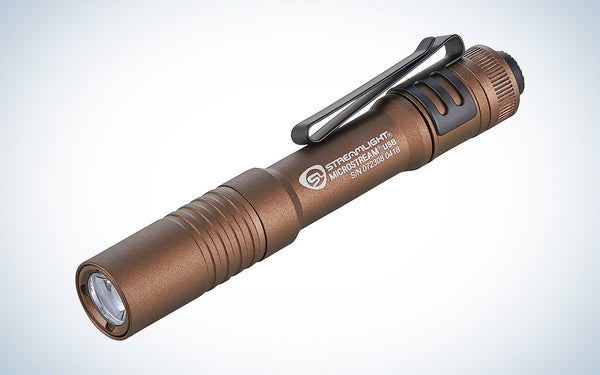
Wayne LaPierre Steps Down from Leadership Role at NRA

0

Embattled NRA CEO and executive vice-president Wayne LaPierre announced on Friday that he will be stepping down from his position. The decision comes days before a New York civil suit is set to begin against LaPierre and other NRA executives. As of January 31st, the announcement ends a decades-long career that many think should have ended long ago.

Out With the Old: Wayne LaPierre to Resign his Position with the NRA

Wayne LaPierre will be stepping down on January 31st, 2023, ending his decades-long position with the NRA. His announcement comes days before a New York City civil trial is set to begin against LaPierre and others. The trial will focus on accusations of misappropriation of the organization’s funds. Specifically, he and other executives allegedly enjoyed luxury vacations and other perks at NRA members’ expense.

In a statement on NRA’s website, LaPierre said, “With pride in all that we have accomplished, I am announcing my resignation from the NRA. I’ve been a card-carrying member of this organization for most of my adult life, and I will never stop supporting the NRA and its fight to defend Second Amendment freedom. My passion for our cause burns as deeply as ever.”

According to the National Rifle Association announcement, an interim CEO and EVP has already been selected. Following the departure of Wayne LaPierre, long-time NRA executive and Head of General Operations Andrew Arulanandam will step in temporarily.

The decision will hopefully weaken NYAG Leticia James’ attacks on the NRA, who vowed to dissolve the organization.

The NRA states, “With respect to the NYAG’s allegations, the NRA Board of Directors reports it has undertaken significant efforts to perform a self-evaluation, recommended termination of disgraced ‘insiders’ and vendors who allegedly abused the Association, and accepted reimbursement, with interest, for alleged excess benefit transactions from LaPierre, as reported in public tax filings.”

LaPierre said, “I am proud of the NRA’s advocacy in New York and, through it all, determination to defend the Second Amendment. I can assure you the NRA’s mission, programming, and fight for freedom have never been more secure.”

You Don’t Have to Go Home, But You Can’t Stay Here

In a Board of Directors meeting in Irving, Texas, today, NRA President Charles Cotton accepted LaPierre’s resignation. Reports indicate that he cited health reasons for his departure. As part of the organization’s announcement, Cotton expressed gratitude for his service:

“On behalf of the NRA Board of Directors, I thank Wayne LaPierre for his service. Wayne has done as much to protect Second Amendment freedom as anyone. Wayne is a towering figure in the fight for constitutional freedom, but one of his other talents is equally important: he built an organization that is bigger than him. Under the direction of Andrew Arulanandam, the NRA will continue to thrive – with a renewed energy in our business operations and grassroots advocacy. Our future is bright and secure.”

While the organization thanks LaPierre for his service, many members simply thank him for leaving.

Didn’t find what you were looking for?

Best Bowie Knives of 2024

0

We may earn revenue from the products available on this page and participate in affiliate programs. Learn more ›

Created in the 19th century by master knife maker Jim Bowie, the first bowie knives were built for hand-to-hand combat. Bowie made a buzz around his knife build in 1827 when he used the knife in the “Sandbar Fight,” and it’s become an American icon since. 

Of course, what over-40-year-old didn’t want a bowie knife of his own after watching Sylvestor Stallone use one in the October 1982 thriller, First Blood. The question, though, for many who spend time outdoors hunting, camping, fishing, etc., is: Do I need a bowie knife, and are they functional? The answer is: Yes. Why? Bowie knives are full-tang fixed-blade knives with lengths typically between 11 and 18 inches. The fixed blades are usually thick and sharp, and the handle has a circumference that allows the user to deploy torque to the blade. A bowie worth its salt will also have some weight, and it will come with a protective sheath.

Aside from their build, bowie knives serve multiple outdoor purposes. If you have a sturdy bowie on hand, you can scale and gut a fish, chop through wood, and skin an elk. I’ve used my bowie knife to carve pine tent poles, and put a rubber mallet on the butt cap of the handle to poke extra holes in a leather harness. Hours later, I used the same knife to gut a half-dozen salmon. A good bowie knife will serve multiple purposes. If you should ever find yourself in a self-defense situation, you can pull a Pual Hogan in Crocodile Dundee and say, “That’s not a knife; that’s a knife,” when you pull your bowie from its sheath.

Whether it’s as a multipurpose hunting and fishing knife, or survival and self-defense, the best bowie knives can handle whatever you ask of them. 

How I Picked the Best Bowie Knives

No, I didn’t test every knife mentioned in the awards section. I did beat on several of them, which were noted in the “Why It Made the Cut” sections. Others were selected based on recommendations from other trusted outdoors people. 

If the knife can clean a fish, gut, and skin a deer and proved helpful around camp, it was labeled a solid bowie knife. Of course, lesser bowie knives with brittle blades, blades that won’t hold an edge, and models with slender, breakable handles were quickly sifted through and discarded. If the knife was given an award, there was a reason for it, and you can trust it as a solid knife that will serve the purposes indicated in the review. 

The Best Bowie Knives: Reviews & Recommendations

Best Overall: Ka-Bar U.S. Marine Corps Bowie Knife

Best Overall

Specs

  • Length: 11.875 in
  • Blade Thickness: .165 in
  • Leather handle material

Pros

  • 56-58 Rockwell Hardness
  • Durability
  • Maneuverability

Cons

  • Sheath
  • Handle gets slippery

A top-end bowie knife that’s been around since World War II, the Ka-Bar U.S. Marine Corps Bowie Knife is durable and versatile. The straight-edge knife is fitted with a 7-inch blade and branded with an overall length of 11.875 inches. The total weight is .7 pounds. The butt cap/guard is durable 12GA commercial-grade carbon steel, which I appreciate as I have hammered on this butt cap more than once with rocks, logs, and rubber mallets.

Another win is the blade thickness and blade width duo. This 1.188-inch-thick blade holds an edge, and its thickness allows it to chop if needed. It works as well as a fish scaler as it does for camp chores, and the gapped leather handle gives the knife a great fit and feel in hand. The leather sheath, besides being branded with the USMC symbol, is average as sheaths go, but this bowie is a tremendous overall knife that any serious bowie knife lover should have.

Biggest and Baddest: Condor Undertaker Bowie Knife

Biggest and Badest

Specs

  • Length: 15.5 in
  • Blade Thickness: 5 mm
  • 10.125-inch 1075 carbon steel blade

Pros

  • Brawny build
  • Joe Flowers design
  • Sharp

Cons

  • A little too heavy
  • Sub-par sheath

First, take a look at it. The Condor Undertaker boasts a classic bowie look and is typically priced between $120-$130 (though it’s under $100 at Amazon, right now). The guard is long and heavy, an excellent feature for a knife with this blade type, and I love the walnut handle with multiple gold pin attachments. This knife offers a lot of brawn, but I’ve had numerous hunters tell me they’ve skinned and gutted animals with it.

The blade is hand-sharpened, and the high carbon steel holds an excellent edge. The knife offers an intimidating look, and it doesn’t hurt to have it lying around camp in its welted leather sheath when some nosey camp neighbors come to look things over. The knife is heavy, which may rob some of its self-defense value, but if you’re a beast and have some arm strength, this may be the bowie you want if a pick-stickin’ match starts. 

Best Budget: Buck Knives 119 Special Knife

Best Budget

Specs

  • Heat-treating system
  • Black phenolic grip
  • 420HC stainless steel blade

Pros

  • Longevity
  • Made in the USA
  • Price

Cons

  • Handle can get slippery
  • Sheath is below average

This was my first-ever bowie, and I still use it. Designed by legendary knife maker Hoyt Buck, the 119 Special is an excellent bowie go-to. Buck notes on their website that its knives are not to be used as hammers, chisels, pry bars, screwdrivers, etc., but I’ve used this knife for all of those things. The blade holds a decent edge, the handle with finger cradles promotes a solid grip, and I love the butt cap. 

The knife has an overall length of 10.5 inches, and the blade has been heat-treated to ensure a more pronounced edge, ease of resharpening, and durability. Blade thickness is .175, and blade length is 6 inches. The sheath could be better, but the knife carries a Forever Warranty, and the phenolic handle features finger grips that help you get a good hold. The knife feels good in the hand and can be used for various purposes. 

Best with Damascus Blade: Bear & Son Cutlery Bowie

Best with Damascus Blade

Specs

  • Indian Stag bone handle
  • High-definition Damascus blade
  • Quick-release leather sheath

Pros

  • Racy look
  • Ultra-sharp
  • Comfortable handle
  • Durable

Cons

Shy of 15 inches in total length, the knife is a true bowie, and the 9-inch Damascus blade married with the India Stag Bone handle makes it a stunner. The brass guard is beefy and prevents the hand from slipping down on the 58-60 Rockwell blade.  

It’s pricey, but a hunting buddy I respect enormously told me, “This is the best hunting and camping knife I’ve ever used. It’s the perfect combination of brute and beauty, and the Damascus blade is as good as they come.” Bear & Son Cutlery has an excellent reputation, and this top-end bowie only strengthens its knife-crafting legacy.

The total length is 14 3/8-inches, and the high-definition Damascus steel blade measures 9 inches long. A brass guard has been added to separate the blade from the India Stag Bone handle, which adds to the knife’s beauty and boosts safety. The Quick Release leather sheath is a nice touch, and at 11.5 ounces, the knife has a great strength-to-weight ratio. 

Best Made in The USA: Buck Knives 120 General Knife – Heritage Series

Best Made in The USA

Specs

  • Length: 12 in
  • 7 3/8-inch clip point D2 steel blade
  • Cocobolo wood handle

Pros

  • Sharp
  • Durable
  • Comfortable

Cons

This knife is a classic, and with the word “General” in the name, you know it was designed to be a multi-purpose knife. With a D2 tool steel blade and a Cocobolo handle, this made in the USA bowie is tough to beat. This Buck showcases a crescent tip, making the blade thinner with a sharper point. I love this knife for skinning deer, scaling fish, and carving up meals in camp. This build promotes the use of the blade for fine-detail work such as scaling and skinning, but the D2 high carbon, high chromium tool steel blade is German-tank tough. And, it holds a significant edge while resisting corrosion.

The traditional cocobolo wood handle gives the knife a great look and the hand swell promotes a good in-the-hand feel. The blade is a clip-shape blade and features a thickness of .175 inches. The sheath could be better, but it serves its purpose, and the full-tang construction with integrated finger guard and a deep choil make this bowie hard to ignore. 

What To Consider When Choosing a Bowie Knife

Other than backcountry wanderers that scrutinize every ounce, I believe every outdoors person should have a bowie knife. However, like the best hunting knives or backpacking knives, not all bowie knives are created equal.

Don’t settle for a cheap bowie with a partial-tang blade. Bowie knives are built to be used and abused, and a partial tang bowie won’t hold up. Go full-tang. And be sure the grip boasts a decent diameter that feels great in hand. Smaller diameter handles reduce the amount of torque you can place on the blade, and when punching through wood, bone, leather, etc., torque is essential. 

Blade material should also be considered. There are many different types of steel used to craft bowie blades, and most bowie yielders want strong steel that will hold an edge and not crack or break under pressure. Damascus steel is becoming increasingly popular in the world of bowie knives. 

Length is something else to consider. There’s a reason bowie knives were developed to be fighting knives. A long blade and handle combo provides power and extends reach, and you want your bowie knife to have some length. Weight is equally as important as length. A flimsy bowie knife will be brittle and weak, and weak things break. Heavier bowie knives allow the user to transfer more energy into a piece of wood they’re chopping. However, you also don’t want a bowie that feels like a sledgehammer. Remember, this is a multi-purpose knife, and you will enjoy some maneuverability.

Usually, I don’t get too hung up on sheath design, but sheath design is critical for bowie knives. Unless the knife is in use, it should be in its sheath. Long, sharp blades can cause damage, and I’ve seen some terrible camp disasters from a left-on-the-table bowie. Most bowie knives will come with a leather or synthetic sheath, and I don’t have a preference as long as the sheath holds the blade tightly when in transport but allows for easy removal. 

FAQs

Q: What are bowie knives used for?

Bowie knives are multi-purpose knives, and they can be used for everything from a knife fight to skinning a rabbit. Their multi-function nature makes these knives popular with the outdoor crowd.

Q: What is unique about a bowie knife? 

First, bowie knives look cool, but they serve many functions. Most unique, perhaps, is you can be using the knife to open a package of bacon one minute, and then the next, be whittling away at branches to create a deadfall trap system. I’ve used bowie knives to gut elk, scale crappie, and breast a dove. 

Q: What happened to the original bowie knife?

Rumors fly about this, but a bowie knife attributed to Jim Bowie’s big brother, Rezin Bowie, was donated to the Texas Ranger Hall of Fame Museum. Whether this is the exact bowie Jim used in the great Mississippi “Sandbar Fight” is unknown. The scabbard of the knife is engraved with a saying, “R.P. Bowie to Captain W. MY Lacey.”

Q: How long was the original bowie knife?

Western historians note the original Jim Bowie knife was likely 17 inches long. 

Q: How long should a bowie knife be?

This question will rial up most any knife guru. Some will say a bowie knife can be six inches long, but most put total knife length between 11 and 17 inches. 

Q: In what states are bowie knives illegal?

Knife laws are ever-changing, and some states even have knife laws that vary by county or district. Knife laws are also tricky in how they are worded, especially for bowie knives. A state like Arizona has knife laws that allow citizens to have any blade and carry that blade concealed. Then there are states like New York. New York knife laws state that it is illegal to own any knife adapted for use primarily as a weapon, but also note it’s legal to own a hunting knife. There is a gray area in some states, and I recommend visiting knifeup.com and reading up on the laws in your state. 

Best Bowie Knives: Final Thoughts

Unless I’m headed into the backcountry with a pack on my back for an extended hunting or fishing trip, I have a bowie knife. There is a bowie knife in my truck, camper, kitchen, etc. I find so many uses for them, and most of these blades have been in my family for generations. A bowie knife makes a great family heirloom — five of mine have been passed to me — and they are simply a meat and potatoes knife. They don’t have a lot of flash and flare. Sure, they look cool, but at day’s end, the best bowie knives were built to serve various purposes, and the more you have one close at hand, the more uses you’ll find for it. 

Why Trust Us

For more than 125 years, Field & Stream has been providing readers with honest and authentic coverage of outdoor gear. Our writers and editors eat, sleep, and breathe the outdoors, and that passion comes through in our product reviews. You can count on F&S to keep you up to date on the best new gear. And when we write about a product—whether it’s a bass lure or a backpack—we cover the good and the bad, so you know exactly what to expect before you decide to make a purchase.
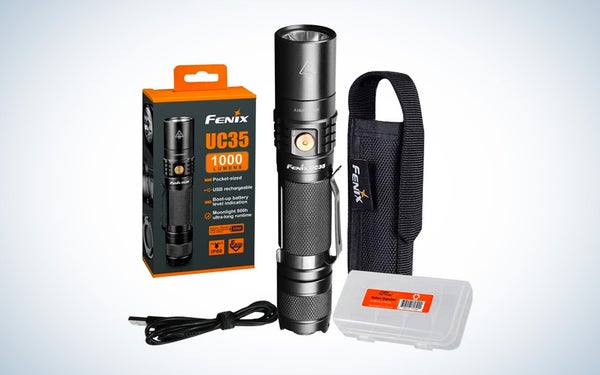
The 5 Best Emergency Blankets of 2024

0

We may earn revenue from the products available on this page and participate in affiliate programs. Learn more ›

Having an emergency blanket in your survival kit is an excellent way to protect yourself against the elements. Whether for a car survival kit during the cold winter months or simply for ease of mind on a backpacking trip, there is a portable and practical blanket for everyone. 

Unlike blankets we keep in our homes, standard emergency blankets are only intended for short-term use to preserve warmth or make shelters. These blankets won’t necessarily be cozy or all that comfortable. Their intention is to keep you alive and help you retain heat all in one portable package. Luckily, there have been some changes and innovations in the emergency blanket world to provide durable and comfortable options as well. To help you stay prepared with a well-stocked survival kit, we put together our top picks for the best emergency blankets.

Things to Consider Before Buying an Emergency Blanket

Before you go out and buy the first emergency blanket you see, identify your intended use and some key features of quality blankets. Read through our things to consider section to better understand what an emergency blanket is and how to pick the best emergency blanket for your needs.

Materials

From the best sleeping bags to the best emergency blankets, materials matter. The quality and type of materials determine the overall quality, performance, durability, and often the sustainability of that product. The materials an emergency blanket is made from are somewhat narrow, and each option has its pros and cons. Traditional emergency blankets or space blankets are made from mylar, but there are a few other options too. 

Mylar: most emergency blankets on the market are made from a mylar material. The use of mylar for these blankets is so widespread because they are effective in helping you retain body heat while still being extremely lightweight and affordable. 

Metalized Polyester: very similar to mylar, metalized polyester has essentially the same properties. Mylar is still often more durable and tear-resistant, but they will both retain around 90% of your body heat. 

Wool: potentially the second most common material used for emergency blankets is wool. Wool is a natural fiber, making it more sustainable than something like mylar. It doesn’t have the same heat reflective abilities, but wool is still an excellent insulator. They will insulate when wet and have fire retardant properties making them slightly more versatile (fiberglass cloth is also a good option for fire retardant blankets). The downside to a wool blanket is that it will be heavier, making them less convenient for something like backpacking. 

Fleece: a popular midrange emergency blanket material is fleece, made from polyester or a nylon blend. Fleece tends to be affordable and relatively lightweight, but it isn’t going to have heat refection as mylar or the ability to be a fire retardant like wool. 

Mylar continues to be the most popular because it is lightweight and has an affordable price. Other blanket types like wool and fleece work better for blankets you won’t have to carry very far. They are common to have in your car or RV emergency kits and home survival kits.

Protection

Most of what we carry when we venture outdoors is for protection. When looking at the best tents or blankets, evaluating their level of protection and the intended use is a great way to narrow down options. 

Since heat retention is the primary purpose of an emergency blanket, it helps to look at that first. The best emergency blankets will be transparent about their overall performance and capabilities. Look at the materials closely because even blankets that appear to be mylar or metalized polyester can easily be knockoffs with minimal functionality in emergencies. 

Other than the apparent protection from the cold, other things to look at are the water and wind resistance. Emergency blankets should at the very least still insulate when they are wet, but ideally, they would be completely waterproof. Mylar blankets are 100% waterproof, so always check the materials to ensure you purchase a material that will protect you. 

When it comes to wind, the goal is to block the wind from your body and continue to help you retain heat. The best emergency blankets should protect against even the strongest winds. Materials like wool or fleece may not be as effective because they are fabrics and will allow some level of airflow through them. 

The intended use of your emergency blanket will also have a lot to do with the level of protection needed. For instance, a blanket you want to bring backpacking and potentially use as a blanket or emergency shelter will likely be made from mylar for better heat retention and protection from the elements. But if you want a multi-functional blanket in your emergency car kit, a wool blanket can work just fine. 

Size and Weight

Your intended use will determine a lot regarding your emergency blanket’s ideal size and weight. Do you plan to use the blanket as a shelter or want to use it for more than one person at a time? Do you need something light and small to carry while backpacking?

Ask yourself these kinds of questions, and then start to identify the size and weight to make sure the blanket will work for your needs. When it comes to size, the blanket needs to cover your body entirely. Ideally, you can wrap it around you, not just cover the front of your body. You may need a longer or wider blanket depending on if you want to use it as a groundsheet in a tent for winter camping or as a shelter in a survival kit. 

The weight of a blanket has a lot to do with the materials. Mylar is the standard and an emergency blanket of average size often only weighs around 2-2.5 oz. Blankets of other materials (wool or fleece) or having several layers of material likely weigh a few pounds but can be upwards of 6 lbs. These are more suitable for in-home or vehicle survival kits.

Best Overall

Why It Made The Cut: The S.O.L. Heavy Duty Emergency Blanket is the best overall for its ample size, durable materials, affordable price, and quality heat reflectivity. 

Key Features

  • Weight: 7.9 oz
  • Dimensions: 96” W x 60” L
  • Materials: Polyethylene
  • Heat Reflectivity: 90%

Pros

  • Multipurpose and versatile 
  • Large size
  • Durable and reusable 
  • Affordable

Cons

  • Hard to use as a shelter with no grommets 

The S.O.L. Heavy Duty Emergency Blanket is a step up from the standard options available. It may be a few dollars more, but for that slight price difference, you get a durable blanket large enough to be used as a tent floor mat or to help insulate the top of your tent. The packability and lightweight make this blanket even better as it can easily be stowed in any emergency kit or taken into the backcountry. 

Don’t let the light weight fool you, though, because this blanket also does a fantastic job helping you retain heat. With the reflective side facing your body, it has a heat reflectivity of 90 percent. For those that don’t like the loud crinkle associated with traditional space blanket designs, you will appreciate that this one is far quieter. 

The blanket is durable and can be reused, which is great for those that like to use an emergency blanket often during camping trips. The only downside to this blanket design is that it does not have grommets or reinforced corners to make shelter building easy. Other than that, this is an excellent all-around blanket for outdoor and emergency situations. 

Best for Hiking

Why It Made The Cut: The Bearhard Heavy Duty Emergency Blanket is a versatile and durable camping companion that will keep you warm, dry, and more comfortable.

Key Features

  • Weight: 1.25 lbs
  • Dimensions: 84″L x 60″W
  • Materials: 5.0 Duralix Material
  • Heat Reflectivity: 90%

Pros

  • Multifunctional
  • Reinforced corners and grommets
  • Waterproof
  • 5-layer material protection 
  • Lifetime warranty 

Cons

  • Heavier and bulkier than traditional emergency blankets

The Bearhard Heavy Duty Emergency Blanket is designed to be used in and out of emergencies. Its durable design allows you to use it as a standard piece of camping equipment. Use it as a tent footprint, backpack rain cover, emergency shelter, wind or sun block, or an emergency blanket. 

The reinforced corners and grommets make it easy to set up as a shelter, and the materials provide an extra durable product. The five-layer design includes non-woven fabric, polyethylene lamination, ploy mesh, another layer of polyethylene lamination, and a layer of aluminized mylar. 

The size of the blanket and the heavy-duty construction make it a bit heavier and bulkier than traditional mylar blankets. So, if you are strictly looking for an emergency blanket as a backup and not for any other function, this one may be overkill. If you like having a multipurpose item with a durable and functional construction, this is an excellent piece of gear. 

Best for Survival

Why It Made The Cut: The Arcturus All Weather Outdoor Survival Blanket is the best for survivalists who want the benefits of both a tarp and an emergency blanket.

Key Features

  • Weight: 3 lbs
  • Dimensions: 12’ L x 8.5’ W
  • Materials: mylar and polypropylene 
  • Heat Reflectivity: 90%

Pros

  • Durable 
  • Multifunctional 
  • Large size 
  • Grommets and reinforced corners

Cons

  • Heavy 
  • More expensive than most simplistic blankets 

The Arcturus All Weather Outdoor Survival Blanket was developed for cold, wet weather in the Pacific Northwest. It is a durable, multifunctional design that you can use as a tarp or a blanket. We picked this blanket as the best for survival because of its large size and durability. 

With a double layer of polyethylene to protect from the elements and a layer of mylar for heat retention, you can create the perfect survival shelter or use it as a blanket when needed. When in an outdoor survival environment, having gear that you can use for more than one purpose is ideal. It cuts down on how much you have to carry while still giving you the safety and security you need to stay alive. 

Keep the idea that this emergency blanket can double as a tarp because it will be close to that size and weight. It is not a lightweight blanket option, but it is functional and long-lasting. If you are looking for a durable emergency blanket that you can use as a shelter, Arcturus is a great place to start. 

Best Wool

Why It Made The Cut: If wool is more your style, the EKTOS Wool Survival Blanket is a durable, comfortable, and washable 100% wool blanket. 

Key Features

  • Weight: 5 lbs
  • Dimensions: 90″L x 66″W
  • Materials: 100% wool 
  • Heat Reflectivity: N/A

Pros

  • Easy to care for wool 
  • No dye or chemicals 
  • Soft, not scratchy 
  • Naturally insulating 

Cons

  • Heavier and bulkier than a mylar blanket 

The EKTOS 100% Wool Survival Blanket is great for indoor and outdoor use. Wool is a naturally insulating material. So, unlike mylar, wool will insulate you to keep you warm instead of reflecting heat back to you. 
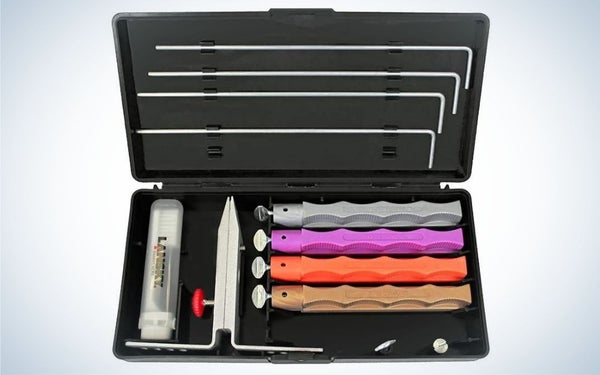
Wool has other benefits beyond insulating, such as being breathable, helping you regulate temperature, and moisture-wicking. Wool is also flame-resistant, yet many wool blankets will add chemicals to increase fire resistance. The EKTOS blanket utilizes wool’s natural ability and avoids unnecessary chemicals. 
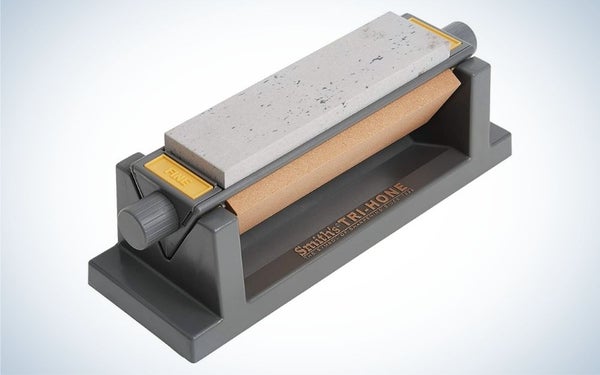
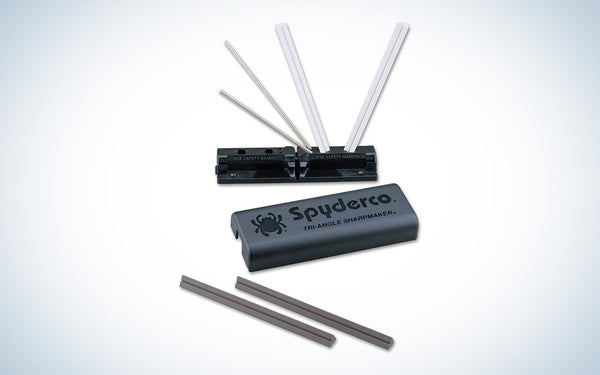
The downside to a wool survival blanket is that it is heavier and bulkier than a traditional mylar blanket. Wool has other aspects that make it desirable, and it is worth noting that mylar survival blankets and wool survival blankets usually have different applications. Since mylar blankets tend to be very small and compact, having both available in your survival kit doesn’t hurt. 

Best for in a Car

Why It Made The Cut: The Mambe Large Extreme Weather Outdoor Blanket is an excellent pick for a car survival kit or general outdoor blanket with ample insulation capabilities and easy-to-maintain materials. 

Key Features

  • Weight: 6 lbs
  • Dimensions: 84″L x 58″W
  • Materials: Polartec classic 300 fabrics & Primaloft insulation
  • Heat Reflectivity: N/A

Pros

  • Machine washable 
  • Versatile use
  • Waterproof and windproof
  • Heat reflective lining 

Cons

For an all-around car camping or car survival kit, the Mambe Large Extreme Weather Outdoor Blanket is hard to beat. It utilizes some properties of a traditional emergency blanket with a heat reflective lining while giving you a fleece blanket’s comfort and insulating properties. 

It is very cozy, but it may prove to be too warm in some conditions. The wind and waterproof materials make this blanket perfect for outdoor activities and winter weather. One stand-out feature is that it is machine washable. Since the blanket is somewhat bulky, it works best in a washer with no agitator, and be sure to read care instructions carefully before washing or drying. 

Like a mylar space blanket, this blanket’s main downfall is that it is noisy. One side of the blanket provides you with wind and waterproofing, and when moving around, it does make a crinkling noise that is likely to annoy some customers. Besides the noise factor, this is an excellent blanket not only for a car survival kit but also for general outdoor use. 

How I Made My Picks

Choosing the best emergency blanket is not a one type fits all situation. Many high-performing and affordable options are available, but personal preference and intended use can influence your decisions. Beyond the materials and overall protection we detailed in the “things to consider before buying” section, we made our picks using criteria such as: 

  • Durability: how long is the blanket expected to last? Can it hold up with use in an outdoor environment? Is there a warranty or a repair/replacement policy on the item?
  • Sustainability: what are the materials used to make the product? Is the company transparent about production practices? Can materials be reused, repurposed, or recycled? What is the product’s projected lifespan?
  • Customer Experience: do verified customers report positive experiences with the product and customer service representatives? Are customer inquiries answered in a timely manner? Does the company respond to questions about sustainability and production practices?

Other considerations when choosing our picks include some first-hand experience with products, company-specific research, and verified customer reviews. 

FAQs

Q: How does a Mylar blanket keep you warm?

A Mylar blanket keeps you warm by reflecting body heat back to you. The material traps your body heat and can reduce heat transfer away from the body by up to 90%. Mylar has no insulating properties.

Q: How much does an emergency blanket cost?

How much an emergency blanket costs depends on the material, you seek. If the blanket is made of mylar or is a “space blanket” design, it will be relatively inexpensive ($5-30). Other types of emergency blankets made of fleece or wool material will be $20+ on average.

Q: Do emergency blankets actually work?

Yes, emergency blankets work. They are intended to keep you alive and avoid things like hypothermia. The best emergency blankets will help you retain at least 90% of your body heat by reflecting and trapping it under the material.

Q: What are emergency blankets made out of?

Traditional emergency blankets are made from metalized polyethylene or mylar, BoPET (biaxially-oriented polyethylene terephthalate). The differing materials reflect anywhere from 80-90% of radiated heat. Other emergency blankets can be made from things like polyester fleece or wool, but these materials insulate instead of reflecting heat.

Final Thoughts

The best emergency blankets will not only protect you when you need them, but they fit your intended use. While any survival kit can benefit from a mylar blanket, you may want something more versatile to keep in your car or to bring camping. Being prepared for anything when traveling, at home, or in the backcountry goes a long way. So make sure you have the best equipment to keep you safe, no matter the circumstances.