Home Blog Page 12

How Long Do MREs Last?

0

The need for survival food, such as MREs, in an outdoor emergency falls behind thermoregulation and hydration. However, the desire for food is both a physical need and increases morale significantly. There are numerous options for food for backcountry trips and disaster readiness. One crucial question often arises: How long can we rely on our food supplies to last? Specifically, for those of us who include Meals, Ready-to-Eat (MREs) in our survival kits, understanding their shelf life is critical. MREs, a staple in military rations, have become increasingly popular among hikers, campers, and emergency preppers due to their convenience and nutrient content. But just how long do MREs last?

How Long Do MREs Last?

So, back to the question at the center of this story: How long do MREs last? The shelf life of an MRE typically ranges from 5 to 7 years when stored at a temperature of around 60°F (15.6°C). However, this duration can vary significantly based on storage conditions, particularly temperature. At higher temperatures, the shelf life of MREs decreases; for example, at 80°F (26.7°C), it might drop to about three years. Conversely, cooler temperatures can extend their usability. It’s important to note that while MREs can remain safe to eat beyond these time frames, their nutritional value and taste may degrade. Therefore, adhering to these general guidelines and regularly rotating your MRE stock is recommended for optimal quality.

The food inside an MRE hardly constitutes as fine-dining. But it’ll keep you going in a survival situation. Jennifer Caudill

What Are MREs?

Meals, Ready-to-Eat (MREs) are self-contained, complete meals initially developed for military personnel to use in combat or field conditions where traditional food facilities are unavailable. Each MRE package is designed to provide a fulfilling meal, with components like an entree, side dish, bread or crackers, spread, dessert, and a beverage mix. They are packed with essential nutrients, offering a balanced mix of carbohydrates, proteins, fats, vitamins, and minerals.

The instructions on the back of an MRE package.
MREs have easy-to-follow instructions on the package. Jennifer Caudill

The robust packaging makes MREs resistant to harsh conditions and easy to transport. Hence, this is why MREs last so long. MREs are also known for their convenience, as they require no refrigeration and can be eaten cold if necessary. However, they often come with a flameless ration heater for warming the food. There is an easily understood direction on cooking them on the packaging. Follow the directions explicitly to get the best function from the heater. If you use too much water, they do not work well. 

How Does Temperature Affect the Shelf Life of an MRE?

Temperature is a critical factor in determining how long MREs last. When stored at cooler temperatures, around 60°F (15.6°C), MREs can last up to 5-7 years. However, as the storage temperature increases, their shelf life decreases. At 80°F (26.7°C), the shelf life may reduce to about three years, and at temperatures above 100°F (37.8°C), it can drop to a few months. High temperatures accelerate the degradation of food quality, impacting taste, texture, and nutritional value. On the other hand, frigid temperatures can affect the texture and palatability of some MRE components but are generally less harmful than high heat. Therefore, MREs should be stored in a relaxed, stable environment for optimal shelf life.  Keep in mind the cooker as well. The cooker degrades in ability over time.  Therefore, your food may last longer, but the cooker will not work well after 6-7 years. 

Are MREs Good Survival Food?

MREs are considered excellent survival food for several reasons:

  1. Their long shelf life makes them ideal for emergency kits and uncertain food supply situations.
  2. They provide a balanced diet, essential in survival scenarios where maintaining nutrition is challenging.
  3. MREs are also compact and easy to carry, requiring no cooking or refrigeration, which is a significant advantage in resource-limited settings.

The variety in MRE menus helps prevent palate fatigue during extended use. Many MREs include candy, seasoning packets, and bottles to help increase morale by eating them regularly. However, they are best suited for short-term survival and emergencies, as prolonged reliance on MREs alone can lead to digestive issues and potential nutrient imbalances.

Packs of gum and candy inside a MRE package.
A little something sweet makes a big difference in how enjoyable an MRE can be. Jennifer Caudill

What Is the Gum in an Meal, Ready-to-Eat For?

It has long been stated that the gum in MREs is either a laxative or anti-diarrhea. I queried the Army Natick Center, responsible for food supplies to the US military. Their designated public affairs person said this is undoubtedly a myth on both fronts but that the gum is there to serve a purpose. The gum is intended to help users keep their teeth cleaner and healthier. 

Do MREs Taste Good?

The taste of MREs is subjective and has improved significantly over the years. While they may not compare to fresh food or home-cooked meals, many find MREs reasonably palatable, especially considering their nature as long-lasting, ready-to-eat meals.

The variety of menus and the inclusion of flavor-enhancers like hot sauce or seasoning packets help improve their taste. However, some people may find them less appealing, particularly over extended periods. Taste preferences vary widely, but MREs are generally designed to be as tasty as possible, given their constraints. Due to the wide variety of options available, you rarely find a particular meal you enjoy. 

We sometimes forget that MREs are survival food, not everyday food—that is why MREs last so long. They were never intended to make people happy. They are intended to keep a person alive and functioning optimally in the short term.  As this industry has progressed, companies now make MREs specifically for civilians and disaster readiness.  Typically, these meals are more expensive but bring more choices and tastes. They also appeal to the dietary restrictions of various groups. Some companies have vegetarian, gluten-free, keto-based, and kosher options. You can also speak to your military friends who have had to live off these things for extended periods to get help and hints. There are many ways to combine items in the MREs to make unique desserts, classic meals, and more. 

Utah Teen Sent to Juvenile Court for Taping Dead Fish to ATMs

0

The police in Provo Utah smelled something fishy…literally. The Provo Police recently investigated a young man for intentionally taping dead fish to ATMs in Utah—and in one case, in Japan. 

The culprit posted photos and videos of fish taped to ATMs on Instagram, under an account known as “The Fish Bandit.” The prank, if that’s what you want to call it, was shockingly bizarre—and simple. The Fish Bandit simply used duct tape to attach fish, including trout, crappie, bluegill, catfish, and carp, to the screens of ATM and the bathroom stall of a Bass Pro Shops location. In one case, the boy also taped several trout to a police car. 

According to KSL5, the Provo Police used a search warrant to figure out the true identity of the Fish Bandit. As a result, a 17-year-old boy, whose identity has not been publicly disclosed, was referred to the 4th District Juvenile Court for two misdemeanor counts for property damage. He taped the fish to the ATMs from August through November 2023. 

Read Next: 10-Year-Old Girl Catches Massive 34-Pound Muskie While Ice Fishing

The Provo Police said that they do not know where or how the culprit acquired the fish involved in his elaborate prank gone wrong. As such, it’s not immediately clear if he could face any additional charges in relation to the state’s wanton waste law, which prohibits the waste of wildlife. 

CO Pet Owner Fires Handgun to Save Dog From Cougar Attack

0

Shawne and Shannon Leach live in the high country of Summit County, Colorado near the banks of the Snake River. On Saturday, Jan. 27, their 14-month-old cur mix Fergus was taken from their backyard by a prowling mountain lion. Miraculously, the dog survived the harrowing ordeal, but not before the Leach’s tracked the lion through knee-deep snow and fired multiple warning shots at the large predator.

“The whole time we were tracking him we didn’t have any fear for ourselves. That cat was not going to take our dog,” Shawne Leach later told Summit Daily. “We were so determined to get him back. Who could have thought I could face a cougar 5 feet in front of me and not be absolutely petrified?”

The couple heard a strange yelp coming from the backyard while they were eating dinner around 7:30 p.m., Summit Daily reports. Shannon did a quick sweep with his flashlight, finding only blood—then the couple took off in pursuit of their pet.

Shawne told the outlet that she opted to crawl over the top of the deep snow to keep from post-holing as she searched for her dog in the darkness. Shannon walked upright, trudging through the snow behind her. They crossed the frozen Snake River and approached the edge of the Keystone Ranch Golf Course when Shawne recognized the familiar glow of Furgus’ fluorescent collar in her flashlight beam. Then she saw the mountain lion hovering above Fergus.

“I (shouted) back to Shannon, ‘Furgus is still alive. We’ve got to save him,’” she told Summit Daily. “I’m yelling at Shannon, ‘Shoot it! Shoot it!’ That thing (had) its mouth open and (was) hissing at me.” Her husband fired one round into ground, but the cat stood its ground, she recalled. When he fired a second shot closer to he lion, it retreated into the woods and Fergus came walking toward them with one of his eyes hanging from the socket.

The couple called their neighbors Boyd and Debora Mitchell who drove them to an emergency veterinary hospital in the nearby town of Lakewood, and Furgus went straight onto the operating table when they arrived. While the vets weren’t able to save his eye, he survived without any major neurological damage or limb injuries, according to Leach. Colorado Parks and Wildlife (CPW) searched for the lion, but it was never located.

Read Next: Video Shows Mountain Lion with House Cat in its Mouth Pounding on Cabin Window

Colorado is home to an estimated 3,800 to 4,400 adult mountain lions, CPW says on its website. “Lions stalk prey and attack with a rush, often from behind,” the agency states. “Their powerful bite crushes the windpipe of their prey or breaks the neck during a kill.” CPW recommends that folks living in lion country install outdoor flood lights and supervise children while spending time outdoors. Pets attract lions, the agency says, and should be kept under control at all times.

WACH: Cougar with House Cat in its Mouth Attacks Cabin Window

0

A British Columbia woman recently shared an up-close encounter she had with a mountain lion while standing behind the “safety” of a pane glass window. According to @natureismetal, which re-shared @mandysnow‘s video on Jan. 20, the lion in Snow’s garage was munching on a house cat when it shifted its gaze to her and violently swatted the glass window between them. See it for yourself below.

Join the 1871 Club and Subscribe to Field & Stream Magazine!

The video shows the cougar standing next to a Polaris side-by-side with something that resembles cat hide hanging from its mouth. When it notices Snow filming, it becomes agitated, bearing its teeth and hissing as it moves closer to the window. Then the big cat lunges forward and slams its sizable paws against the window with a thud. Thankfully, the glass holds, and Snow backs away unharmed as the short video cuts out.

Snow’s video has created quite a stir on the internet. Her personal Instagram post has racked up more than 300,000 likes and some 9,000 comments. When @natureismetal shared it on Jan. 20, the video put up similar numbers, and a Youtube post by ViralHog has been seen more than 11,000 times.

Read Next: As Yellowstone’s Elk Numbers Decline, the Park’s Wolves Turn to Bison

While the footage is shocking, cougar sightings aren’t exactly rare in British Columbia. According to the Alaska Department of Fish & Game, there are more than 3,500 cougars in the southern part of the province, and Vancouver Island has one of the highest mountain lion densities of any location on earth.

On its website, the B.C. government says that anyone who encounters a cougar should stay calm, keep the cougar in view, and back away slowly, as any sudden movements or sounds could provoke an attack. “Roaming pets are easy prey for cougars,” the website states. “If the pet must be left out at night confine it to a kennel with a secure top.”

Field & Stream Magazine Returns to Print

0

Think of your favorite opening day. Deer, trout, turkey, dove, elk… A day you circle on the calendar. A day that conjures memories of past openers and optimism for the one to come. A day you enjoy sharing with family and friends. Have you got it? Good.

That’s what today feels like to me. I’ve had it circled on my calendar for weeks now. Today has me both reminiscing and looking forward. More than anything, though, today is a day I’ve been excited to share with you.

Today’s the day when Field & Stream gets back to doing what we do better than any other outdoor lifestyle brand: telling stories.

Stories online.

And stories in print.

That’s right—print. We’re bringing back the magazine. (Find out how to subscribe here.)

This contact sheet from our photo archives shows a few F&S staffers in the late 1970s, including Editor-in-Chief Jack Samson, working on an issue of the magazine—exactly the kind of work the current staff can’t wait to get back to doing. Field & Stream Archives

A Comeback Story

Let’s step back for a minute. It’s been more than three years since we published the last print issue of F&S. I’d be lying if I said that I hadn’t seen the writing on the wall at the time, but when the end finally did come, I at least took comfort in the fact that we swung for the fences with our final issue—in which we celebrated the brand’s 125th anniversary. Every page of that magazine hummed. I loved it. More importantly, readers loved it. Here’s a letter from one veteran subscriber that I’ve saved all these years:

Your 125th Anniversary Issue of Field & Stream was extraordinary and brought back wonderful memories of the magazine from my youth. The issue had nostalgia, the well-disciplined array of old and new articles, and the editorial forethought to provide an old man like me a great reminiscence. It reminded me of the time when I was 12 and took a fly rod and caught smallmouth bass in a creek west of my hometown. It brought back memories of the time I saw my oldest boy shoot his first pheasant.

I’m an old man now, and I don’t get to the duck blind with my sons anymore like I used to—nor do I fish as earnestly as I did in the past. But this issue certainly helped me be reminded of how much I enjoyed the outdoors and how much Field & Stream contributed to that. Now I get to see my grandson being taught by my son to hunt and fish successfully, and Field & Stream magazine is as much a part of their lives as it had been mine. Thank you for this issue, and for a job well done.

I’ve been working at F&S for more than 15 years now, and in that time we’ve won a slew of awards—including the highest honors in the magazine industry. But no accolade comes close to reader recognition like what is on display in that letter.

I assumed that the end of the print magazine would be the end of the magazine—full stop. I was wrong. Under our previous ownership, we continued publishing F&S, but in a digital format. Even though I’d already made my peace with the idea of the magazine being a thing of the past, a part of me was intrigued by the new format, not to mention enthused about getting to tell long-form hunting and fishing stories again. I thought: Maybe our readers would forget the printed format and might actually go for a digital magazine.

Again, I was wrong.

Here’s another reader letter I’ve saved—one sent to me shortly after we launched the digital magazine. (The notes in bold are his, not mine.)

Mr. Kearns. I am a longtime subscriber. I have zero interest in you replacing my printed magazine with a digital version. I spend all day on computers and smartphones. When the work day is finally over, I will grab one of my old issues and sit quietly and read a magazine I can physically hold. I love seeing the magazine in my mailbox when it arrives. I don’t want to sit at a computer to read a magazine.

I wish I could say this note was an isolated jeer. The truth is, I heard similar reactions from countless readers. Nevermind that we published some truly remarkable stories in those digital editions of the magazine (here, here, here, and here, if you don’t believe me), one thing was abundantly clear: You missed reading stories in print.

Which brings me back to the good news: Field & Stream has new owners—who, in addition to acquiring the F&S media brand, also purchased the product rights from Dick’s Sporting Goods. As a result, Field & Stream, the brand, has been united for the first time ever. A centerpiece to this new era of F&S is reviving the magazine—the print magazine—and bringing it back where it belongs: in your mailbox, in your hands, and in your home.

The Next Generation of F&S Magazine

So, what’s this revived version of Field & Stream going to be like? If the other editors and I do our jobs, it’ll be better than ever. Bigger than ever, too. The roots of this magazine featured print editions in an oversized format. We’ll follow their lead: The new F&S magazine will measure a whopping 11×14 inches. Inside, each issue of the bi-annual magazine (delivered in the spring and fall) will have 120-plus pages packed with all the great storytelling—expert advice, hard-hitting commentary, adventure narratives, and more, all by your favorite writers—and the stunning photography that’ve made F&S a household name for more than a century.

Field & Stream is under new ownership, and the first thing we’re doing is bringing the magazine—the print magazine—back where it belongs: in your mailbox, in your hands, and in your home.

As you can tell, I’m fired up about print. But I’m also excited about the plans for digital content that we have in the works. Everyday on F&S.com, we’ll continue publishing trustworthy gear reviews, expert how-to articles, and outdoor news stories. You can also expect more timeless storytelling, the kind only Field & Stream can produce, right here on the website—pieces like this brand-new one from Bill Heavey about Pennsylvania’s flintlock season. In the coming days and weeks, we’ll also launch a new serialized feature about hunting camp, plus classic stories from the archives, step-by-step recipe guides, and gear recommendations from noted outdoor experts.

A concept cover of what the new Field & Stream magazine will look like
Here’s another sneak-peek at a concept behind the revived print edition of Field & Stream magazine. While the edition you’ll ultimately receive will look a bit different than this—the feeling of holding and enjoying a physical magazine will be the same. Field & Stream

Let Us Know Your (Honest) Thoughts

Before I go and let you enjoy and explore the new F&S, I’ll leave you with two things: One, stay in touch. Drop me a line (you can reach me at [email protected]) and let me know what you love, what you hate, and any suggestions you want to pass on. Two—if it’s not asking too much—just a bit more patience and grace on your part would be greatly appreciated. We want to re-earn your trust. We want to get this thing perfect. Hopefully, by the time the first issue of the print magazine arrives at your home this spring, we will have achieved both.

I can’t wait to share the revived Field & Stream with you.

How to Subscribe to the All-New Field & Stream

Unlike the previous versions of Field & Stream magazine, the new one will not be available for sale on newsstand. The only way to purchase it is through a membership in our 1871 Club. Learn more about the 1871 Club here.

Mayor Wants to “Terminate” Sharks Responsible for Recent Attacks

0

Sharks have recently been terrorizing people in southern Australia, prompting one local mayor to put forward an unorthodox solution: a targeted shark cull. 

According to ABC News, there have been a whopping six serious shark attacks in the past eight months in southern Australia; three of those were fatal. Most recently, a 64-year-old surfer was bit in the leg in the waters off of Elliston in early January. Several weeks before that, a 15-year-old surfer was killed by a shark near the Yorke Peninsula, which is near Elliston. Great white sharks are suspected to be the primary culprits in these recent incidents. 

The spate of attacks prompted Elliston Mayor Andrew McLeod to put forward a new management tactic: tracking down and killing the sharks responsible for the attacks. “If fisheries officers were able to attempt to terminate a shark following an attack, that would be a targeted approach,” he said. “Trying to terminate the shark responsible for the attack would not risk the survival of the species as a whole.”

This isn’t the first time McLeod has put forward a shark cull. He first did so in 2014 following a close call between himself and a great white. “It is ridiculous that they’re classified as endangered and they should be harvested like every other resource,” he said. “It is an absolute fluke that I didn’t get killed.”

According to some experts, however, McLeod’s proposal is likely ineffective. “It’s unlikely authorities would ever be able to hunt down the individual shark involved in [a] fatality,” wrote environmental scientist Daryl McPhee for The Conversation. 

Additionally, contrary to popular belief, scientists say that great white sharks do not get a taste for human flesh. Scientists widely believe that most shark attacks are the result of “mistaken identity,” or because sharks confuse people with typical prey items like seals, though some researchers have recently challenged that hypothesis.

Read Next: Scallop Diver Killed by Shark Off the Coast of Mexico

According to the International Shark File, in 2022, Australia recorded the second most unprovoked shark attacks of any country. The U.S. documented the most shark attacks in the world.

The Best AAA Batteries (2024 Guide)

0

We may earn revenue from the products available on this page and participate in affiliate programs. Learn more ›

The year is 1780, and Italian physician Luigi Galvani has a dead frog attached to a brass hook on the kitchen table. He and his wife were skinning the amphibian so they could rub its skin and produce static electricity. When the steel scalpel touched the amphibian, its leg twitched. Galvani was convinced that meant the frog was electrified, but his friend and fellow scientist Alessandro Volta wasn’t so sure. Volta thought the dead frog kicked because its body was a moist conductor between the hook and the scalpel—and he used that hypothesis to build a battery called the voltaic pile.

The battery started out as a series of wine goblets filled with super salty water into which Volta dropped electrodes. That confirmed that two metals and a salt solution are necessary to generate an electric current. And that’s the story of the first battery…or is it?

In the 1930s, archaeologists unearthed a mysterious clay jar in Iraq. The jar had an asphalt stopper and an iron rod shoved into a copper cylinder inside the jar—and when it was filled with vinegar, the jar generated over a volt of electricity. It turns out the jar was a 2,000-year-old battery probably used for electroplating around 250 B.C.

Contemporary batteries aren’t nearly as exciting as a series of goblets or an ancient clay mystery battery, but they’re way more convenient. Here’s what to look for when choosing the best AAA batteries for your various devices.

The Best AAA Batteries: Reviews & Recommendations

Best Alkaline Batteries for Shelf Life: Duracell Alkaline Batteries

Why It Made the Cut: A steel, zinc, and manganese alkaline battery that’s good for 10 years.

These long-lasting, mercury-free alkaline AAA batteries feature what Duracell calls Duralock Power Preserve Technology, which keep them fresh for 10 years in storage. They’re made in the USA and are ideal for use in remotes, flashlights, smoke detectors, and toys. You can buy small packs of them at a cost of less than a dollar a battery.

Best Lithium Batteries for Shelf life: Energizer Lithium Batteries

Why It Made the Cut: This high-tech battery lasts up to 20 years before expiring.

AAA lithium batteries are leak-proof and boast a shelf life of up to 20 years when stored properly. These are good for high-tech or smart devices that require more power to function over the long haul. They’re also a good choice for long-term storage—in a deer camp or summer home, say— or for backup for important high-tech devices in the home.

Best Rechargeable: Panasonic Rechargeable Batteries

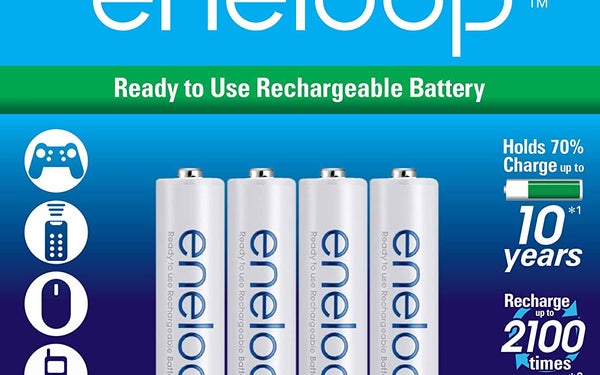
Why It Made the Cut: This NiMH battery is good for 2,100 recharges and maintains 70 percent charge when stored for 10 years.

These nickel metal hybrid (NiMH) rechargeable batteries can be recharged over 2,000 times before they begin to break down. That makes them ideal for use in a device that you use often and goes through batteries, because you can rotate two sets of batteries for years.

Best in Bulk Packaging: Rayovac Alkaline Batteries

Why It Made the Cut: A bulk package of single-use alkaline batteries with a 10-year shelf life.

These AAA alkaline batteries are single use, making them ideal for low power devices, emergency kits, and times when the user can’t access electricity to recharge. The re-closable bulk package makes it easy to store unused batteries over the product’s 10-year shelf life.

Best Budget: AmazonBasics Alkaline Batteries

Best Budget

Why It Made the Cut: The single-use AAA batteries in this bulk package have a 10-year leak-free shelf life.

The AAA batteries feature an internal insulating ring that prevents short circuits and accidental discharge.

What to Consider When Choosing AAA Batteries

There are two major considerations when shopping: the type of battery (alkaline, lithium, or rechargeable), the battery’s expected shelf life, the price, and whether you prefer name brand or generic batteries.

The first consideration is single use versus rechargeable. Single-use batteries are generally classic alkaline or its lighter, longer lasting (but more expensive) cousin lithium. They will power your device for as long as the elements inside it last, and then you toss the dead battery into the trash or recycle it.

Rechargeable batteries can drive their internal reactions backwards, resetting the battery so you can use it over and over for about 3 years.

Shelf life, cost, and brand name vs. generic are other considerations. Here’s what to know when deciding how long you need to store your batteries, how much money you want to spend at the outset, and whether a generic product meets your needs.

How Long Do You Need the Battery to Last?

Alkaline batteries use the same basic principle that governed Volta’s battery: two electrodes and a salt solution that lets ions flow between them. Those electrodes are what most people think of as the positive (anode) and negative (cathode) sides of the battery.

For modern alkaline batteries, the anode is usually zinc, and the cathode is manganese oxide. The movement of ions between the two generates the energy the battery uses to power your devices. This is a chemical reaction, and over time, the chemicals driving the reaction are used up, and the ions stop flowing. That’s a dead battery.

The metal electrodes also break down over time, and that battery won’t work even if it’s never been plugged into a device. That’s why batteries have expiration dates. Most of us keep a stock of batteries at home or in our vehicles so that we don’t have to hit the store the moment a flashlight or remote control quits on use, so it’s a good idea to consider a battery’s shelf life when making your choice. Many alkaline batteries have shelf lives that fall between 7 and 10 years. Alkaline batteries are less expensive than other battery types, making these a good choice for all-around use.

FAQs

Q: Are lithium batteries worth the cost?

Lithium batteries operate on the same basic principle as alkaline batteries, but use different elements to drive the chemical reaction. In this case, the cathode is a lithium compound, and the anode is carbon.

Lithium is a highly reactive element, which means it stores a lot of energy. And since AAA batteries are designed to hold exactly 1.5 volts of power, an energy-dense lithium battery can do that with fewer ingredients. That translates to a lightweight battery—about half the weight of equivalent alkaline batteries. They also have a much longer life. In fact, lithium single-use batteries boast double the shelf life—up to a whopping 20 years.

Single-use lithium batteries really shine when you want long battery life—crucial in a high-tech device—or plan to store the batteries on the shelf for a while. And they’re ideal if you want the device you’re powering to be as light as possible. The downside is that lithium batteries tend to be more expensive than their single-use alkaline cousins. Because lithium is so reactive, it’s also slightly more likely to discharge randomly (read: explode), but that’s more of an issue for rechargeable lithium-ion batteries used to power cell phones and laptops.

Q: Should I invest in rechargeable AAA batteries?

So, what about rechargeable batteries? This, too, is a chemistry lesson. Remember how the chemical reaction that takes place inside a battery eventually taps out the chemicals, and the flow of ions stops, leaving you with a dead battery? When plugged into an energy source, rechargeable batteries can run those chemical reactions backwards. That reverses the changes to the chemicals in the battery, and you wind up with a fresh battery.

This doesn’t last forever, of course. Over time, tiny bits of metal get stuck in the imperfections in the surface of rechargeable lithium batteries. triggering a reaction that builds up crystals. These get in the way of the ion flow, eventually making the battery so inefficient that it simply stops working. But that happens over about three years, so we’re talking hundreds of recharges.

Some rechargeable batteries generate energy using nickel and cadmium. Thanks to the properties of those elements, NiCd (typically referred to as NiCad) batteries can be used and recharged over a very long time—up to 20 years—which means you won’t need to consume as many batteries. However, it’s important to dispose of these batteries carefully. Cadmium is toxic to plants and animals and can cause harm if it seeps into the groundwater.

Rechargeable AAA batteries are more expensive than alkaline or lithium batteries, and you’ll have to invest in a recharger (which is often sold with the batteries), but they’re more economical over the long haul. That makes rechargeable batteries are a wise choice for any device that runs through batteries quickly. Get enough batteries so you can use one set in your device and keep another set fully charged. You won’t have any downtime.

Q: Are generic AAA batteries any good?

In general, generic products tend to be much cheaper when compared with the name brand option—but sometimes that name brand brings a measure of security about the quality or durability of the item. How does the name-brand versus generic question shake out when it comes to batteries?

Consumer Reports and a physics blogger at Wired researched this by hooking up numerous batteries to voltage and current testers and recording the results. It turns out that name brands do hold more energy per battery—up to 3 watt-hours versus less than 1 watt-hour. But the generic batteries were indeed much cheaper— so the price per watt-hour was basically a wash.

Their bottom line is that it probably makes sense to invest in name-brand batteries for devices that require a lot of power, or that you wouldn’t want to quit on you without warning. But for devices such as remote controls, or toys that a child will use often (or leave on, draining the batteries), inexpensive generic AAA batteries are a good choice.

Q: Is buying in bulk worthwhile?

The average household in the U.S. uses about 47 batteries per year. That’s 188 single-use batteries over four years, or just 12 rechargeable batteries. When you look at that math, it seems like rechargeable batteries make the most sense, and that’s generally true—except when it isn’t.

Believe it or not, there are some instances where experts recommend sticking with old-school single-use batteries. This is true with devices that use very little power, such as headlamps or clocks. These may dim or keep time poorly when a rechargeable battery is almost out of juice. Battery-powered smoke alarms are optimized for single-use batteries, so they may not chirp if a rechargeable battery is low on power. It’s also a good idea to stick with single-use batteries for emergency kits and outdoor use, since these batteries may hold up better in harsher conditions.
If you use a lot of triple A batteries, buying in bulk may minimize the per-battery expense and ensure a good stock of batteries for emergency circumstances. In general, bulk packages of triple A batteries clock in anywhere from two-thirds to one-half the price, per battery, of standard packages.

Final Thoughts on the Best AAA Batteries

When it comes to selecting the best AAA battery for a device, you need to consider how crucial the device is, how much power is required, if you’ll be keeping batteries in storage, and of course, the price. Single-use alkaline batteries are ideal for all-around use, while lithium batteries are powerful, lightweight, and last a long time. Rechargeable batteries are ideal for devices that go through batteries quickly, and buying an off-brand battery, or in bulk, will save you money over the long term if you use a lot of AAA batteries.

Why Trust Us

For more than 125 years, Field & Stream has been providing readers with honest and authentic coverage of outdoor gear. Our writers and editors eat, sleep, and breathe the outdoors, and that passion comes through in our product reviews. You can count on F&S to keep you up to date on the best new gear. And when we write about a product—whether it’s a bass lure or a backpack—we cover the good and the bad, so you know exactly what to expect before you decide to make a purchase.

The 7 Best Multi Tools of 2024

0

We may earn revenue from the products available on this page and participate in affiliate programs. Learn more ›

The multitool has been around since the 80s when Dan Leatherman introduced his prototype. In the 90s, they exploded onto the scene and haven’t quit. The reason is: A good multitool gets a lot done without having to pack a toolbox around. As human beings, one of the things we are known for (besides philosophy and mathematics) is our tool-making ability. You can trace the earliest version of a multitool back to Roman times, a surprisingly well-put-together knife, spike, pick, fork, and spatula combo. Engineering saw another milestone in 1897, with the introduction often poorly imitated, never duplicated Swiss Army knife. This timeless tool earned its chops during World War II and has been a staple ever since. You know it when you see it because of its iconic red handle. Many classic design aspects can still be seen in modern multi-tools, but they have also advanced to include more tools or be more specific for certain activities. Regardless of the design, the best multi tools are the ones that fit your needs, are durable, and are easy to use.

Choosing the best multi tools came down to the practical application of each tool within the given category. With field experience and brand/product knowledge, we were able to compile a list of tools that would suit many outdoor purposes and sports. To help narrow down the choices, we also considered:

Durability: how long the tool lasts may be one of our top considerations. Since multi tools serve such an essential role in so many backcountry activities, having one that you can trust for years to come is essential. We looked at materials and the design to ensure we found the tools that last the longest.

Versatility: Although many of the best multi tools are for specific activities, having one that is versatile enough to take on a variety of purposes is ideal.

Ease of Use: Even if a multi tool has many tools, that doesn’t mean much if it is a pain to use. The best multi tools make it easy to retrieve the tools you need, and they’re easy to use when needed.

Let’s dive in to determine the best multi tools for your needs.

Best Overall: The Leatherman Wave Plus

The Leatherman Wave Plus. Amazon

Why It Made The Cut: The Leatherman Wave Plus is our best multi tool pick overall because of the unbeatable durability, versatility, and value the tool provides.

Key Features

  • Weight: 11.2 oz
  • Materials: Stainless Steel
  • Number of Tools: 18

Pros

  • Tools lock into place
  • Includes both a serrated and straight edge blade
  • Made in the USA
  • Easy to access tools with one hand

Cons

When any product sells heads and tails above the rest, there are good reasons for it. In the case of multi tools, the Leatherman Wave Plus is killing it.

Why? It’s not the cheapest, and this is telling. Throughout my life as an outdoorsman, I’ve tried to pinch pennies where I can. I’ve learned that when you really want something to work well, it’s better to cry once and get the right piece of gear. When it comes to footwear, clothing, and tools that work, life is better if you skimp elsewhere.

The Wave Plus runs around $100, but you don’t hear anyone complaining about it. In addition to abounding positive user feedback, I can tell you firsthand that I wanted one from the minute I picked one up. The thing that impressed me most was its ease of use. This multitool is a smooth operator. It opens and gets to work without a fight.

The Wave Plus packs a total of 18 tools that get to work quickly. Pliers, wire cutters, scissors, two blades, two saws, screwdrivers galore, and Leatherman’s proprietary bit driver. External access to the blades and saws doesn’t require unfolding the entire tool. The biggest complaint folks have is the lack of a pocket clip and the proprietary bit driver (I like the option of a pocket clip). Proprietary designs, while innovative, can sometimes create headaches. However, we are at the point of splitting hairs. Still made in the U.S.A, the Leatherman Wave comes in ahead of the rest.

Best EDC: Leatherman Wingman

The Leatherman Wingman. Amazon

Why It Made The Cut: The Leatherman Wingman is another classic loved by many because of its compact size, ease of use, and functional design.

Key Features

  • Weight: 6.88 lbs
  • Materials: Stainless Steel
  • Number of Tools: 14

Pros

  • Spring loaded pliers
  • Excellent value
  • Knife accessible without opening pliers

Cons

  • Can be awkward to use some tools

Life is busy. The day starts early and ends late. When your multitool leaves the house every time you do, it needs to function well but be an afterthought to take with. In terms of EDC (Everyday Carry), there is no one-size-fits-all option. Everyone’s EDC needs are different, but there are a few basics to consider. Knife, pliers, wire cutters, and a couple of screwdriver options are where you want to start. The bigger the tool, the more likely it gets left at home. If you’re like me, my work knife and multitool never leave my work pants or work belt (except when it’s time to wash them). I never think about taking it with me. It just goes.

Leatherman offers a good EDC option to consider, the Wingman. The Wingman runs slightly smaller than average size for a multitool, rocks 14 tools, a pocket clip, and is made of stainless steel. Tools include a blade, scissors, several screwdrivers, file, spring-loaded pliers, and bottle opener. The price is $60.

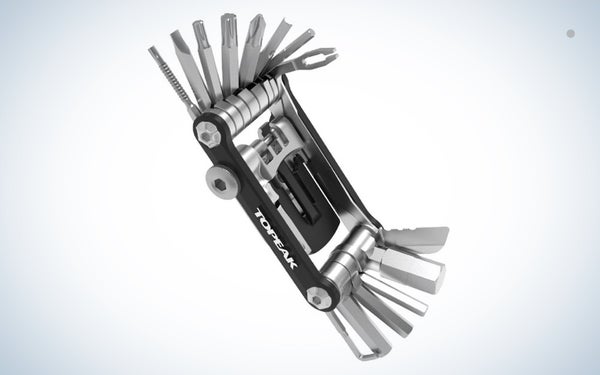
Best for Bikes: Topeak Ninja Master + Toolbox PT30

The Topeak Mini PT30. REI

Why It Made The Cut: The Topeak Ninja Master PT30 is a bike tool you should never leave behind when you hit the trail. The compact design comes equipped with 30 functions and a waterproof toolbox.

Key Features

  • Weight: 9.92 oz
  • Materials: Aluminum and chrome vanadium steel
  • Number of Tools: 30

Pros

  • Convenient carrying case
  • Can be mounted under water bottle cage
  • 30 functional tools
  • Easy to access tools

Cons

  • Case attachment to bike can be tricky and can rattle loose

If you’re a cyclist, you understand tools are essential. If you mountain bike, then tools become even more important. Trail riding practically ensures you will be tweaking and repairing your ride on a consistent basis. Flat tires, popped chains, bent spokes, or wheels will happen.

During my law enforcement career, I spent considerable time as a bike cop on the street. I also ran a bike patrol course for officers. Part of this training involved basic bike maintenance and field repair. Bike multitools are an essential piece of gear for any cyclist, and they are a specialized piece of equipment that gets a lot done.

When I ride, I carry a standard multitool and bike multitool. I consider both essential. Regardless of type, all bikes will have a certain range of adjustment points that require hex wrenches and torx bits. These adjust everything from seats and handlebars to brakes. Then there are chain tools, spoke wrenches, and tire tools. These are essential tools you can’t get basic repairs done without. Aside from packing a small toolbox, only a bike multitool will have this stuff in a portable package.

Topeak is one of the top-selling names and brands I use. Their latest model is the Mini PT30. It has 30 tools made of lightweight alloy steel. It’s got hex heads, torx bits, screwdrivers, a tubeless repair tool, a removable chain tool, and a master link tool. The chain tool is compatible with single and multi-speed chains up to 12 speed, but it does not work with Campagnolo hollow pin chains. The PT30 is on the higher end of the price range at $50.

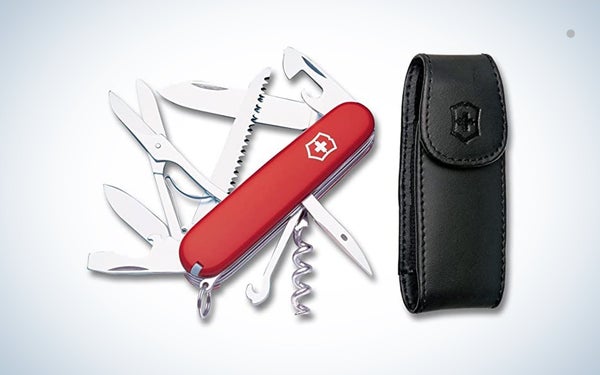
Best for Fishing: Swiss Army Huntsman

The Swiss Army Huntsman. Amazon

Why It Made The Cut: The Swiss Army Huntsman has the iconic design along with unbeatable quality, impressive functionality, and innovation needed to make it one of the best multi tools for fishing.

Key Features

  • Weight: 3.42 oz
  • Materials: Acrylonitrile Butadiene Styrene
  • Number of Tools: 15

Pros

  • Compact size
  • Easy to sharpen blades
  • Doesn’t rust easily
  • All tools function well for the size

Cons

  • Carrying case included isn’t the best quality

Fishing and multitools go hand in hand. I’ve always carried various tools while fishing, whether on the boat, raft, canoe, or foot. If your needs are basic and you’re not packing around too much gear, all you really need is a Swiss Army Knife.

I’ve owned one version or another ever since I was a young Boy Scout, and one has lived in my fishing vest for the last 20 years. I consider the Swiss Army Huntsman to be the perfect fishing multitool. You can scale a bluegill with the blade, and the spring-loaded scissors are perfect for trimming fishing line. The screwdrivers are adequate for minor reel repairs. The toothpick is a great knot fixer, and the bottle and can openers are indispensable. If I’m just fishing on foot for the day with a chest pack or vest and not much else, it’s all I need. 

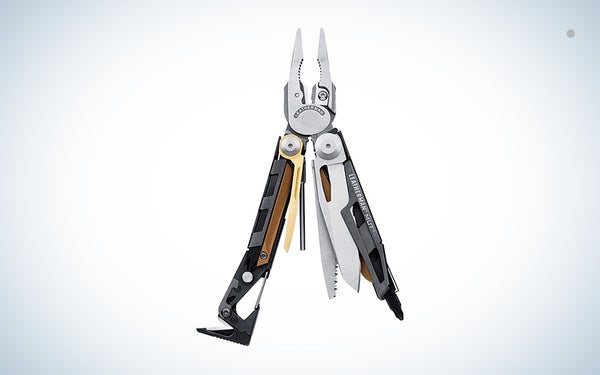
Best for Firearm Maintenance: Leatherman MUT Multitool

The Leatherman MUT. Amazon

Why It Made The Cut: The Leatherman MUT EOD is a unique and specialized tool that folks in and out of the military will enjoy.

Key Features

  • Weight: 11.2 oz
  • Materials: Stainless Steel
  • Number of Tools: 14

Pros

  • Easy access configuration
  • Heavy duty materials
  • Specialized tools
  • 25-year warranty

Cons

When it comes to firearms maintenance, Leatherman again rises to the top with its patented MUT multitool. The Leatherman MUT was designed for combat soldiers. It has many tools to reach into those tight spots that are always difficult to clean, whether it’s an M4 Carbine or 240B Machine Gun. What works well on the battlefield will work great on the range too. It has a punch handy for disassembly, cleaning rod adapter, replaceable bronze carbon scraper, replaceable wire cutters, electrical crimpers, standard pliers, needle nose pliers, a large bit driver, and a hammer. 

The MUT’s most distinctive feature is the bolt override tool, which is designed for clearing malfunctions on any AR platform. This is a highly specialized, overbuilt tool intended for Murphy’s Law. It’s just waiting for something to go wrong. But at $160, you will probably want to ask yourself, is this what I need? It’s a tool for the guy or gal that handles firearms regularly and may encounter a variety of problems on any given day, whether at work or play. Though I think any recreational shooter who can afford it will find it useful on a regular basis.

Best for Traveling: Gerber Dime Travel

The Gerber Dime Travel. Amazon

Why It Made The Cut: The Gerber Dime Travel multi tool is a traveler’s best friend with a compact and functional design and versions that are TSA-approved.

Key Features

  • Weight: 2.12 oz
  • Materials: N/A
  • Number of Tools: 10

Pros

  • Lightweight and compact
  • The bladeless version is TSA approved
  • Affordable price
  • Durable design

Cons

  • Limited application due to size and tool inclusion

When we travel by air, we do so at the whim of the airlines once we’re through security. As someone who has flown with guns and knives for work and play, I have learned to scale down my carry on. Yet I have had to mail a knife home to myself and have barely gotten through security due to an errant bullet I forgot to remove from the backpack. 

One problem with most multitools and traveling is the blade or other sharp objects could, if so desired, be used as a weapon. But now that we’ve been living with tightened security measures for 20 years, the demand for a travel compliant multitool has been met and there are more than enough to choose from. So, what are they and which one is best?

Gerber’s Dime Travel Bladeless comes with the same tools as the regular Dime but without the knife. It has scissors less than 4 inches long, which are TSA-compliant and sell for around $25. 

Best Budget: Gerber Suspension NXT

The Gerber Suspension NXT. Amazon

Why It Made The Cut: The Gerber Suspension NXT provides decent quality at a price that remains affordable for most budgets.

Key Features

  • Weight: 6.4 oz
  • Materials: Stainless Steel
  • Number of Tools: 15

Pros

  • Affordable
  • Slim and compact design
  • Locking feature for tools
  • Pocket clip
  • Spring loaded pliers

Cons

  • Durability is questionable

Let’s face it when it comes to just about anything, the price is always a consideration. We have families to care for, bills to pay, and oftentimes we must make our money go as far as it can. It simply may not be feasible to pay $100 for a multitool. I’ve been there, and still am at times, so I want to make sure nobody feels priced out of a multitool market and that their money gets the best it can buy. 

Gerber’s Suspension NXT is comparable to the Rev. It sports the basic tools you need: knife, pliers, file, screwdrivers, and scissors which you don’t find on most budget models. It would also fit the bill for an EDC multitool with its pocket clip. It runs about $35.

If you’re like me, you carry a multitool of some kind everywhere you go. They have been a part of my life outdoors, indoors, overseas, and underwater since I can remember. Multitools have always been there for me from my earliest days in Boy Scouts (a Victorinox Huntsman I got when I was 11), a lifetime outdoors, and serving in the military and law enforcement.

I’ve used them at my best and worst. You can never have too many, and I keep multitools just about anywhere I think I’ll need one—hunting pack, fishing vest, boat box, blind bag, chest rig, duty belt, and yes, the junk drawer.

The best thing about modern multitools is how general or specialized they can be.

Ask yourself the following questions:

  • What am I doing?
  • Where am I going?
  • Who am I going with?
  • When am I going?
  • Why and how?

If you’re a hunter or fisherman, you need a good blade, screwdrivers, pliers, and a file. Bowhunter or mountain biker? You need hex wrenches and torx bits. Fishing saltwater or scuba diving? Rust resistance is critical.

FAQs

Q: Is Leatherman still made in the USA?

Leatherman, founded in 1983, is headquartered in Portland, Oregon. While they source a handful of components internationally, the overwhelming majority of the parts and materials that go into one of their multitools is from right here in the States. All manufacturing and assembly take place in their Portland factory.

Q: What are the best multi tools for survival?

The one you have on you. But seriously, just about any high-quality multi tool can help out when the chips are down. Just make sure you select a model with a full-size blade and stout pliers. Other implements, like saws and serrated blades, and scissors can also help.

Q: Which multi tool has the best scissors?

The scissors on most multi tools are a bit lacking. Unless of course, you’re talking about the Leatherman Raptor line. This unique multi tool is built around a set of EMT shears, which can perform wonders in an emergency situation or when you need to cut through braided fishing line. Unfortunately, their uses are limited by the scissor blades making up the main tool.

Q: What is a multi tool good for?

What a multi tool is suitable for depends on the intended purpose of the overall design and the tools it includes. There are fishing-specific, hunting-specific, and even biking-specific multi tools that will all vary in their tool inclusion. In general, a classic multi tool design is good for survival, gear repair, and a variety of common camp tasks.

Q: How durable are multi tools?

The durability of a multi tool depends on the materials, construction, and overall design. When in doubt, stick with reputable brands instead of buying the cheapest option you find online. Buying a Leatherman will more often than not guarantee you invest in a multi tool that will likely outlast you.

Q: What tools come in a multi tool?

What tools come in a multi tool often depends on the type of multi tool you buy. Some only include a few tools, while others may have up to 20+ tools. While these tools can vary dramatically, the most common ones in a multi tool design include needle nose pliers, scissors, wire cutters, screwdrivers, bottle openers, and a blade (serrated or straight).

As you can see, multi tools fulfill an essential role in the lives of avid outdoorsmen, military and law enforcement personnel, and just about anybody else. They are as much an expression of who we are and how we go about our daily work and play. Hopefully, I’ve given you some things to consider and a range of options that fits your needs. Remember WWWWH (When, Where, What, Who, and How) of everything you do and that will tell you which is the best multi tools for your purpose.

Why Trust Us

For more than 125 years, Field & Stream has been providing readers with honest and authentic coverage of outdoor gear. Our writers and editors eat, sleep, and breathe the outdoors, and that passion comes through in our product reviews. You can count on F&S to keep you up to date on the best new gear. And when we write about a product—whether it’s a bass lure or a backpack—we cover the good and the bad, so you know exactly what to expect before you decide to make a purchase.

The Best Solar Generators (2024 Guide)

0

We may earn revenue from the products available on this page and participate in affiliate programs. Learn more ›

Solar generators have become increasingly popular for various activities, but especially for avid campers and full-time travelers.

If you need a solar generator for your hunting cabin or off-grid home, your needs will significantly vary from that of someone looking for enough power to charge electronics and potentially run a blender when they’re on the road. The best solar generators are easily portable, fit the intended application, and have enough power and battery life for your needs. 

How We Picked the Best Solar Generators

Though I have lived in an assortment of vehicles, a solar generator wasn’t always a piece of gear I had. But once I understood the value, I got one, which happens to be from one of the brands on our list!

The type of generator you choose will be highly subjective to your intended use. For instance, I only used mine to power small electronics and occasionally run a little blender. I did have a small fridge but rarely needed to power it, and I ended up using it more like a cooler to save power when possible. In choosing the best solar generators for this list, I took the category into account as well as the following:

  • Longevity: How long do I intend on using this item? What is the projected lifespan? Is there a warranty? How durable is it for both indoor and outdoor use?
  • Portability: Am I using this only at home or taking it on the road? Are there carrying handles or a cart to move it with? What is the size and weight? 
  • Ease of Use: Is the generator straightforward for use? Is there an easy-to-read battery display? Are the connection and charging options accessible and clear?
  • Company Policies: Is there a warranty? A satisfaction guarantee? Any replacement policy or repair options? Do they offer package purchases with panels and generators? Are there attachments for connecting panels to each other?

When searching for products online, it is also a good idea to sift through verified customer reviews and the company websites. Reviews give you up-to-date information about customer experiences and overall product quality, and company websites can give you a better look into product sources, production, warranties, and more. 

Best Solar Generators: Reviews and Recommendations

Best Overall: Goal Zero Yeti 1500x

Best Overall

Specs

  • Battery Capacity: 1516 Wh 
  • Continuous Power Output: 2000 W
  • Surge Power: 3000 W
  • Best Use: Home backup, off-grid travel

Pros

  • Power multiple devices with 7 different port options
  • Convenient carrying handles for portability 
  • Customizable energy storage system 
  • Easy to read LED display 

Cons

  • May be too large for some people’s travel needs

The Goal Zero Yeti 1500x is a robust solar generator in an easy-to-store package. While the size and weight (46 pounds) may be too much for some travelers, many agree that this generator is the best solar generator for a home backup or convenient off-grid travel. 

It has seven different port options, allowing you to power multiple smaller appliances or charge several devices at one time. With a 1500 Wh lithium-ion battery, this generator can easily power even a full-size refrigerator for around 28 hours. It can be useful for an emergency home generator for about a day, but if you’re looking for something to power appliances for days or weeks, this may not be the best backup choice. 

However, the size, weight, and overall power are ideal for travel. It takes a while to get a full charge, and it will depend on the type of solar panels you pair with the generator. For most folks on the road, 1500 Wh will be more than enough to keep them going, especially if they have a lot of sun. 

Best for Camping: Jackery Explorer 1000

Best for Camping

Specs

  • Battery Capacity: 1002 Wh
  • Continuous Power Output: 1000 W
  • Surge Power: 2000 W
  • Best Use: Camping, travel, tailgating 

Pros:

  • Easy to carry (only 22 pounds)
  • Relatively fast charge time
  • Excellent value for the price

Cons:

  • Full-time travelers may need a faster charge time

If portability is your main concern, the Jackery Explorer 1000 is a great option. Jackery has a wide range of solar generator options, so if the Wh on this generator doesn’t fit your needs, there are other sizes. We chose the Explorer 1000, though, because it is easy to carry, doesn’t take up much room, and has enough power to charge and run smaller appliances. 

The solar charge time is listed at just under seven hours, which is awesome for the power output. Just keep in mind that there are a lot of factors that can influence how fast it takes to charge from solar panels, like the type of panels and amount of sunlight. 

While this is a great pick for camping, if you are using it daily, you’ll likely need to charge it daily as well. So, it may take some extra planning, but it is an excellent choice in terms of usability and application. 

Best for RVs: EcoFlow Delta 1300

Best for RV

Specs

  • Battery Capacity: 1260 Wh
  • Continuous Power Output: 1800 W
  • Surge Power: 3300 W
  • Best Use: Off-grid, RVing, full-time travel, home backup, professional

Pros

  • Exceptionally fast charge time
  • Good size for travel and storage
  • 13 different charging ports

Cons

  • Awkward arrangement of charging ports and fan

Any solar generators on the list would work well for RV travel, but the EcoFlow Delta 1300 is my top choice. It has one of the fastest charging times on the market, it is straightforward to use, and it can charge or run several devices at once. 

Not only can you power home appliances, but you can charge devices and even run power tools. So, when you’re not on the road, this can be a great companion for projects around the house or garage. 

It does have the power to run something like a refrigerator, but only for a short time. It would work better with smaller appliances like a mini-fridge. As with most solar generators, it will have the fastest charge time from a wall outlet (96 minutes), but with the right solar panels, you can get this generator fully charged within 4-8 hours. 

Best Portable: Anker PowerHouse II 800

Best Portable

Specs

  • Battery Capacity: 778 Wh
  • Continuous Power Output: 770W
  • Weight: 18 pounds
  • Best Use: Camping, short boondocking trips

Pros:

  • Lightweight 
  • Unique integrated flashlights
  • Easy to read LED screen
  • Durable for outdoor use

Cons:

  • Does not support devices over 500W

Sometimes we are just looking for a little bit of extra power without lugging around a clunky battery. That’s where the Anker PowerHouse II 800 comes into play. This bad boy is only around 18 pounds, has an easy-to-carry handle, can easily power most small appliances, and gives your electronics a quick charge. 

It won’t be suitable for large loads or anything over 500W (toasters, hairdryers, microwaves), but it can power some mini-fridges for short periods. Most users seem to gravitate towards this power station to charge devices and computers, and that is really where it thrives. 

Overall, it is a quality device, and pending your needs, it will work quite well. Since it has a lower battery capacity, the charge time with solar is relatively fast. Perhaps the best feature is also the most unique, and it is the built-in floodlight. 

Best for Refrigerator: Point Zero Energy Titan

Best for Refrigerator

Specs

  • Battery Capacity: 2000 Wh
  • Continuous Power Output: 1500 W (single battery)
  • Surge Power: 3000 W (single battery)
  • Best Use: home backup, off-grid 

Pros

  • Removable and expandable battery
  • Can run a standard refrigerator for 36 hours
  • Durable metal frame
  • Two-year warranty

Cons

The Point Zero Energy Titan is comparable to many larger solar generators on the market, but it stands apart with a higher power output with a dual battery system. The specs listed above are for a single battery, so you can double it for two batteries. 

It is also an excellent option for off-grid living or home backup systems because you can expand on the battery as much as you want. That way, you can continue to hold a charge to keep things running. The maximum power point tracking while charging from solar panels is 2000 W, higher than comparable models. 

It can run a standard home refrigerator for 36 hours on one battery pack, making it an excellent choice for home backup systems. An integrated RV port and several other power outlet options are also available. 

Looking for more power bank choices? Here are a few more of our favorite power banks.

What to Consider When Choosing a Solar Generator

There are several considerations when deciding to purchase a solar generator, and they will be unique to your intended use and overall budget. Before jumping down to our top picks for the best solar generator, read through our buying guide to ensure you’re able to find the perfect fit.

Type of Solar Panels

To have a fully operational solar generator, you not only need quality power and battery capacity, but you need the right solar panels. Many companies that sell solar generators will also have solar panels that work specifically with that generator. However, many of them have universal adaptors to make it easy to attach and use other brands of solar panels. 

In any case, getting to know the type of solar panel you may want is an important consideration. 

The most common types of solar panels you’ll see include: 

  • Monocrystalline solar panels: These tend to be the most efficient and the most expensive panel option. They will work well in high heat environments, and they usually offer around 15-20% efficiency. Monocrystalline solar panels are made from a single crystal, hence the name. 
  • Polycrystalline solar panels: Offering a 13-16% efficiency rate, polycrystalline solar panels are not far behind monocrystalline. They won’t work quite as well at high temperatures, but the overall differences are minor. Polycrystalline panels are made from more than one crystal, which changes the name and efficiency. Since they are slightly lower quality, they also tend to be more affordable. 
  • Thin-film solar panels: Of the three options listed, thin-film solar panels are the least efficient and only yield around a 7-13% efficiency rate. They are usually much larger and require more surface area, but they are the cheapest option making them relatively popular. 

The panels you choose are what influences how much power you’re able to collect during the day. Most solar generators have other charging capabilities, so solar is not the only option. But as a solar generator, having quality panels increases the efficiency and value of your purchase. 

Surge Power Capacity

Among the most important considerations to make is identifying the surge power capacity of the generator. The surge power capacity will tell you the maximum power the solar generator system can provide at once. If you exceed the capacity and overload the generator, the appliances will no longer be powered. 

This also applies to things like motors or refrigerators that have instantaneous electrical surges that last a few milliseconds at a time, usually to get started. Then, they’ll use less power as they continue to run. You can often compare the surge power of an appliance to the generator’s capacity, which will give you a good idea.

Battery Capacity

Every generator will have a different storage capacity dictated by the battery. While the generator is charging, the energy needs to be stored somewhere so you can continue to use it after dark or when it is not collecting a charge. Most battery capacities on these devices are measured in watt-hours. 

The battery capacity not only influences the amount of time appliances can be connected to the battery, but it impacts how long it will take for it to charge. Most modern solar generator batteries are lithium-ion batteries. These are not the only battery option, but they are usually the most effective and reliable. 

To know how many watts you can actually pull from the battery, you then need to know the inverter rating. The inverter rating does not necessarily influence the power capabilities of the generator, but the ratio between the inverter and the watts in the battery does matter. You are looking for a ratio between 1.5 watt-hours to 1 inverter rating for the most effective performance.

Keep in mind that the battery’s physical size doesn’t always correlate to the battery capacity or power output. To make the last paragraph more sense, let’s talk about watt-hours (Wh) in more detail. So, one watt-hour equals one watt flowing for one hour. Look at the listed Wh on the generator’s battery, and many of the best solar generators will range anywhere from 700-1000+ Wh.

While, in theory, that seems like a lot of time, the inverter rating is what determines how much power you have. This is because the watt-hours differ according to what the battery is plugged into.

How do you predict the battery capacity and how long the generator will last then?

Luckily, many solar generator manufacturers have made this process easy on us, and they have charts that explain how much battery life common appliances and electronics eat up. Not everyone needs the highest capacity battery, but the higher the capacity, the longer it will last. Just remember, it takes that much longer to charge as well.

The display for the battery life is also important to notice. If it isn’t easy and clear to read how much battery life is left, then it can be difficult to know when the generator is useful or needs to charge. Look for ones with a clear LED display to make the battery easy to monitor.

Need to re-power your fishing boat? Here’s a look at the best trolling motor batteries.

Charging Modes

Although you are buying a solar generator, it should be capable of charging off other things. Sometimes, the weather is cloudy for days, and it is hard to get enough sun to top off the batteries. So, having the option to plug it into a standard outlet or even into your vehicle while driving can be extremely helpful. 

If you choose to charge your generator off of your car or RV battery, it is advised to do so only when the vehicle is running to avoid having a dead car battery.

Intended Use

Your intended use largely influences all of the other factors discussed. For instance, if you are only using a solar generator to charge small electronics like phones or an occasional laptop, something as small as a 200Wh battery will suffice. If you plan to run appliances like blenders, coffee pots, and even a fridge, you’ll need much more power. 

If you are getting a solar generator as a backup for your home versus one to take with you in your RV or rig, it is also important to factor in portability. Some larger generators come with wheels to make them easy to move around a garage or home, but smaller ones can easily be lifted and carried when out camping. If you just need to power small electronics, check our round up of best AAA batteries or invest in a portable charger.

Need a small, portable charger for backpacking? Here are a few tips on choosing a lightweight solar charger.

We hope we provided most of the information you need to choose the right solar generator, but choosing the correct size can be tricky. When in doubt, get a larger battery capacity than you think you’ll need. If you do this, keep in mind that you need a way to charge the battery!

To get more specific, you can use an equation to calculate the watt-hours you need to power everything. One of the brands we list below has some great information about choosing an appropriate size solar generator on their website if you want more details.

In short, all you need to do is estimate the time it takes to power individual devices or appliances. Then, collectively calculate how many hours it would take to power or charge all of them. When you have that estimate, add up the wattage needed.

Finally, multiply the time and wattage needed to figure out the watt-hours.

As mentioned, always plan for more than you think you need, especially if you power things like a fridge or power tools that use more surge power.

FAQs

Q: How long will a solar generator last?

How long a solar generator will last varies according to the quality of the product when new, how well maintained, and how often it is used. In general, most solar-powered generators will last anywhere from 25-35 years.

Q: Are solar generators worth the money?

To most people, solar generators are worth the money despite the high upfront costs. Once you have them, there are usually no additional costs to keep them functional, unless you are charging them from your electricity or replacing solar panels. Since most panels last 25-35 years, the value tends to be worth the investment.

Q: What size solar generator do I need to power a refrigerator?

The size of the solar generator you need to power a refrigerator depends on the size of your refrigerator. If you want to go completely off-grid with a full-size fridge, a generator with 6,000 watts is recommended. However, if you strictly use it for short windows of time or as a backup in case of an outage, a generator with 1500 watts should be enough.

Q: Can I run my house on a solar generator?

You can run a house on a solar generator, but it needs enough power. It also depends on how long you plan to power the house because if it is a backup vs. the primary power source, that will impact the type of solar system you need. A generator ranging from 5000 to 7500 watts is enough to power a house pending what is being powered and for how long. The best way to know the size of the solar generator you need to power your house, look at the wattage of all the appliances you plan to run. The watts or amps are often listed on product labels. To keep these charged via solar, you’ll also need 25-35 solar panels (100-300 watt panels).

Q: Are solar generators noisy?

Solar generators are not noisy, especially when compared to conventional fuel-powered generators. Solar generators do not have moving parts, so the only noise you should hear from a solar generator would come from the inverter.

Best Solar Generators: Final Thoughts

Finding the best solar generator is dependent on your intended use. There are so many amazing options on the market today you will undoubtedly find one that fits your needs. Whether you want a home backup for emergencies, something to take with you to charge your phones while camping, or a full-time traveler, there is a solar generator for you. 

Why Trust Us

For more than 125 years, Field & Stream has been providing readers with honest and authentic coverage of outdoor gear. Our writers and editors eat, sleep, and breathe the outdoors, and that passion comes through in our product reviews. You can count on F&S to keep you up to date on the best new gear. And when we write about a product—whether it’s a bass lure or a backpack—we cover the good and the bad, so you know exactly what to expect before you decide to make a purchase.

Minnesota Ice Fisherman Drown After Truck Falls Through Ice

0

A Minnesota boat charter operator died January 12 when his truck broke through the ice and sunk. Other anglers found the body of 80-year-old Richard “Dickie” Gadbois floating in a lifejacket, moved him to shore and called 911. 

Lakeland PBS reports the accident happened at Mille Lacs Lake in central Minnesota about two hours from Minneapolis. Mille Lacs is the second largest inland lake in the state and offers year-round recreation.

According to Minnesota Department of Natural Resources, walleye and northern pike are popular catches in the wintertime on Mille Lacs and other Minnesota lakes. Temporary villages pop up annually on the area’s frozen lakes, with ten percent of the state’s 1.5 million licensed anglers fishing through ice in what is usually considered safe winter recreation. 

Mille Lacs Lake, in particular, is known for freezing thick by mid-December with the potential to be iced three-feet deep. But it was only six inches thick where Gadbois died. It has to be more than 13-inches thick to hold a vehicle.

“This is another reminder to the public that ice conditions are not safe for driving cars and trucks on right now,” Mille Lacs County Sherriff’s Office stated in a news release. “The ice on many lakes across the state is not good, clear ice due to rains and warm temperatures.” 

Read Next: Three Ice Fishermen Drown After Falling Through Thin Ice in Vermont

Minnesota Public Radio reports three other people were injured on ice around the same time as the recent fatality. A teenage boy on a snowmobile sunk on Little Rock Lake in Benton County, and two men in a UTV on broke through ice on Upper Red Lake in Beltrami County. 

Additionally 122 people were stranded on an ice sheet at the end of December on Upper Red Lake. According to CBS News they all had to be rescued after the ice they were fishing on separated from shore leaving 30 feet of open water between their shacks and safety.